Why Putin Should Be Worried, Very Worried
Trump’s move in Venezuela is really bad news personally for Russia’s long-time authoritarian leader. The split between him and Russia’s kleptocratic elites is unmistakable.
January 8, 2026

Note to journalists: You may quote from this text, provided you mention the name of the author and reference it as a new Strategic Assessment Memo (SAM) published by the Global Ideas Center in Berlin on The Globalist.
Donald Trump’s extraction of Venezuela’s authoritarian caudillo Nicolas Maduro may be the first step toward parceling out the world among global superpowers — the United States, China and Russia.
If so, it would be a signal to Moscow that it can have a free hand in the former Soviet Empire, and perhaps even in Western Europe.
That should be a very exciting prospect for Russian President Vladimir Putin. And yet, the opposite is the case. Trump’s move in Venezuela is really bad news personally for Russia’s long-time authoritarian leader.
The oil price as a noose around Putin’s neck
A key reason is that the oil piece is already tearing the Russian state budget apart at the seams. Before Putin decided to invade Ukraine, it was at a comfortable $90 per barrel in January 2022, now it is already one-third lower at $60 per barrel.
Worse, to the extent that Trump is pursuing any consistent strategy, he seems to be adamant about creating an oil glut, which will drive the price of oil down even further.
While that will also displease his Saudi allies, Trump is keen on taking credit domestically for reducing inflation by virtue of a lower oil price.
But that’s not the really dangerous story for Putin
If this development worries Putin, what then could he be worried about far more? This is not an obvious story. It starts out with the fact that Trump has consistently shown no interest in promoting democracy.
In the Putin context, that is actually excellent news. The irrepressibly transactional Mr. Trump cares first and foremost about self-enrichment and is fine with some rent-sharing by enticing other autocrats to enrich themselves as well to get whatever deal done that Trump envisions.
For conclusive proof, look no further than the fact that the Trump Administration is leaving Venezuela’s existing Chavista government in place, despite the latter’s socialist ideology and oppressive practices.
For their part, Venezuela’s leftist set of corrupt elites seems content to operate now under U.S. hegemony — as long as they can keep their positions and preserve their ill-gotten wealth. In fact, they can reasonably expect to get richer if U.S. oil giants indeed rebuild the country’s infrastructure and pump its oil.
Putin’s problem: He doesn’t care about crass commercialism
This is exactly what Trump has been telling Putin he should do: Stop this stupid war in Ukraine, Vlad. There are so many great projects we could work on together. You and I could be making billions.
But Putin is already obscenely rich. No one knows how rich exactly but estimates put his personal wealth at hundreds of billions of dollars.
Putin’s mantra: Make war, not money
Besides, Putin is no longer interested in money. War has now become his consuming obsession. He gets visibly excited when he talks about military subjects, such as Russian advances in Ukraine, threats to NATO countries and new weapon systems.
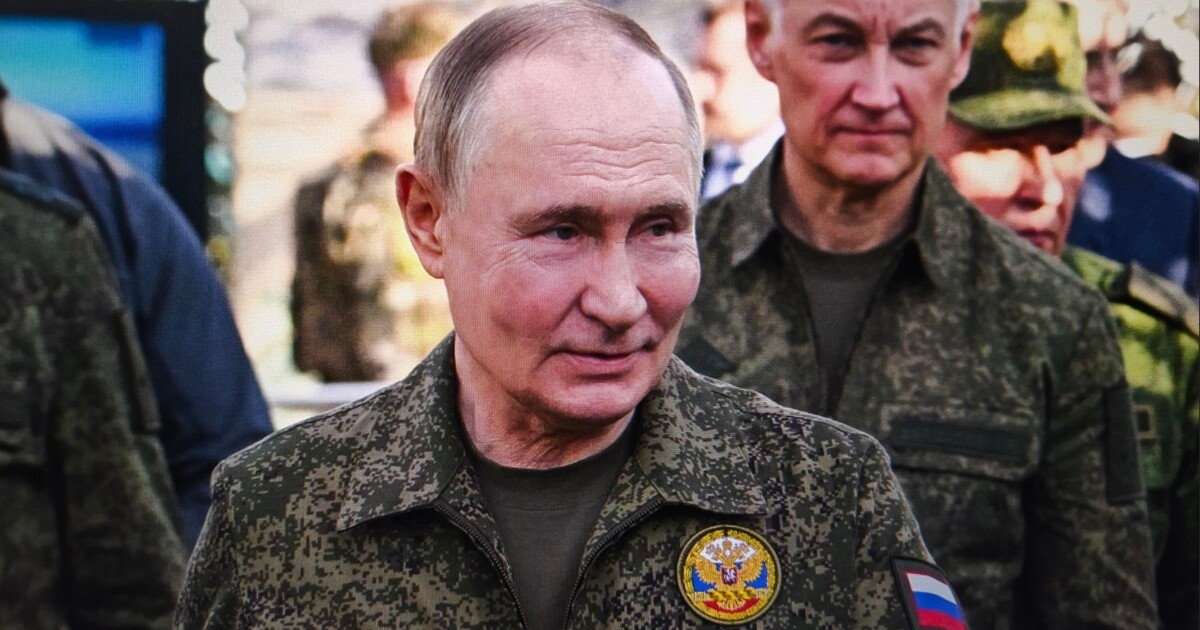
He has even started to appear on Russian television wearing army camouflage. He relishes his role of a warlord and will not relinquish it for a promise of a few extra billion.
The split in Russia’s elites
But while Putin and one or two of his closest associates want to keep fighting, Russia’s elites don’t. They may pretend to support his war in Ukraine, and are happy to profit from it, but they desperately want the hostilities to end.
Why is this so? First, remember that post-Soviet elites in Russia have never been motivated by nationalism or any other ideology. Their one abiding interest has always been money.
For that reason, it is important to realize that corruption in Putin’s Russia is not just endemic — it is the foundation of the entire system.
The decrepit nature of Russia today
In today’s Russia, everyone steals and takes bribes, each person in proportion to his or her position and rank. Traffic cops enrich themselves by many thousands of dollars, mid-level officials by hundreds of thousands, and ministers amass fortunes to the tune of hundreds of millions.
Stealing — and sharing the gains with the superiors — is both the way to keep the job and achieve career advancement.
The corrosion created by Putin is eating him up
True, Putin has always encouraged this pilfering of Russia’s wealth because it created a totally loyal government bureaucracy. It is a system in which everyone is complicit and has a stake in its survival.
Not only were Russian elites stealing but they were sending their capital abroad, to the tune of well over $1 trillion. The money stolen from the budget or taken as bribes have been converted to luxury properties in London, Miami, the French Riviera and elsewhere.
Fooling a clueless Putin
Even the guardians of Putin’s regime — the FSB, the GRU and other security agencies — are primarily interested in stuffing their own pockets, not doing their job.
Prior to attacking Ukraine, Russian spy agencies were allocated huge budgets for suborning Ukrainian officials and building up the Fifth Column inside the country. That was supposed to lay the foundations for an easy victory once the invasion started.
In actuality, the funds were misappropriated, and none of the subversive cells existed.
The failure of Putin’s blitzkrieg in Ukraine was also the result of widespread corruption in the Russian military. Russia allocated as much as $65 billion to modernizing its armed forces prior to the war.
But it turned out that the Defense Ministry spent money on producing sleek Hollywood-style videos of airborne special forces jumping out of helicopters to impress Putin, while the rest of the money went to construct the top generals’ private villas.
Changing the terms of the deal
All of that puts Putin in an even worse pickle. He must be realizing that his problem isn’t just that most of the sizable investments made available to overpower Ukraine were wasted.
What’s far worse, and what the Venezuela episode teaches him is that the terms of the deal he set up a quarter century ago have changed profoundly. While all he cares about is making war, all that the “elites” around him — far poorer than he is — care about is preserving their money-sucking role in Russian society.
And they realize that the jig could be up for them as well — unless they move to offer Trump what he wants, making money in and on Russia.
But for that scenario to come about, they must remove the main obstacle in the way — and that is Vladimir Putin.
In that sense, Putin’s long-time sidekick (and former Russian President) Dmitry Medvedev has it all wrong. He recently fantasized about capturing German Chancellor Friedrich Merz in the same manner that U.S. forces dealt with Nicolas Maduro in Venezuela.
For their part, most Russian elites must at least be daydreaming about rather having Putin seized, so that they can get on with all the rich deals they envision to receive at Trump’s hands.
Worn down by sanctions
Remember that Russian elites have been under progressing levels of Western sanctions since the start of the Ukraine war. Leaky though those sanctions have been, they have made it much more difficult for Russians to visit their properties in Western Europe and to enjoy the luxuries they were consuming in private (while, of course, always extolling the virtues of Russian nationalism in public).
And now that so many of them have become even richer by war profiteering, they would dearly love to legalize their fortunes and to return to global respectability.
Trump has a deal for Russia’s kleptocrats, but Putin stands in the way
This is exactly what Trump is offering to Russia and what Putin is rejecting. Rich Russians were filled with hope when Trump returned to the White House in 2025.
The Russian stock market rocketed by nearly 40% in the two months following the U.S. election. But Putin’s stubborn refusal to take up Trump’s offer has dashed such hopes during 2025.
Clearly, many a Russian billionaire is keen on grasping the great money-making possibilities if Putin fell down the stairs in the Kremlin, for example, or ate poisonous mushrooms.
Who can remove Putin?
Of course, Russian elites lack the courage to plot a coup. But Putin can’t be certain about that.
What should make him especially worried is all those rumors that some people in Maduro’s own entourage sold him out as a fall guy to the Americans, which made the U.S. military operation in Caracas such a resounding – i.e., relatively easy — success.
The parallels between late-stage Stalinism and now late-stage Putinism
Putin is getting old, and this is when long-time dictators develop paranoia and start suspecting their entourage.
This is what Stalin did in his final years, initiating purges and executing potential successors he himself had appointed. In the next few weeks, we may well see the heads of Putin’s closest associates suddenly starting to roll.
Takeaways
Putin’s worries about the domestic and international consequences of Trump’s actions, not just related to Venezuela, extend well beyond the oil price – although an ever-lower oil price is deadly for Russia’s finances.
Putin is already obscenely rich. He is thus no longer interested in money. War has now become his all-consuming obsession.
While Putin and one or two of his closest associates want to keep fighting, Russia’s elites don’t. They may pretend to support his war in Ukraine, and are happy to profit from it, but they desperately want the hostilities to end.
Remember that post-Soviet elites in Russia have never been motivated by nationalism or any other ideology. Their one abiding interest has always been money.
To preserve – and expand – their wealth, Russia’s elites must remove the main obstacle in the way. That is why they must be daydreaming about having Putin seized, Maduro-style, so that they can get on with all the rich deals they envision to receive at Trump’s hands.
Former Russian President Dmitry Medvedev has it all wrong. He recently fantasized about capturing German Chancellor Friedrich Merz in the same manner that U.S. forces dealt with Nicolas Maduro in Venezuela. The intra-Russian game is about removing Putin.
Note to journalists: You may quote from this text, provided you mention the name of the author and reference it as a new Strategic Assessment Memo (SAM) published by the Global Ideas Center in Berlin on The Globalist.