
The Industrial Food Complex: A Close-Up
Why are human beings not unifying publicly and loudly to protest against what the industrial food complex has in store for them?
March 3, 2026
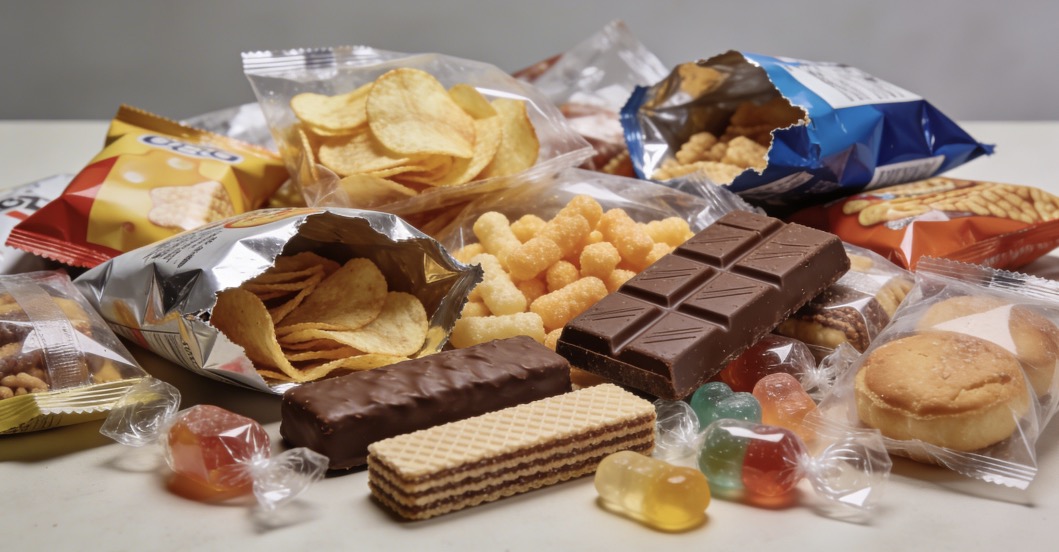

We live in a strange world. On the one hand, we see parents rightfully fearful of the impact that access to social media has on their children.
On the other hand, comparatively little attention is paid to what food manufacturers are deliberately doing to encourage addiction to their processed foods among the general public of all ages.
Investing food scientists and engineers
The industrial food complex pays eye-watering sums of money to food scientists and engineers. Their task? To discover how most profitably it can trigger the brain to stimulate the need to “eat-just-one-more-chip”.
Manufacturers use highly sophisticated neuro-imaging and scientific research to establish the perfect combination of high fat and high carb levels with the perfect balance of sugar and salt to stimulate the brain’s “pleasure centers” and make cheap nutritionally empty food irresistible.
No surprise here
According to Marion Nestle, the American molecular biologist, nutritionist and public health advocate, food industry-funded research, like that sponsored by the tobacco, chemical and pharmaceutical industries, “almost invariably produces results that confirm the benefits or lack of harm of the sponsor’s products, even when independently sponsored research comes to opposite conclusions”.
Not surprisingly, the industry is reluctant to release its budgets for such “research”. But a paper published in 2016 in the Journal of the American Medical Association revealed that during the 1960s, the sugar industry paid three Harvard scientists $50,000 (in today’s dollars) to produce research overlooking the effect of sugar on heart disease and blaming fat instead.
Investing in downplaying the link between sugary drinks and obesity
Back in 2010, a review of scientific studies of fat in the American Journal of Clinical Nutrition found that “there is no convincing evidence that saturated fat causes heart disease”. Neither conclusion is true.
In addition, between 2010 and 2015, Coca-Cola invested over $132.8 million in scientific research to downplay the link between sugary drinks and obesity.
Why would any manufacturer behave like this? The market value of the Top Ten food and drink industrial companies, from Nestlé to Coca-Cola and Cargill and the seven other giants which combine to feed us, is estimated at between $700-800 billion annually.
Still peanuts
But Big Food Biz profits are peanuts when you look at the global revenues generated by businesses whose motives are, similarly, hardly philanthropic:
– drug trafficking, $426-652 billion
– money laundering (a London speciality), $1.5-$1.87 trillion
– human trafficking, $150.2 billion
– global cyber crime, $10.5 trillion
– counterfeiting, $923 billion to $1.13 trillion, and
– illegal logging, $52 billion to $157 billion.
Those astonishing figures are the equivalent of or higher than the economic output of a significant number of developed nations.
On the hunt
Big Food Biz eyes these figures with its own rabid hunger. And wants to stimulate yours, at minimal cost to itself. For starters, it is now downsizing ready-meal portions to reflect the smaller appetites resulting from weight loss drug appetites.
Will it downsize the cost of these lesser meals? Over to you to answer that one. And how much nutrition will they be delivering?
Physical well-being of anyone of no concern
At a time when swathes of modern industrial society slither into widespread intolerance, why are decent human beings who are engaging in frantic debate about the tech bros’ control of their children’s brains not unifying publicly and loudly to protest against what the industrial food complex is doing to manipulate the physical well-being of everyone of every age for its own financial gain?
Don’t reach for those salted chips tempting you from their crammed supermarket shelf. You are about to pay out $1.50 to buy a 35g-50g bag that used less than one medium potato costing between 12-24 cents.
Go home and make your own, where you can calibrate the amount of salt you add and ignore the dextrose, maltodextrin, sugar and yeast extract common in commercial brands.
Industry-wide, Big Food Biz is alarmed by workforce shortages, global supply chains and sourcing, rising operating costs and the upskilling needed to work with technological and digital advances, all of which are likely to intensify their dependency on cheap-to-produce processed foods.
Conclusion
Don’t let the industrial food complex seduce you with its junk. Don’t let it be we consumers who cover their potential dips in profits with the packets of junk formulated to make us want more of them.
Shop strategically and healthily and support your local producers, not the multi-nationals making us sick.
Takeaways
The world's top food manufacturers are deliberately encouraging addiction to their processed foods among the general public of all ages.
Shop strategically and healthily and support your local producers, not the multi-nationals making us sick.
Don’t let the industrial food complex seduce you with its junk.