Seventeen Lesser Known Facts About Iran
Your guide to many historic facts about Iran that have a great bearing on modern-day Iran and geopolitics today.
March 16, 2026

Some key facts about Iran’s history are generally well-known in the West. They include the forced deposition of Iran’s democratically elected Prime Minister Mohammad Mossadegh to strengthen the rule of Shah Mohammad Reza Pahlavi, later the fall of the Shah, the cleric-led Iranian revolution of 1979, the embassy hostage taking.
However, many historic facts which still have a great bearing on modern-day Iran are less well known.
The late Ayatollah Chamenei saw himself less as a cleric and more a de facto commander-in-chief of the Islamic Revolutionary Guard Corps.
That is why it is much more fitting to consider Iran as a national-security state rather than as a theocracy.
Essentially every Iranian institution in existence today has been shaped by the country’s confrontation with the West.
Iran is historically a grand civilization – but it is a lonely civilization as its mainly Muslim Shia population is surrounded by many Muslim Sunni-dominant states.
Modern Iran was created by the Safavid dynasty in the 16th century, which adopted Shia Islam in order to distinguish itself from the Ottoman Empire.
Iran is mainly a country of Persian language speakers in a region dominated by speakers of Arabic or Turkic languages.
Iran’s loneliness in the region is a very important cause of the anxiety-driven way today’s Iranian leaders think about national security.
During the 19th century, Iran was brutalized by imperialism, losing territory to Russia and Britain. Its economy was also deeply penetrated by imperialism.
The grand goal of the Iranian Revolution in 1979 was to restore Iran’s independence after two centuries of external domination and using Islam as a vehicle for achieving that.
The eight-year-long Iran-Iraq War, which began with the Iraqi invasion of Iran in September 1980, left Iran with the feeling that the whole world was against it. After all, a broad phalanx of nations — the Arab countries, the United States, western Europeans and the United Nations — supported Iraq.
That experience reinforced a widespread sentiment among Iran’s revolutionary guards that Iran is alone and must be independent and completely self-reliant.
Henry Kissinger was the father of Iran’s civil nuclear energy program. In the 1970s, as U.S. secretary of state, he played a significant role in supporting the program under the shah by authorizing plans to sell billions of dollars in nuclear equipment to Iran.
Kissinger’s intention at the time was to help the country transition away from dependence on the oil sector.
Iran’s interest in the 2015 Iran nuclear deal (the Joint Comprehensive Plan of Action, or JCPOA) was a de facto way of opening to the West, without the need to establish diplomatic relations.
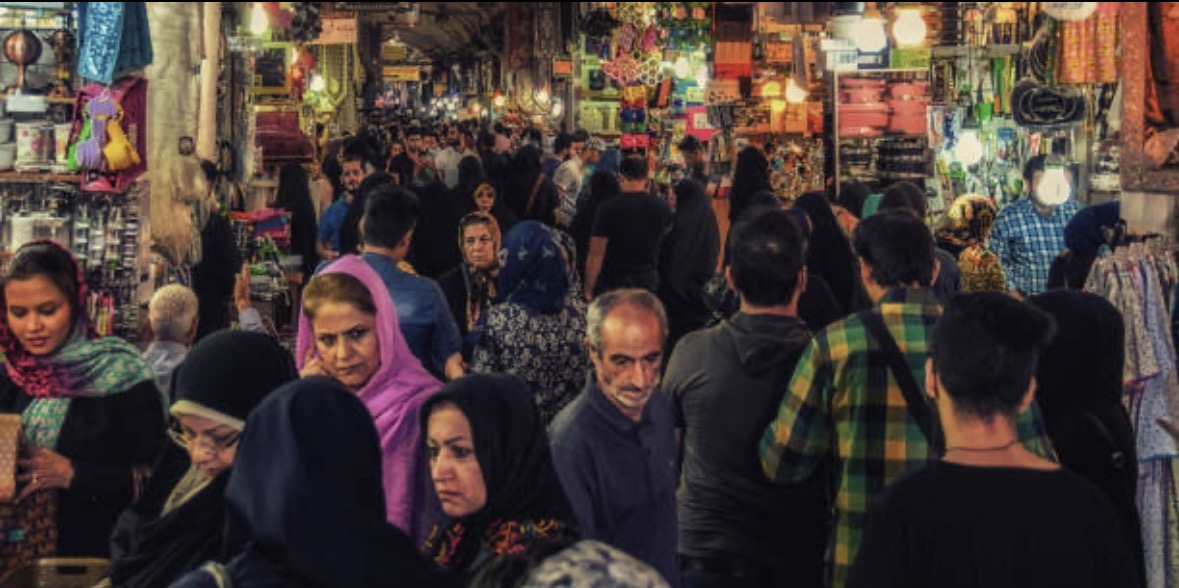
A large part of Iran’s population today is deeply frustrated and desperately wants a normal state and a growing economy.
Iran's population today is very different from that of the 1980s. Most Iranians are young and have no memory of the revolution.
Even apart from regime change, any political reform in Iran is difficult because Iran’s politics is riddled with factions, from hard-liners to reformers, as well as different ethnic groups.
Author’s note: Credit is due to Vali R. Nasr, from whose book “Iran’s Grand Strategy: A Political History” the above material is drawn.