Trump’s Social Media Posts: The Apocalyptic Style of U.S. Politics
Richard Hofstadter once described U.S. politics as periodically seized by “the paranoid style.” Now look at Trump’s social‑media activities.
May 19, 2026
In 1964, the historian Richard Hofstadter described American politics as periodically seized by “the paranoid style” while seeing the world “in apocalyptic terms.” This would lead to “heated exaggeration, suspiciousness and conspiratorial fantasy” and replace ordinary democratic conflict.
Sixty years later, that style has found its clearest expression not in some fringe political movement, but in the late‑night social‑media activities of the sitting president of the United States.
A totally undisciplined U.S. President
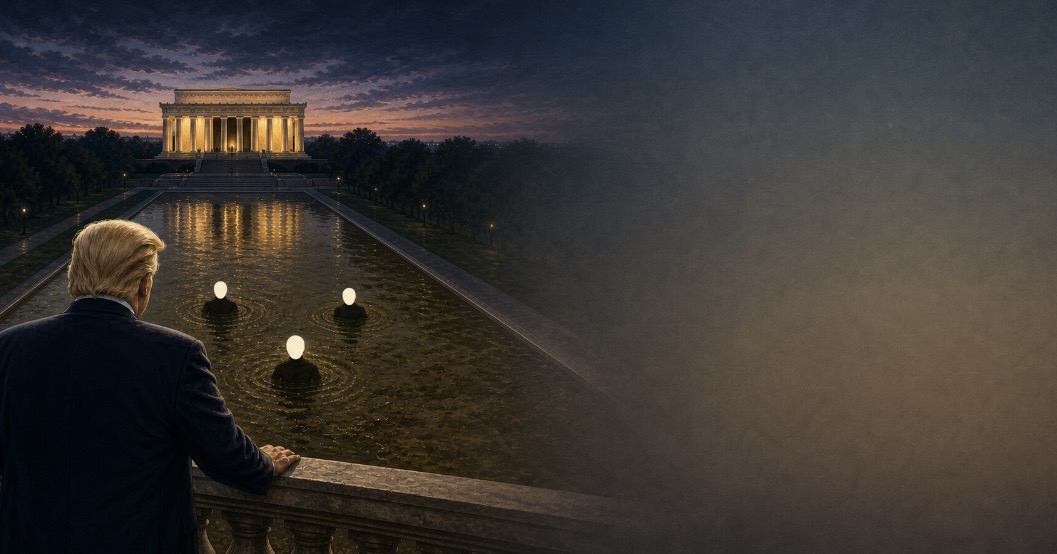
By way of a particularly telling example, Donald Trump recently shared an AI‑generated image on Truth Social showing Barack Obama, Joe Biden and Nancy Pelosi neck‑deep in brown sewage in the Lincoln Memorial Reflecting Pool, under the caption: “Dumacrats Love Sewage.”
The meme was posted as part of a broad spree of AI-generated images and rants. Between about 10 p.m. and 1 a.m. EST, it included posts or reposts of more than 50 items, along with a call to “arrest Obama the traitor” and degrading, humiliating or attacking hs opponents.
An analysis of six months of posts found hundreds of examples in which he promoted false claims of secret plots by the FBI, government officials or Democrats to destroy him or the country.
Trump also hits U.S. allies
Trump’s outbursts know no geographic limits. Trump regularly casts U.S. allies as parasitic, unserious, even traitorous.
He falsely describes them as unwilling to stand on “the front lines” and supposedly happy to let the United States of America bleed.
What in fact are complex and legitimate disputes over burden‑sharing and strategy among allies are recoded by Trump as acts of betrayal and cowardice.
Why did he do it?
Crude as it is, the obvious purpose of this presidential “information stream” is to trigger the emotions of one’s own true-believer base by vilifying domestic opponents as freeloaders, cowards and conspirators.
That is a complete break from what used to be known as the “decorum” to be maintained in American politics. Current presidents always shied away from criticizing their successors.
It is tempting to dismiss the incident as just another vulgar burst of Trumpism, a childish provocation that is best ignored.
Trump sees himself as the representative of absolute innocence, while charging any democratic opponent as a representative of absolute corruption and the “deep state.”
Trump interprets every investigation, every electoral setback, not as part of democratic life but as proof of the sinister reach of conspiratorial forces.
Hofstadter underestimated the problem
As apt and as vividly as Hofstadter’s imagery of the “paranoid style” appears in today’s context, he also underestimated the problem.
He assumed that this style would remain largely at the margins. At best it would on occasion seep into the political mainstream via movements like McCarthyism.
Alas, Donald Trump has chosen to make it the daily language of the American presidency itself.
No institutional control
In the past, American presidents’ statements were carefully vetted through layers of political, communications and legal staff.
But the internal filters that once softened or slowed presidential rhetoric via speechwriters, the national security staff and the in-house lawyers are bypassed. There is no independent moderation around him and no communications director who can edit his messages or restrict his access, never mind simply take the account away.
Trump circumvents any of those theoretically possible traditional mechanisms by posting directly from his phone via a social media platform that he effectively controls.
That effectively means that the U.S. executive branch’s management mechanisms are sacrificed to the impulsive whims of a de facto absolute ruler.
Surreal President, real world consequences
What Trump calls a meme-based joke can move markets can inflame international crises, send cues to autocratic allies internationally and trigger his true-believer fringe alike.
Theoretically, the U.S. Congress can hold hearings or, in extremis, impeach. The 25th Amendment even allows for removal if a U.S. President is truly incapacitated.
In practice, none of these tools are designed to deal with the problem of a U.S. commander‑in‑chief who spends the early hours of the morning sending out paranoid fantasies and messages calling for the elimination of an entire civilization.
Strange asymmetry
A private U.S. citizen who posts AI images of political opponents in sewage at 1 a.m. might face platform sanctions or a conversation with his or her employer’s HR team.
The case of a U.S. president who does this on his own platform is a far more significant case, Trump’s outbursts and scandalous repostings become part at least of U.S. quasi-official political communications.
Anybody who has a sense of the extensive personnel resources that are devoted to supporting the President of the United States essentially cannot believe any part of this development.
Conclusion
As it stands, there are almost no mechanisms to restrain this style of communication once a president decides to adopt it.
Trump’s digital persona not only personifies the steady drip of paranoia. With the sheer force of his personality, he has normalized this behavior that gravely undermines the standing and reputation of the United States in the world.
The United States is a nation that used to thrive on its soft power – its ability to attract other societies to its way of life by means of voluntary cultural identification with U.S. brands and values.
As Trump erodes trust, he lowers expectations and incessantly transforms the idea of democratic politics into a cesspool of permanent betrayal.
Finally, in an ironic twist of history, Trump’s social media communications resemble the bizarre messages traditionally sent out by Iran’s mullahs and IRGC propagandists.
Takeaways
In 1964, the historian Richard Hofstadter described American politics as periodically seized by “the paranoid style” while seeing the world “in apocalyptic terms.”
Sixty years later, that "paranoid" style has found its clearest expression in the late‑night social‑media activities of the sitting president of the United States.
Trump’s social media outbursts know no domestic bounds nor any geographic limits. Trump regularly casts U.S. allies as parasitic, unserious, even traitorous.
In the past, American presidents’ statements were carefully vetted through layers and layers of political, communications and legal staff.
Trump circumvents any traditional review mechanisms by posting directly from his phone via a social media platform that he effectively controls.
A private U.S. citizen who posts AI images of political opponents in sewage at 1 a.m. might face platform sanctions or a conversation with his or her employer’s HR team.
The case of a U.S. president who does this on his own platform is a far more significant case, Trump’s outbursts and scandalous repostings become part at least of U.S. quasi-official political communications.