
Turkey and NATO: Inverting the Original Relationship
What Turkey wanted from NATO has changed — and so has what NATO is and represents. The 36th NATO Summit underscores both developments.
July 6, 2026

Note to journalists: You may quote from this text, provided you mention the name of the author and reference it as a new Strategic Assessment Memo (SAM) published by the Global Ideas Center in Berlin on The Globalist.

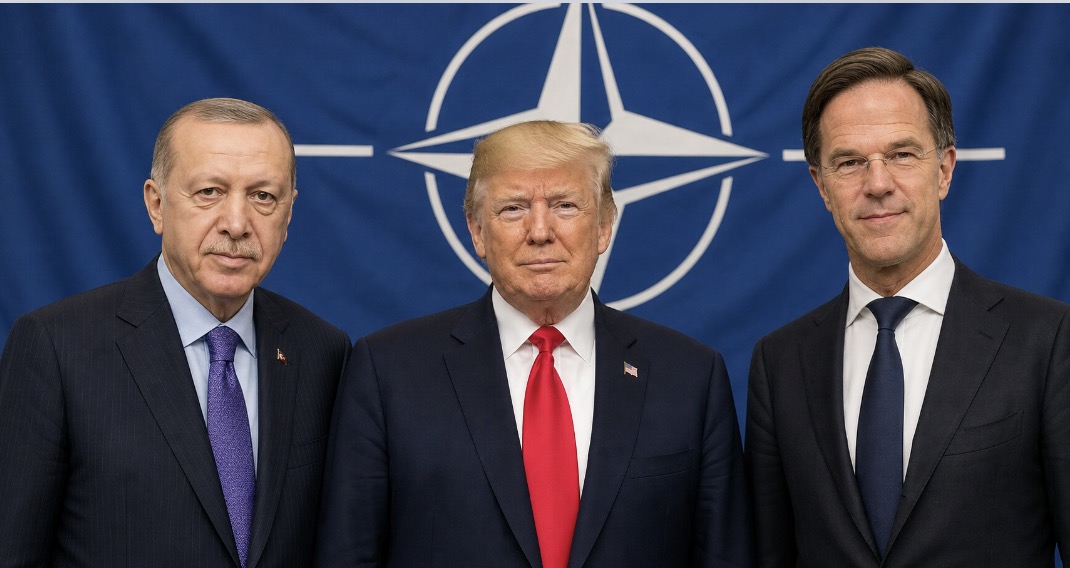
NATO’s 36th Summit, held in Ankara this week, is an important meeting. For starters, Donald Trump, the U.S. President, has threatened to quit NATO numerous times, just as he has threatened to quit, or indeed quit, almost every alliance and treaty the United States is party to.
Erdogan as NATO’s linchpin
Trump has also let it be known that he will only turn up because his good friend and Turkey’s President Erdogan is hosting.
A couple of years ago, it was Erdogan who caused trouble by refusing to accept Sweden as a new NATO member for a prolonged period. Now, he has become the glue, the linchpin that holds the alliance attached to Trump.
Turkey’s NATO journey
The conventional account of Turkey’s NATO accession in February 1952 is typically presented as a security story. It posits that the Soviet Union had made territorial demands on Turkey in 1945, then the Truman Doctrine followed in 1947, while membership in the North Atlantic alliance provided the formal guarantee that U.S. power would stand behind Turkish borders.
This account is not wrong, but it is incomplete.
Prior to being admitted in 1952, Turkey had been refused NATO membership twice (rejected first in 1948, then again in September 1950). This underscored that the security imperative alone was not sufficient to overcome Western resistance.
What broke the deadlock was Turkey’s deployment of 4,500 troops to Korea in July 1950. It was the first Turkish military operation beyond the borders of the republic in its history.
Tit for tat
This inaugural transaction established a template that would persist for decades: Turkey offering military service and strategic real estate in exchange for security guarantees and political standing.
From NATO’s perspective, what Turkey provided was considerable. It held the Bosphorus and Dardanelles straits, which denied the Soviets naval passage to the Mediterranean.
It also hosted the Incirlik air base, which has housed U.S. nuclear weapons since the 1960s. Significantly, Turkey also fielded the second-largest standing army in the alliance. And it anchored NATO’s southeastern flank, the most geographically exposed arc of the Cold War perimeter.
The world order and Turkish identity
For its part, by gaining full membership, Turkey was claiming its place in what the Cold War framework called the “Free World.” It joined not with associate status, not as a Mediterranean annex, but in an equal membership alongside France, Britain and the United States.
This civilizational aspiration had a corollary that is equally revealing. Turkey insisted throughout the accession negotiations that it be categorized as European rather than Middle Eastern.
For example, when Britain proposed a Middle East Command that would have Turkey serving under a British general alongside its Arab neighbors, Turkish diplomats, press and politicians across the political spectrum reacted with fury.
The Soviet threat as glue
When the Cold War ended and the Soviet threat dissolved, neither Turkey nor NATO was prepared for what their relationship required without it.
Meanwhile, the post-Cold War security ruptures followed a consistent logic. The first Gulf War left Turkey with billions in promised U.S. compensation that never materialized, as well as with a devastated trade position in the lower Middle East.
The accumulated resentment erupted in 2003 when the Turkish Grand National Assembly refused to authorize U.S. troop deployments through Turkish territory for the invasion of Iraq. That vote shocked Washington and permanently altered the bilateral relationship.
On opposite ends
Then came the Kurdish issue in Syria, which placed Turkey and its NATO allies on opposite sides of the most consequential battlefield of the 2010s.
Turkey’s insistence that the Kurdish militia (which the United States armed and trained to fight ISIS) was indistinguishable from the PKK created a dispute that no amount of diplomatic management could resolve.
Playing into Russia’s hands
Turkey’s 2017 purchase of the S-400 Russian air-defense system made the interoperability of its military infrastructure with NATO’s own systems problematic.
It also didn’t help that Turkey was calling for a stronger NATO presence in the Black Sea while at the same time seeking to reduce its dependence on the alliance. This divergence has served Russian strategic interests regardless of Turkish intent.
Muddled future
Today, the security relationship between Turkey and NATO is truly muddled. The original Cold War logic, with Turkey as flank and NATO as guarantor, is overlaid by post-Cold War divergence, the Iraq rupture, the Kurdish impasse and the S-400 episode.
What holds NATO and Turkey together now is mutual indispensability. NATO cannot easily replicate Turkey’s geographic and military contributions, while Turkey cannot easily replicate Article V.
The relationship between Turkey and NATO is simultaneously defined by structural dependency and functional estrangement.
Conclusion
The Ankara NATO summit of July 2026 represents a particular crystallization of this tension.
The summit is said to be an opportunity to deepen NATO’s engagement with its “southern neighborhood.” That is a framing that Turkey has actively cultivated and that positions Ankara as the indispensable mediator between the alliance and the Arab and North African states to its south.
In that sense, aside from hosting the NATO summit, Turkey is attempting to redefine what NATO’s southern agenda means, in ways that serve Turkish regional influence more than collective Atlantic security.
Takeaways
In 2024, Erdogan caused trouble by refusing to accept Sweden as a new NATO member for a prolonged period. Now, he has become the glue, the linchpin that holds the alliance attached to Trump.
What holds NATO and Turkey together now is mutual indispensability. NATO cannot easily replicate Turkey’s geographic and military contributions, while Turkey cannot easily replicate Article V.
The relationship between Turkey and NATO is simultaneously defined by structural dependency and functional estrangement.
Turkey is attempting to redefine what NATO’s southern agenda means, in ways that serve Turkish regional influence more than collective Atlantic security.
For Turkey, NATO membership represented a civilizational aspiration. Throughout the accession negotiations, Turkey insisted that it be categorized as European rather than Middle Eastern.
By gaining full NATO membership, Turkey was able to claim its place in what the Cold War framework called the “Free World.”
Turkey was eager to join NATO not with associate status, not as a Mediterranean annex, but in an equal membership alongside France, Britain and the United States.
Note to journalists: You may quote from this text, provided you mention the name of the author and reference it as a new Strategic Assessment Memo (SAM) published by the Global Ideas Center in Berlin on The Globalist.