Why China Cannot Escape the U.S. Dollar Trap
Grand announcements made around BRICS+ meetings routinely deflate into technocratic initiatives to “encourage the use of local currencies.”
July 13, 2026

Note to journalists: You may quote from this text, provided you mention the name of the author and reference it as a new Strategic Intervention Paper (SIP) published by the Global Ideas Center in Berlin on The Globalist.

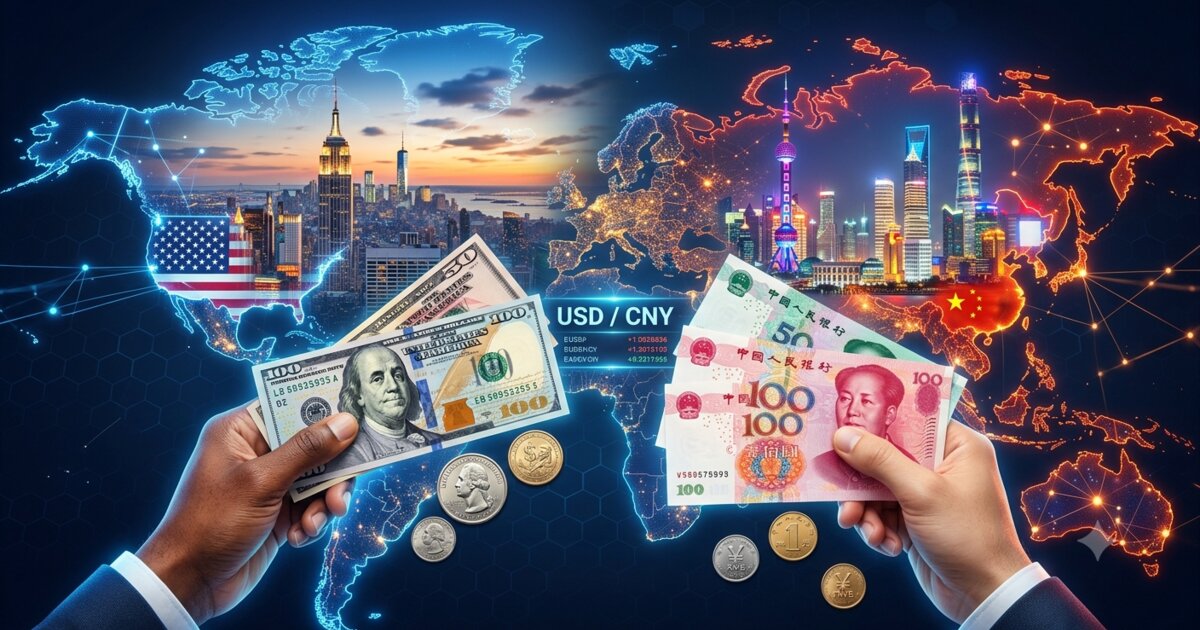
Despite the very real structural weaknesses in the U.S. economy, no BRICS+ country – not even China – and not the group as a whole comes close to matching the role of the U.S. dollar in the world economy.
The great contradiction
Chinese officials like to talk about “de dollarization,” but in practice their country remains structurally dependent on the very U.S. led financial order it denounces.
That is the core contradiction in China’s public diplomacy that any honest assessment of its future financial and great power prospects must confront.
Beijing presents itself as the vanguard of a post Western monetary order. That is why it promotes the renminbi as a currency to settle international trade, pilots a digital currency and backs initiatives within the BRICS+ grouping to reduce reliance on the U.S. dollar.
And yet, despite all these moves, China’s growth model is tightly bound to the existing structures of the global currency system.
For starters, China’s export-driven economy has been built on access to dollar markets, dollar denominated demand and a global payments and settlement infrastructure that is still overwhelmingly U.S.-centric.
You’ve got to earn it…
For China, a sudden or radical break from the U.S. dollar would not be an act of liberation. It would be an act of self-harm.
That dependence is not just about trade volumes or foreign exchange reserves. It is about the role the dollar plays as the backbone of global finance. Reserve currency status is not awarded for national ambition or geopolitical swagger.
It rests on a demanding bundle of conditions. These include full currency convertibility, deep and liquid financial markets, credible legal protections for investors, as well as payment systems that are trusted well beyond one’s own alliance network.
The United States still offers all of this, albeit imperfectly. China offers almost none of it at the necessary scale.
Link between capital controls and China’s communist control
The renminbi is tightly managed and only partially convertible. Capital controls remain central to how the Chinese Communist Party maintains control over the domestic economy, cushions shocks and sustains politically important sectors that generate overcapacity.
Simply put, a genuinely global reserve currency cannot be locked inside such a cage. Countries that invoice in that currency, hold it as a reserve or invest in assets denominated in it must be free to move in and out without asking permission from the issuing state.
Beijing does not trust the world — or its own citizens — enough to allow that.
Market depth as a constraint
Financial market depth is an even more brutal constraint. The dollar’s global primacy is underwritten by the size, sophistication and liquidity of U.S. capital markets.
Foreign central banks, sovereign wealth funds, and private investors can park hundreds of billions of dollars in U.S. Treasury securities and a broad universe of dollar assets with reasonable confidence that they can exit when they wish.
Absence of true global openness as an eternal obstacle?
For currency rivals of the U.S. dollar, the real challenge is not whether some oil cargoes are priced in another unit, but whether the rest of the world can accumulate and liquidate large positions in your currency without fear of political or financial entrapment.
China’s bond markets, legal system and regulatory regime do not yet offer that reassurance — and under current political conditions they almost certainly won’t.
China’s de-dollarization hopes: Rhetoric vs. reality
This is where Chinese rhetoric about leading a “de dollarized” world collides with the logic of China’s own political economy.
To make the renminbi a true rival to the U.S. dollar, Beijing would have to accept a loss of control, including by opening its capital account and tolerating more volatile exchange rates.
It would also have to submit its financial institutions to the scrutiny of global investors and build a track record of respecting property rights even when doing so is politically inconvenient.
That would mean curbing the CCP’s ability to direct credit to favored sectors, to lean on banks for policy purposes and to deploy financial repression as a quiet tax on its own citizens.
In other words, serious monetary internationalization would undermine the very tools the CCP depends on at home to secure its dominance.
Enduring ambivalence
The result of all this is that China will have to live with what is best described as an enduring ambivalence.
On the one hand, it wants the status benefits and strategic leverage that come with issuing a major international currency. On the other hand, it does not want to pay the price in terms of institutional openness, rule of law constraints and market discipline.
That is why grand announcements around BRICS+ meetings routinely deflate into technocratic initiatives to “encourage the use of local currencies” in trade or in calls to design parallel payment channels that only nibble at the edges of U.S. dollar dominance, without presenting a genuine alternative.
The most that Beijing and its partners can currently hope for is to reduce their own vulnerability at the margins — not to re-found the international monetary system.
Case in point: The energy trade
This tension is particularly visible in the international energy trade. Much commentary has been devoted to the idea that China could persuade major oil exporters to accept payment in renminbi, thereby eroding the so called “petrodollar” system.
But for countries like Saudi Arabia, holding significant renminbi balances makes sense only if those balances can be invested flexibly and safely.
If an investor’s choice is between U.S. Treasuries, backed by decades of liquidity and legal precedent, and Chinese assets inside a system where capital can be frozen by administrative fiat, the decision is straightforward. So long as this is true, any symbolic move toward RMB pricing will remain just symbolic.
The U.S. faces problems too
None of this is to deny that the dollar’s position carries risks and presents its own contradictions. The United States has repeatedly abused its financial power through extraterritorial sanctions and weaponized access to the dollar system.
Over the long run, that behavior does encourage others to seek workarounds. In addition, the U.S.’s fiscal trajectory and pronounced political dysfunction do not inspire investor confidence either.
But the uncomfortable reality for Beijing is that the fragilities of the U.S. system do not automatically translate into strength for its own. While dollar fatigue is real, dollar displacement is not.
The U.S. as a benevolent global force
There is also a historical dimension that China has not replicated. The post-war U.S. dollar order was not sustained only by U.S. coercion and institutional design. It was also sustained because the United States used its dominant position to distribute material benefits to other world regions.
Just consider the impact of measures such as setting up reconstruction funding through the Marshall Plan, access to its vast domestic market, as well as a willingness —self interested, no doubt — to underpin open trade and capital flows that generated growth elsewhere.
The rest of the world tolerated and even welcomed U.S.’s “exorbitant privilege” because the net gains from participating in that system outweighed the costs.
China as an extractive global force
China, by contrast, has so far treated the global economy primarily as a field to be dominated and extracted from for national gain — not as a community to be stabilized.
Its state capitalist model, export mercantilism and its selective enforcement of rules, while undoubtedly very successful in terms of boosting China’s national economic fortunes, have generated suspicion around the globe rather than benign dependence.
The big lesson China still needs to learn
What Chinese leaders need to get their head around — if they can — is the simple insight that sharing prosperity on terms others regard as fair is a precondition for persuading third countries to re-anchor their financial and monetary systems around your currency.
Until Beijing shows a credible willingness to open up to provide such “public goods,” talk of a renminbi centric order will remain just that, talk at conferences and in communiqués.
Conclusion: Critic of the currency system by day, captive by night
The paradox at the heart of China’s global currency strategy is thus simple. To free itself from the constraints of the dollar system, it would need to build a more open, predictable and law bound financial architecture than the one the United States currently offers.
That task may have been made easier by the fact that the United States now lives in the Age of Trump, i.e., under a President who is determined to hollow out many of the solid rule-of-law and orderly regulation features that underpinned the rule of the U.S. dollar.
But even though the U.S. has now created more of an opening for China’s global reserve currency ambitions, the CCP is not prepared to accept that trade off.
As long as that remains true, China will continue to rail very publicly against the U.S. dollar while relying on it.
Takeaways
Chinese officials like to talk about “de dollarization,” but in practice their country remains structurally dependent on U.S.-led financial order.
China’s export-driven economy has been built on access to dollar markets, dollar denominated demand and a global payments and settlement infrastructure that is U.S.-centric.
For China, a sudden or radical break from the U.S. dollar would not be an act of liberation. It would be an act of self-harm.
Reserve currency status is not awarded for national ambition or geopolitical swagger.
Capital controls remain central to how the Chinese Communist Party maintains control over the domestic economy.
A genuinely global reserve currency cannot be locked inside a cage. Beijing does not trust the world — or its own citizens — enough to allow that.
For currency rivals of the U.S. dollar, the real challenge is whether the rest of the world can accumulate and liquidate large positions in that currency without fear of political or financial entrapment.
To make the renminbi a true rival to the U.S. dollar, Beijing would have to accept a loss of control, including by opening its capital account and tolerating more volatile exchange rates.
The most that Beijing and its partners can currently hope for is to reduce their own vulnerability at the margins — not to re-found the international monetary system.
The post-war U.S. dollar order was sustained because the United States used its dominant position to distribute material benefits to other world regions.
China has so far treated the global economy primarily as a field to be dominated and extracted from for national gain — not as a community to be stabilized.
Note to journalists: You may quote from this text, provided you mention the name of the author and reference it as a new Strategic Intervention Paper (SIP) published by the Global Ideas Center in Berlin on The Globalist.