The New Era of Bilateral Transactionalism
The world is discarding multilateralism, even though it is the only tonic for the destructive results of nationalism as practiced by Xi, Putin and Trump.
August 29, 2026

Bilateral transactionalism is replacing multilateral cooperation as the dominant model of international relations. China’s Xi Jinping, Russia’s Vladimir Putin and the United States’ Donald Trump are driving this change, and it is picking up speed.
China will be the big winner. Correction: it already is. Beijing has been swift to exploit what former U.S. AID Administrator Samantha Power called America’s “soft power suicide,” when Congress stood aside and allowed the Trump administration to shutter U.S. AID and withdraw from scores of international institutions.
Meanwhile, the world’s smaller states stand to lose the most if this fundamental change in international relations goes unchallenged.
Globalism undermined
The multilateral arrangements Xi, Putin and Trump wish to cast aside have proven their worth as tools for addressing global challenges.
They are far from perfect. But without them, states have no capacity to prevent nuclear proliferation, counter climate change, regulate artificial intelligence or combat corruption.
And indeed, bilateral transactions involving powerful nations offer major opportunities for bribes and kickbacks.
Even as global challenges are becoming more urgent, summits of the Group of 7 and the Group of 20 have come to be treated as mere photo opportunities. They no longer serve to set important understandings on global strategy.
Major risks
The zeal with which China, Russia and the United States are embracing bilateral approaches threatens to leave small states’ security subject to the whims of three leaders.
Those leaders have abandoned the belief that smaller nations should influence the global agenda.
Sitting alone at a table across from a much more powerful partner indeed hobbles any state’s ability to achieve its aims. Preserving the infrastructure of multilateralism is thus a core interest for small states and medium powers.
The EU: Coulda, woulda, shoulda
The European Union has its shortcomings, but it is a strong example of multilateralism at work.
While the EU at the moment lacks the political will and leadership needed to counter bilateral transactionalism, it can still sound the alarm among its national publics and demand the restoration of multilateral institutions on behalf of its member states.
Diminishing the multilaterals
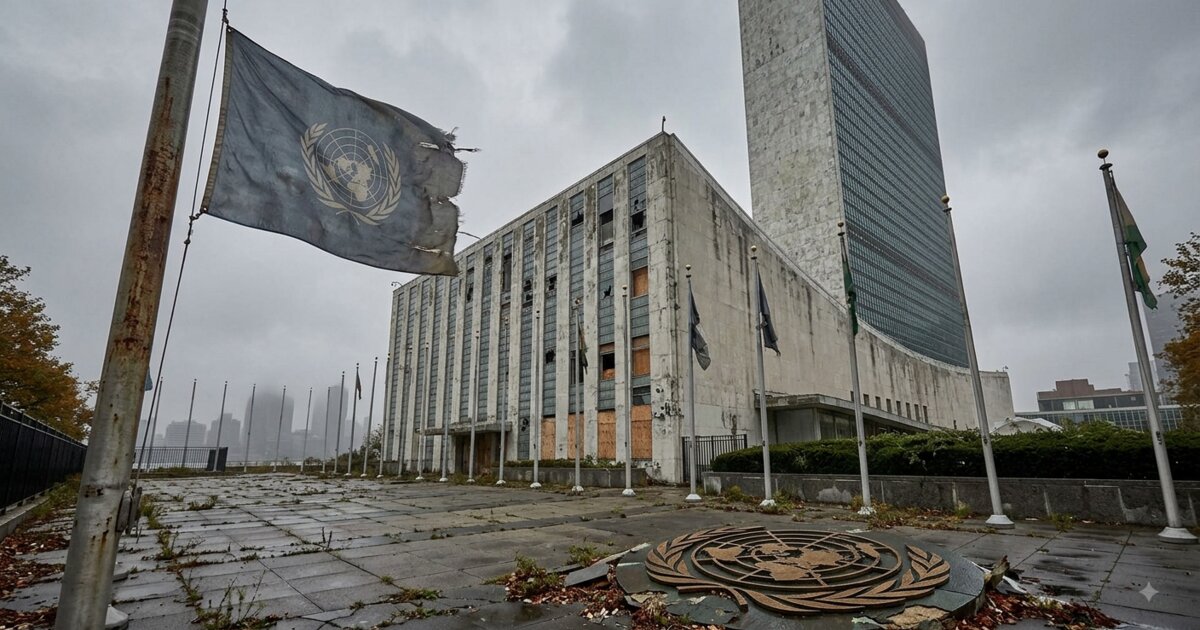
As the speed of bilateral transactionalism accelerates, the United Nations is a prime casualty. Its influence and its finances have rarely been in such dire straits.
The case of Sudan illustrates the results. Russia, Turkey, Egypt and the United Arab Emirates each deal with their preferred client among the rival forces fighting in Sudan — arms are shipped into the country and gold is shipped out. The United Nations appears powerless to find ways to end what may be the worst conflict of our time.
The devolution of NATO
NATO is another multilateral institution shackled by uncertainty. No one can say for sure that the United States would intervene to help a fellow NATO member under Article Five.
NATO Secretary General Mark Rutte traveled to Washington ahead of the most recent NATO Summit to plead with Donald Trump just to attend the gathering in Turkey. Trump eventually said he would, noting that he is fond of Turkish President Recep Tayyip Erdogan.
“Withdrawalism” as U.S. strategy? Look at the WHO
After the United States withdrew from the World Health Organization, the WHO was forced to slash its budget and workforce. Its ability to coordinate a response when the next global pandemic arrives is not certain.
Meanwhile, China’s role within the WHO has grown. China often gains influence and relative power thanks to Trump’s decisions, such as his moves to dismantle the United States’ world-leading science apparatus.
Playing into China’s hands: Look at the WTO
The World Trade Organization was already weakened by China’s multiple violations of its rules. Trump’s unilateral tariff policies have left it in shambles.
Trump uses continual threats of major tariffs to extort concessions from U.S. trading partners — the very nations he supposedly wanted to be “tough” on China.
This grave strategic error boosts China’s ambition to use its Belt and Road projects to deepen diplomatic relations with scores of countries.
Beijing is aggressively and successfully taking advantage of Washington’s erratic approaches to trade and foreign policy, which have sowed distrust across the world.
The World Bank: An asset in Trump’s plans to rebuild the Middle East?
So far at least, the World Bank has escaped largely unscathed. The U.S. president evidently recognizes that its resources will likely be needed to finance reconstruction in Gaza, Lebanon or Iran.
Nevertheless, Trump dislikes any talk of helping the world’s poor. The World Bank has obliged, changing its rhetorical emphasis from alleviating poverty to boosting employment.
With Trump declaring against all evidence that climate change is a hoax, the World Bank announced it is no longer maintaining its goal of allocating 45 percent of new investments to climate change–related projects. It has not announced a new benchmark.
The “Just blame China” syndrome: The ignorance of Trump and his allies
Trump’s “America Firsters” have long peddled a facile false narrative about the World Trade Organization. According to the Trumpist line, China joined the WTO, corrupted its rules and boosted its global trade at the expense of all others.
That account completely ignores how closely Chinese success was linked to American prosperity. I recall being in Beijing as far back as 1983, when American businessmen patiently waited for opportunities to meet with Chinese government officials and open the doors to commerce.
Badly outdated views
The dull Trumpian narrative also ignores the enormous benefits globalization yielded for the United States. It played a vital role in transitioning the U.S. economy from manufacturing to the service industries. Not least given the inexorable trend of increased automation in factories, that was a wise move.
Trump and his ideological followers are stuck in the 1950s, when manufacturing was still king in the United States. They yearn for a return to that time when Americans punched their work cards at factories across the nation. That time will not return.
In 1955, almost one-third of the U.S. workforce was in manufacturing. Today, about 8 percent is. Trump fails to understand that the world has changed.
He wants to turn back the clock. And that is where his emphasis on bilateral transactionalism comes in.
He attempts to isolate and bully the Japanese, South Koreans and Saudis to invest staggering amounts in the U.S. manufacturing sector. To see him off, they make promises they know they will not keep.
Multilateralism can be improved
Multilateral institutions obviously have proven to have many shortcomings over the past decades.
Yet the response must be intensified cooperation, not its opposite. For proof, Europeans need only look across the English Channel. Brexit is an expression of anti-multilateralist thinking, and it has been a disaster for the British.
The lesson for almost all nations is that they need to resist the forces of nationalism, and, in the case of the larger powers, the temptation of unilateralism.
The path ahead
The globalist perspective on why multilateralism is needed starts from a simple fact: The defining risks of the 21st century are structurally global.
Climate change, pandemics, cyber‑insecurity, financial contagion, supply‑chain fragility and irregular migration flows do not respect borders or electoral outcomes.
No government can unilaterally stabilize the climate, contain pathogens, secure digital infrastructure or insulate its economy from systemic shocks.
What’s next?
What the world most needs are multilateral agreements that can constrain the ambitions of the few.
Today, those constraints do not exist, and the results are evident.
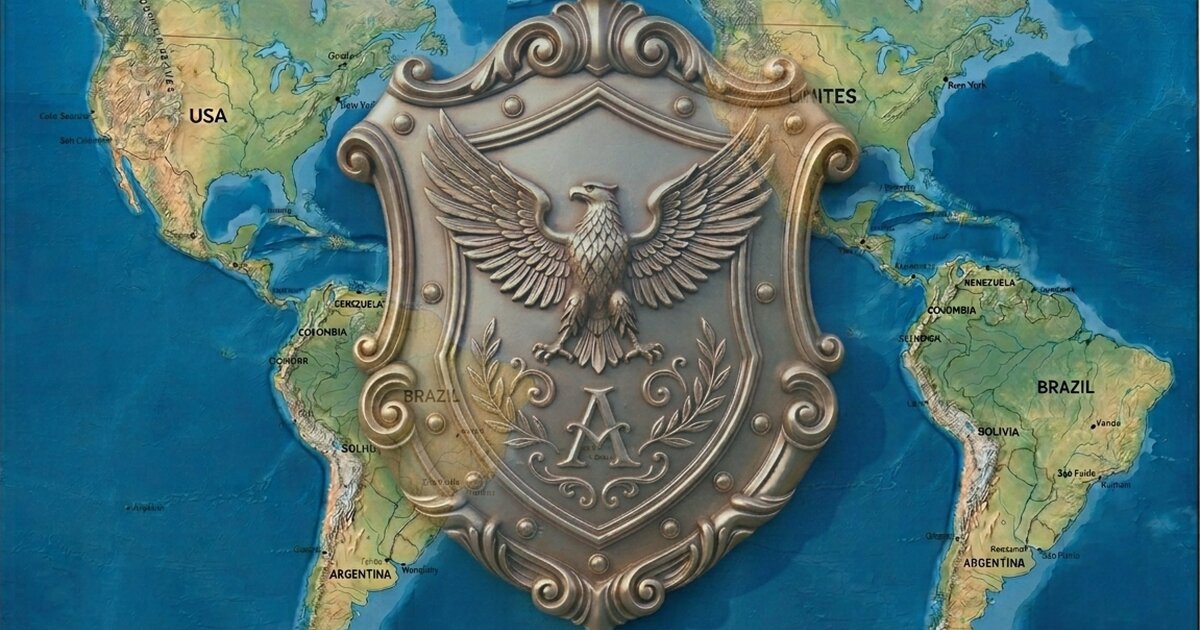
The United States once again claims dominion over Latin America.
Russia, at the cost of partial self-mutilation, blindly strives to restore a past empire.
Xi Jinping may move to increase similar claims in East Asia, sharpening China’s threat to take Taiwan by force if necessary.
Acts of imperial vanity may satisfy a psychological need for dominance, but they do little to expand domestic prosperity and well-being, which ought to be the central goal of any constructive government. The fumes of nationalism do not fill stomachs, build roads or stabilize economies.
Strengthening multilateralism
The need for strong multilateralism has rarely been greater. It is the only tonic that may reverse the destructive results of state nationalism as promoted by Trump, Xi and Putin.
The real choice facing nations around the world, therefore, is not between “globalism” and “sovereignty,” but between managed interdependence and unmanaged vulnerability.
To understand how critical multilateralism is in this historical moment, consider the rise of artificial intelligence.
Planetary safety and AI
The planet’s safety demands multilateral management of this life-altering technology. Without broader international cooperation, U.S.-China competition over AI and competitive introduction of AI-enhanced tools could quickly turn destructive.
AI is changing the way we live, the economies that support us, the financial systems that are essential to prosperity, as well as military technologies. Regulations backed by powerful enforcement systems are imperative.
One logical approach would be to establish a new multilateral agency, structured much like the International Atomic Energy Agency, that operates under strict guidelines and is supported by 181 signatory countries.
It would oversee a staff of highly qualified inspectors who could ensure strict safety standards are enforced across the globe.
Common sense says this is what AI needs. But Trump and Xi will use their transactionalist approach to undercut any effort to limit U.S. and Chinese employment of artificial intelligence.
Takeaways
The zeal with which China, Russia and the United States are embracing bilateral approaches threatens to leave small states’ security subject to the whims of three leaders: China's Xi Jinping, Russia's Vladimir Putin and the United States' Donald Trump.
China often gains influence and relative power thanks to Trump’s decisions, such as his moves to dismantle the United States’ world-leading science apparatus.
Preserving the infrastructure of multilateralism is a core interest for small states and medium powers. It is the only tonic that may reverse the destructive results of state nationalism as promoted by Trump, Xi and Putin.
The globalist perspective on why multilateralism is needed starts from a simple fact: The defining risks of the 21st century are structurally global.
Climate change, pandemics, cyber‑insecurity, financial contagion, supply‑chain fragility and irregular migration flows do not respect borders or electoral outcomes.
No government can unilaterally stabilize the climate, contain pathogens, secure digital infrastructure or insulate its economy from systemic shocks.