
A World of Orange
The orange’s remarkable journey from green Himalayan wild fruit to global staple. And why it may be going green again.
July 26, 2026

Just like carrots, oranges as we known them weren’t orange until they became domesticated.
Growing in the wild in the foothills of the Himalayas from Southern China across Northeast India to Burma, oranges were green. (Travelling there the year before the first major Rohinga massacre, I was advised to call the country ‘Burma’ to demonstrate my opposition to the military regime.)
Chlorophyll acts as a sunscreen against the intense heat of the climates wild oranges grew in.
The Chinese were the first to cultivate them, around 314 BC, before they spread around the world along trade routes. Once they were planted in cooler climates, the cold broke down the chlorophyll and turned the skin orange.
A word that traveled the world
The word “orange” comes from the Sanskrit nāraṅga, meaning “orange tree”. When the fruit reached Persia, the word became nārang then nāranj across the Arab world. By the 14th century it had evolved, via Old French, into orange. Not until 1512 was it formally recorded in English as a color.
Until quite late in its travels the orange had been a predominantly bitter fruit, used in medicine as much as in cooking.
From bitter medicine to status symbol
But in 1471 came the first mention of the fruit as sweet, recorded in Savona, Italy. On his second voyage to the New World in 1493, Christopher Columbus carried sweet orange seeds with him which quickly flourished in the warmth of Florida and Brazil.
By the 17th century, sweet oranges had become a status symbol among the wealthy of Europe, who constructed glassed-in ‘orangeries’ to grow the prestigious fruit year-round for showing off their wealth.
A global fruit
These days, Brazil, Mexico and China lead global production of more than 60 million a year. At one stage, Israel was famous for its Jaffa oranges.
Today, Florida produces significantly more oranges than Israel, 582,000 tons last year against Israel’s 138,000 tons. But Florida’s production has plummeted with an almost full-circle return to the fruit’s original color.
Yellow dragon disease, Huanglongbing, caused by a bacterium spread by a tiny sap-sucking insect called the Asian citrus psyllid, turns the fruit green. It has no known cure and eventually kills the trees it infects.
Welcome to the orange peel world
We use orange zest without even thinking in cakes and puddings.
But aside from strips of the peel slid into southern France beef stews, orange peel isn’t much added to main courses.
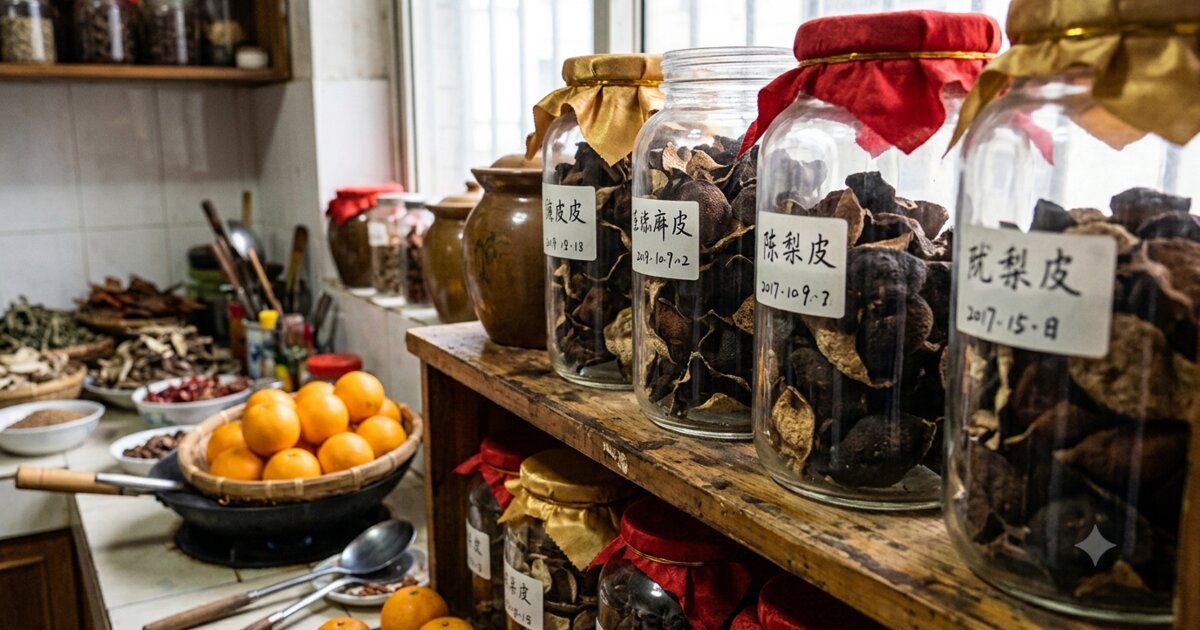
The Chinese, that other nation of refined culinary technique, make a point of drying orange and tangerine peel called chenpi, storing it in jars, and using it without thinking in so many dishes.
It goes into the Sichuan and Hunan favourite Stir-fried Crispy Beef, into Cantonese pork ribs marinated in tangerine peel, and white fish steamed with thin strips of chenpi, ginger, scallions then drizzled with hot oil and soy sauce.
Zero waste, maximum flavor
Which makes me think we should follow suit and start drying peel. We profess to be into zero-waste, after all.
Just consider that the average American eats 12.5 pounds of citrus each year. Moreover, in some large thick-skinned oranges, the peel accounts for almost 25 percent of its weight. That’s a substantial proportion to chuck in the bin.
If you decide that cooking with peel is a fine idea, then definitely buy organic fruit. Pesticides are not a good ingredient.
Beyond the kitchen
If you don’t fancy cooking with peel, you could turn it into an invigoratingly fresh-smelling cleaner. Just submerge it in white vinegar in a sealed jar for at least two weeks then strain and use full-strength or diluted.
Alternatively, cover scrubbed orange peel strips in sugar in a jar for 24-36 hours. Natural orange oils will seep into the sugar, giving you a syrup delicious in summer cocktails or to use in baking.
And one more fact from culinary cultural history: Oleo saccharum, as this is called, evolved during the 17th century as part of the fashion in high society for punch.
Takeaways
Oranges weren't orange until they were domesticated — in the wild, chlorophyll kept them green.
The word "orange" travelled from Sanskrit to Persian to Arabic to Old French before entering English in 1512 — as a color, not a fruit.
Yellow dragon disease is turning Florida's oranges green — a near full-circle return to the fruit's original color
The average American eats 12.5 pounds of citrus a year — and in some oranges, the peel accounts for 25 percent of its weight.