Can Europe Reassert Itself?
China and the United States increasingly act as imperial systems. Can Europe assert itself by shaping a better international monetary order?
December 3, 2025
A Strategic Assessment Memo (SAM) from the Global Ideas Center

You may quote from this text, provided you mention the name of the author and reference it as a new Strategic Assessment Memo (SAM) published by the Global Ideas Center in Berlin on The Globalist.
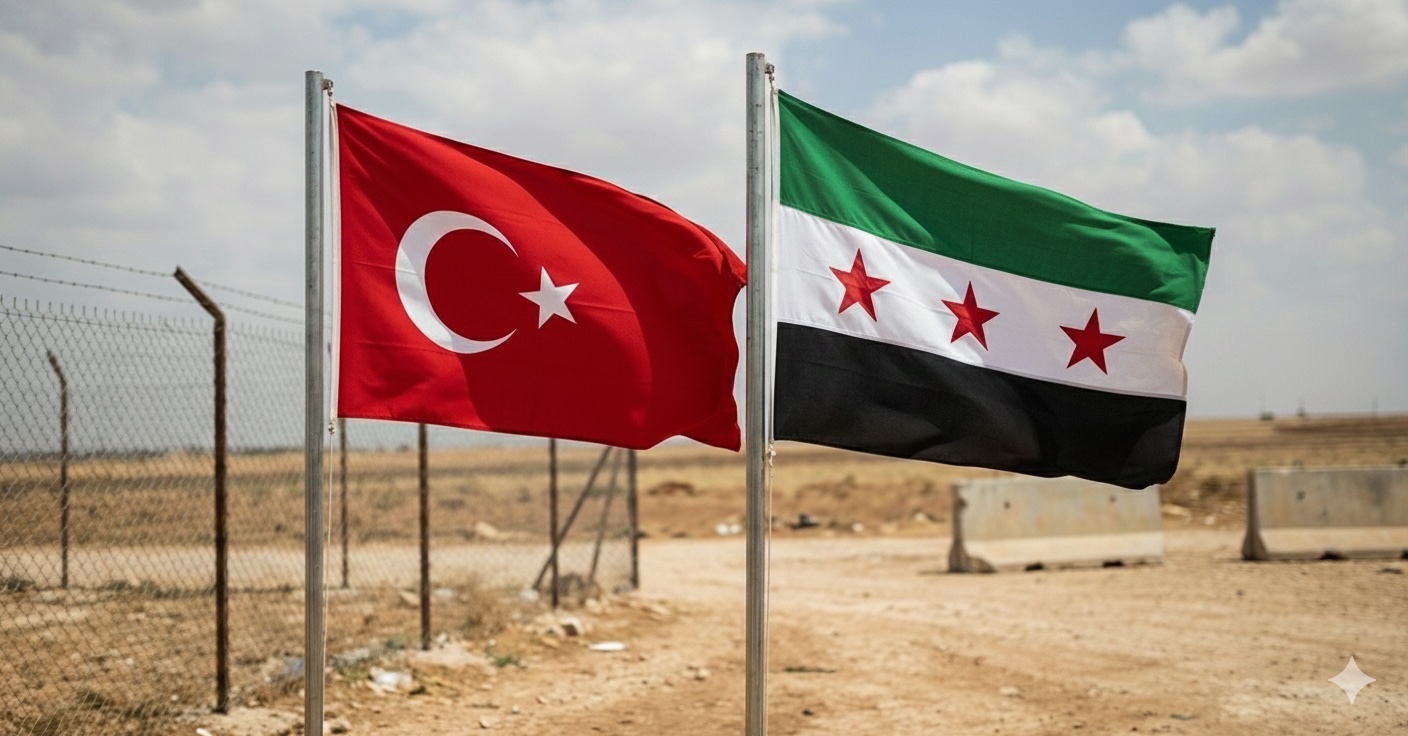
Europe seems hard pressed to maneuver between a rock and a hard place — read: the United States and China — and risks to be crushed by them.
At such a moment, it is instructive to remember the motivational force that drove European integration in its early stages.
How Europeanization brought liberation
The Europeanization achieved in the late 1950s and 1960s largely took the form of an obscure sounding economic policy tool, competition policy.
But as that policy succeeded in strengthening the backbone of European industry, it strengthened Europe’s economic dynamism. That, in turn, brought a significant dose of liberation from the shackles of geopolitics and of superpower competition.
Thereafter, for decades, the EU benefitted in its further development from the fundamental worldview that firmly guided the United States at the time — the commitment to well-ordered market rules.
Two illiberal powers
Now we see a world that is once again divided into blocs, although there is considerable uncertainty about what these are and who exactly belongs to them.
It increasingly appears that the combination of trade wars, incipient currency disorder, instability and political illiberalism have placed the United States in a position that is at odds with the core liberal features of the post-war order.
Meanwhile, China is using all sorts of tools to expand its soft power. This includes betting on creating dependencies through its lending in Asia, Africa and South America.
And it is using hard power via its control of global supplies of rare earths and minerals that are critical to the new digital age.
Imperial systems keen on subjugation?
Are China and the United States simply new imperial systems seeking to subjugate other countries in a new vassal order. That is, are they malicious and predatory superpowers?
It is easy to believe that, with the tariffs announced on “Liberation Day,” April 2, 2025, the United States is trying to blackmail other countries. After all, the officially stated goal is to extort more investment in the United States and more foreign purchases of U.S. debt to finance ongoing public deficits.
Giants with clay feet
If this were all there was to it in today’s world, there would be compelling reasons to believe that the situation would be untenable.
In reality, both giants also have profound weaknesses. They stand on feet of clay, as in the biblical dream of Nebuchadnezzar, where the giant has a mighty golden head and a silver chest — but no sturdy foundation.
China faces a massive demographic problem with a shrinking and aging population due to its long pursuit of the one-child policy. The United States, for its part, faces a fiscal time bomb. Donald Turmp’s “Big Beautiful Act” guarantees deficits of 6% of GDP for the foreseeable future, along with a booming U.S. economy.
And in case a financial crash is followed by a downturn, U.S. budget deficits would be even higher. Surprisingly, few have recognized how desperately the United States is trying to extort capital from abroad.
How Europe can play a key role on the emerging monetary order
While things look grim, there are alternatives. Europe can play a key role in building a new institutional framework for stability.
The postwar monetary order was built around the U.S. dollar. While commentators have been announcing the imminent end of this order since the 1960s, the dollar has become increasingly important as the center of the global financial system.
However, maintaining this position has become increasingly precarious.
One way for the U.S. government to make the dollar more attractive again is to create entirely new assets — in particular, promoting stablecoins, i.e., digital blockchain ledger currencies that are tied to existing fiat currencies and, in practice, pegged to the U.S. dollar.
The stablecoin is a dollar, but only in a sense, not a whole dollar. To ensure convertibility, stablecoin issuers must hold a substantial reserve of U.S. dollars. If they held 100% reserves, the new quasi-money would indeed be completely stable, but in reality they hold other assets.
Tether, for example, holds gold and Bitcoin. Both perform well when doubts about the dollar increase. the stablecoin issuer seems to be making a successful two-way bet: When the dollar is strong, the stablecoin is attractive and attracts new buyers. When the dollar weakens, the alternative assets in its portfolio gain value.
The dark side of the stablecoin universe
This argument overlooks some important features of the stablecoin universe. They are attractive because they offer uncontrolled and frictionless access to the U.S. dollar. When the United States imposes financial sanctions on North Korea, Iran, Russia and possibly China, these countries can continue to use the U.S. dollar.
Second, and more importantly, stablecoins pose a major risk to financial stability. Under the provisions of the Genius Act, it is illegal for stablecoin issuers to pay interest (although stablecoins already issued by the state of Wyoming do pay interest).
However, U.S. federal law does not prevent circumvention, whereby crypto exchanges or affiliated companies indirectly pay interest on behalf of a stablecoin issuer. The stablecoin issuer can therefore be a platform for building exposure to a variety of crypto businesses, many of which are very risky.
An opportunity for Europe
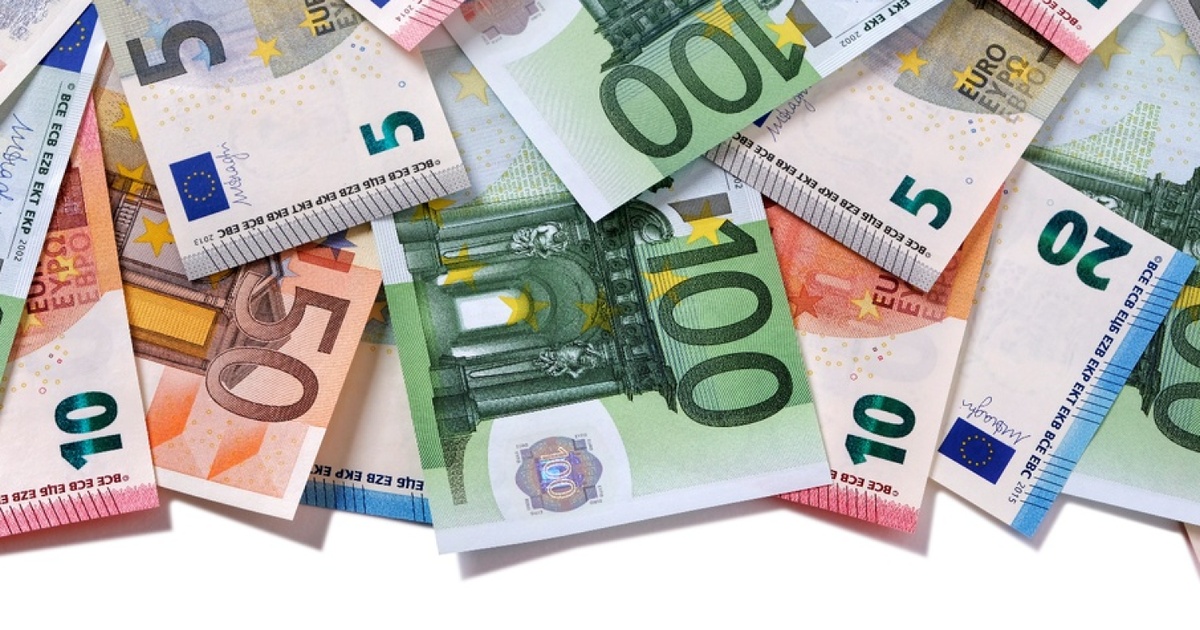
This presents Europe with an opportunity to develop an alternative that is truly stable and simply and transparently does what stablecoins were actually created for — making payments, including cross-border payments, easier and cheaper.
The way to achieve this is through the expansion of the digital euro and its wider availability. This would be a safer alternative to the uncertainties of the U.S. alternative: The provision of a genuine public good.
Well-organized and regulated stablecoins based on the euro or baskets of smaller currencies (Swiss franc, Australian and Canadian dollars, Scandinavian kroner, etc.) under supervision would also be conceivable.
Conclusion
Technical as it may seem, the shape of future international monetary order is one of the key building blocks. One can only hope that the EU will muster the energy and focus to play a key role on this issue.
Takeaways
Europe seems hard pressed to maneuver between a rock and a hard place — read: the U.S. and China — and risks to be crushed by them.
China and the U.S. stand on feet of clay. China faces a massive demographic problem, while the U.S. faces a fiscal time bomb.
Due to the combination of trade wars, currency disorder, instability and political illiberalism, Trump’s U.S. is at odds with the core liberal features of the post-war order.
One way for the U.S. government to make the dollar more attractive again is to create entirely new assets — in particular, promoting stablecoins.
Technical as it may seem, the shape of future international monetary order is one of the key building blocks of the future. One can only hope that the EU will muster the energy and focus to play a key role on this issue.
A Strategic Assessment Memo (SAM) from the Global Ideas Center
You may quote from this text, provided you mention the name of the author and reference it as a new Strategic Assessment Memo (SAM) published by the Global Ideas Center in Berlin on The Globalist.