Impunity: A Global Condition, Not a Regional Pathology
The crisis of politics is no longer confined to particular geographies or regime types.
March 2, 2026
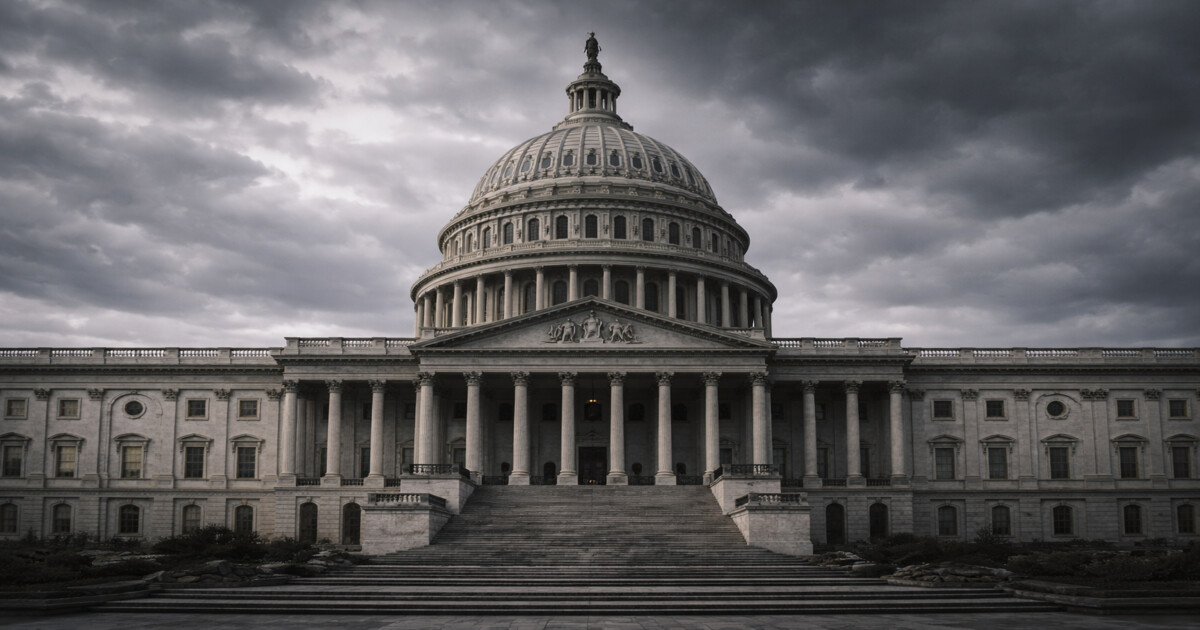

Over the past year, we have certainly all witnessed a wide range of events that, to a considerable extent, reflect regional pathologies.
Many of these events have revealed not only the limits but the exhaustion of international law as a meaningful constraint on state violence.
Don’t misinterpret what 2025 has clarified
Yet to frame all of this merely as series of regional pathologies would be to misinterpret what 2025 has clarified with unusual force: the crisis of politics is no longer confined to particular geographies or regime types.
And it certainly no longer appears to be limited to, or even mostly focused on the Middle East. On a worldwide basis, we are experiencing a more general predicament that cuts across regions once assumed to be insulated from such decay.
No region insulated from decay
Europe, for instance, increasingly resembles not a bulwark against authoritarian reflexes but a testing ground for their normalization. It faces a dual challenge: economic pressure from China and a security dependence on the United States, whose increasingly transactional politics corrode the Atlantic alliance from within.
Meanwhile, Donald Trump’s United States — while busily issuing threats that risk major confrontations — at home oscillates between deal-making, authoritarian impulses and corruption, while failing to bring the war in Ukraine to an end.
As a result, there is no strategic coherence whatsoever in Western leadership.
A plethora of academic terms…
For countries across the globe, there is a plethora of academic terms to describe regimes that suppress pluralism, preside over economic systems that extract from their citizens and deepen inequality and cling to power, whether through elections or without them.
– Authoritarianism
– Competitive authoritarianism
– Electoral authoritarianism
– Façade democracy
– Hybrid regimes
– Crony capitalism
– Illiberal populism
– State capture
– Oligarchic rule
– Majoritarian rule.
Our political institutions are no longer effective
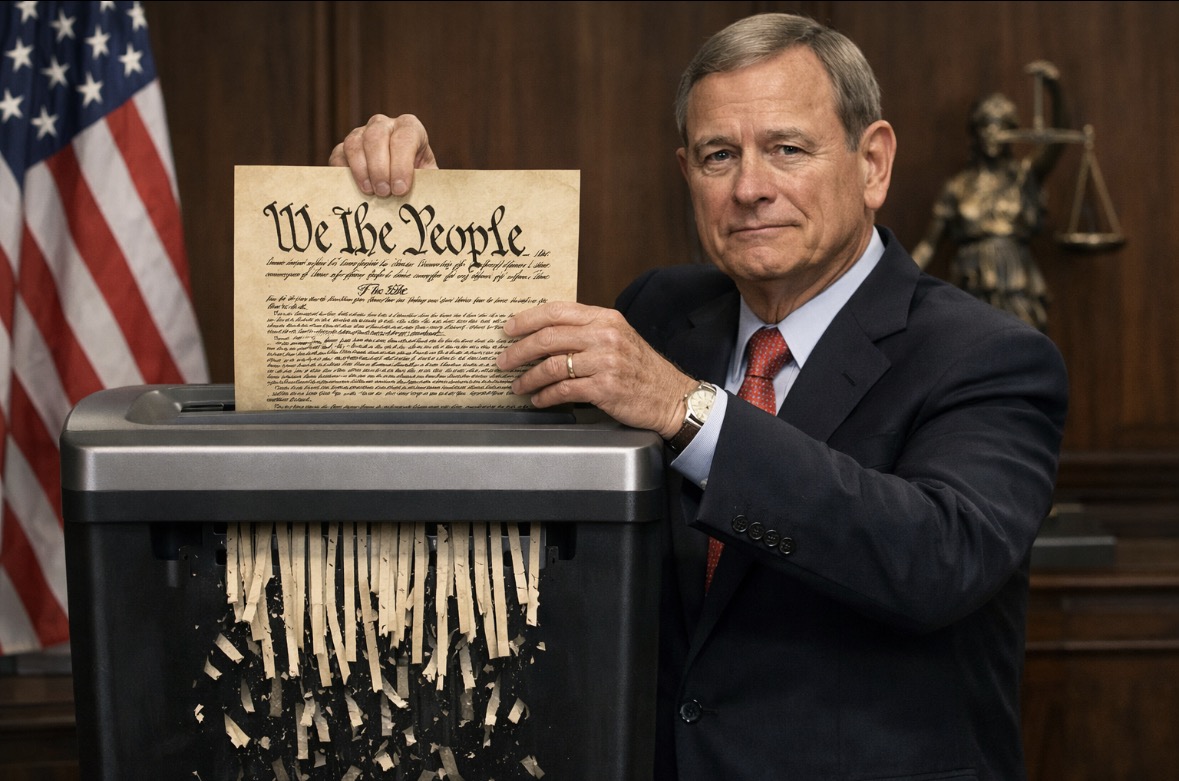
Political institutions were built to mediate conflict, distribute power and maintain accountability. They continue to operate procedurally, but increasingly do so in ways that insulate incumbents, manage dissent and extract legitimacy without delivering protection, representation or responsibility in return.
Meanwhioe, elections persist, rights remain formally codified and democratic vocabulary continues to circulate. However, these elements function as surface features and mask a deeper reorientation toward control and exhaustion.
Masking a deeper reorientation toward control and exhaustion
What enables this transformation is not only institutional capture by certain individuals in state or private sector but a shift in how political responsibility itself is imagined.
Our current style of politics increasingly rests on an implicit logic of isolation, in which social harms are treated as disconnected events and where structural violence is reframed as individual failure. Any consequences are systematically detached from those who produce them.
In addition, there is constant gaslighting, through which states and governments disorient their citizens’ sense of reality and choice.
From this perspective, the global convergence currently on display appears less as a sudden authoritarian turn than as a shared movement toward political impunity.
The Middle East has long been governed in this manner. What is new is the extent to which this logic has become relevant elsewhere.
John Gray’s dismantling the liberal belief in historical progress
Much of the contemporary condition resonates with the work of John Gray, who has spent decades dismantling the liberal belief in historical progress as an empirical account of human history.
Is the idea, as Gray posits, that humanity is moving, however unevenly, toward greater rationality, moral restraint or political decency not only false but actively distorting? Does it indeed encourage societies to treat violence, hierarchy and cruelty as temporary deviations rather than as recurrent features of human life?
The return of Hobbes?
In his latest book, The New Leviathans, Gray returns to Thomas Hobbes to argue that insecurity, conflict and fear (the core elements of the Hobbesian state of nature) are persistent features of contemporary politics, never fully overcome.
He suggests that modern states have become “new Leviathans,” promising security while often reproducing insecurity, and that the post–Cold War faith in liberalism as humanity’s inevitable destination was a mirage.
For Gray, this is simply not how human societies operate. He firmly believes that there is no trajectory toward moral or political improvement.
Conclusion
It is undeniably true that social order is always vulnerable to reversal
Takeaways
The crisis of politics is no longer confined to particular geographies or regime types.
Our political institutions are no longer effective.
Political institutions continue to operate procedurally, but increasingly do so in ways that insulate incumbents, manage dissent and extract legitimacy without delivering protection, representation or responsibility in return.
Our current style of politics increasingly rests on an implicit logic of isolation, in which social harms are treated as disconnected events and where structural violence is reframed as individual failure.
The idea that humanity is moving, however unevenly, toward greater rationality, moral restraint or political decency not only false but actively distorting?
Elections function as surface features and mask a deeper reorientation toward control and exhaustion.