
Jane Austen’s Critique of Narcissistic Patriarchs
Exploring leadership and responsibility in Austen’s novels.
December 16, 2025
A Strategic Assessment Memo (SAM) from the Global Ideas Center

You may quote from this text, provided you mention the name of the author and reference it as a new Strategic Assessment Memo (SAM) published by the Global Ideas Center in Berlin on The Globalist.

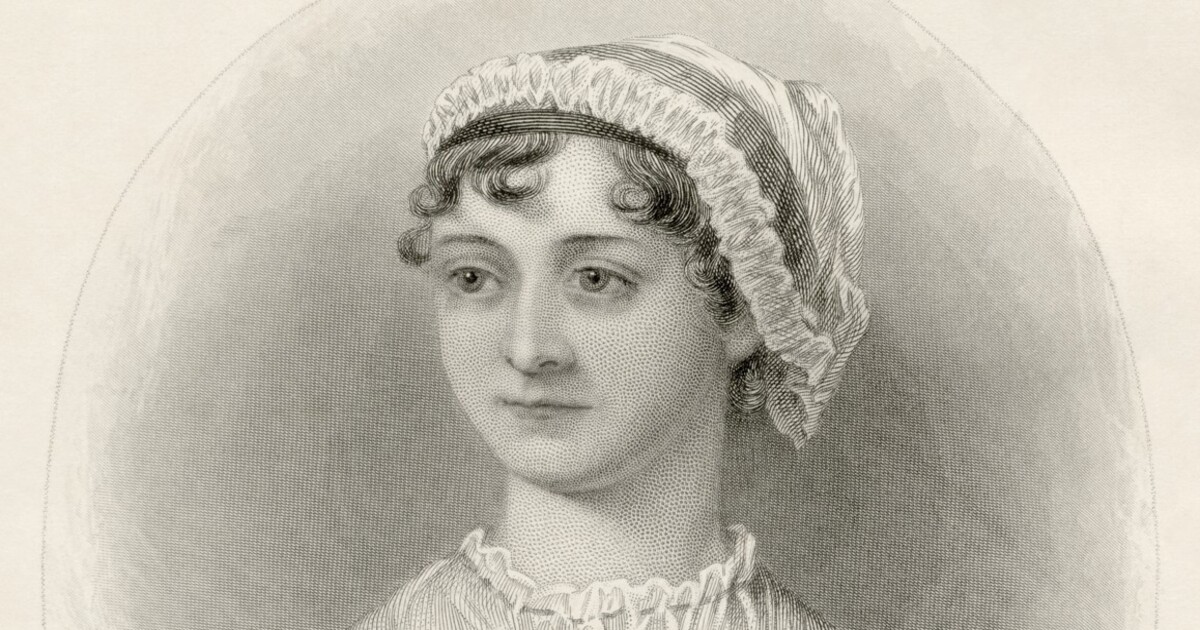
As we approach the semiquincentennial of Jane Austen’s birth on December 16, 1775, celebrations in the United States and the United Kingdom have emphasized period costumes and picturesque locations like Bath, England.
Austen reflected on leadership, responsibility and power
But Jane Austen was concerned with much more than what dress her heroine was wearing to a ball. She reflected deeply on leadership — particularly the responsibility of those with power to take care of those who depend on them.
Born in the year that the first shots were fired in the American Revolution and spending her formative years within the shadow of the French Revolution, Jane Austen was a conservative Tory, skeptical of revolution. This did not mean, however, that she was a blind supporter of those who hold the reins of power.
In fact, she admitted to hating the Prince Regent (the future George IV), who ruled Britain during George III’s final illness and the last years of her own life.
Irresponsible fathers as poor leadership write large
Austen, who described her own novels as “pictures of domestic Life in Country Villages,” did not write directly about politics. However, in an era when household structure was still seen as a mirror for the state, Austen’s satire of fathers who are ineffective and irresponsible offers a striking critique of poor leadership write large.
Moreover, the worst offender of all her failed patriarchs is the father figure in her final novel, Persuasion (1818) — a patriarch consumed by vanity who is unable to recognize the needs, emotions, or concerns of anyone who does not resemble him.
Austen’s first critique of failed patriarchs is evident in her most beloved novel, Pride and Prejudice (1813). Even Elizabeth, Mr. Bennet’s favorite daughter, acknowledges her father’s “indolence” and “the little attention he has ever seemed to give to what was going forward in his family,” particularly when his youngest daughter, Lydia, runs off with Wickham.
Even though Elizabeth shares her father’s sense of humor, she recognizes his failure to establish clear moral guidelines for his youngest daughters. He has also failed as a financial leader, in not saving adequately for his daughters’ dowries.
That same novel offers a contrasting model of leadership in the hero, Fitzwilliam Darcy, who shows energy in attending to the needs of his sister, the servants on his estates, and in tracking down Lydia and Wickham and persuading them to marry.
When Elizabeth first visits Pemberley, his estate in Derbyshire, she is struck by “how many people’s happiness were [sic] in his guardianship!” Austen also makes clear through the course of that novel that Darcy is wrongly accused of being “vain,” but rightly accused of the “proper pride” that inspires him to live up to the family name—and to the responsibilities that come with being a large landowner with many in his circle of responsibility.
Vain male characters
In contrast to Darcy’s proper pride, the patriarch in Persuasion (1818), is defined by vanity. As Austen explains, vanity is “the beginning and end” of Sir Walter Eliot’s character.
Austen mockingly introduces him as someone who reads only one paragraph in one book: the paragraph about his own family in Debrett’s Baronetage of England. Sir Walter has appreciation only for one of his children: his eldest daughter, Elizabeth, who is “very like himself.”
Consumed by self, he does not save for his daughters’ dowries or curb his ostentatious lifestyle. By the start of the novel, he has run up so much debt that he is obliged to rent out his own landed estate and decamp to more modest accommodations in Bath. He views Anne, his own most intelligent and sensitive daughter, as “nothing” because she is not inclined to marry for land or titles. He initially refused permission for her to marry the naval captain, Frederick Wentworth.
Satirizing the ruling elite
When Anne finally marries Captain Wentworth eight years later, Austen contrasts that selfless commander and “fearless man” to Anne’s own father, the “foolish and spendthrift baronet, who had not principle or sense enough to maintain himself in which Providence had placed him.”
Anne herself recognizes that the needs of the “poor” and the “parish” are better maintained by Admiral Croft who is renting Sir Walter’s estate than by Sir Walter himself. She acknowledges that “they were gone who deserved not to stay.”
Although a conservative Tory staunchly opposed to revolutionary change, Austen nevertheless satirizes the ruling elite who do not take responsibility for their network of dependents. She most fiercely mocks the narcissistic patriarchs who have no thought for anyone but themselves.
Takeaways
Jane Austen reflected deeply on leadership — particularly the responsibility of those with power to take care of those who depend on them.
Austen’s satire of fathers who are Austen’s satire of ineffective and irresponsible fathers offers a striking critique of poor leadership writ large.
The worst offender of all her failed patriarchs is the father figure in Persuasion — a vain patriarch who is unable to recognize the needs, emotions, or concerns of anyone who does not resemble him.
Although a conservative Tory opposed to revolutionary change, Austen fiercely mocks the narcissistic patriarchs who have no thought for anyone but themselves.
A Strategic Assessment Memo (SAM) from the Global Ideas Center
You may quote from this text, provided you mention the name of the author and reference it as a new Strategic Assessment Memo (SAM) published by the Global Ideas Center in Berlin on The Globalist.