
The U.S. Founders Warned Against Political Parties. They Were Right.
George Washington, John Adams and James Madison all warned that party loyalty could hollow out the republic.
September 19, 2026
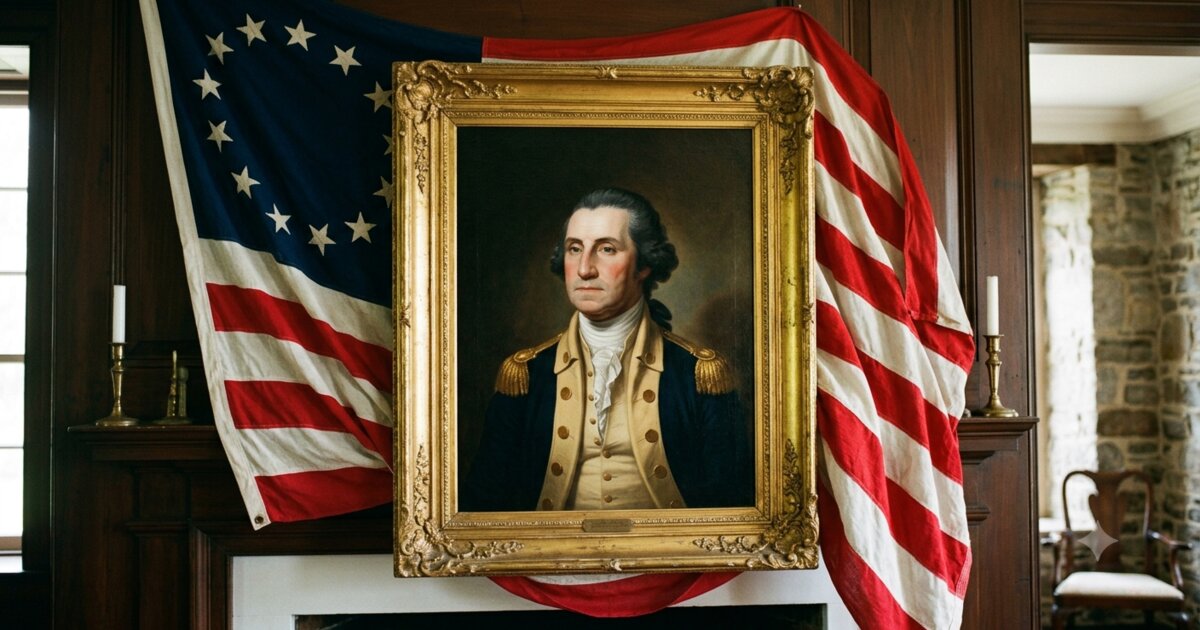

On CNN recently, former U.S. Senator Joe Manchin returned to first principles. He noted that the word “political party” never once appears in the drafts of the Constitution.
That reminder comes at an opportune moment. America’s two-party system seems to be eating itself alive. The founders were not neutral on this question. They warned, repeatedly and explicitly, against the rise of political parties.
A senator’s independent streak
Manchin served as senator from West Virginia for many years. Officially a Democrat, he built a reputation as an independent voice not beholden to either party line.
While Manchin was long dismissed as unreliable, his positioning looks wiser now, given the recalcitrant state of U.S. politics today.
The founders’ original warning
The deeper point here goes well beyond Manchin. The founders were adamant in warning against the rise of political parties.
They did not see parties as healthy vehicles of representation. Rather, they saw them as engines of factionalism, resentment and institutional decay.
As the founders saw it, the fledgling United States needed unity around a common cause. Parties threatened exactly that.
That concern feels much more acute now. The United States has just passed its 250th anniversary, and the founders’ warning has arguably never mattered more.
The profound wisdom of George Washington
George Washington, the nation’s first president, made a precise argument against parties in his Farewell Address. He warned Americans “in the most solemn manner against the baneful effects of the spirit of party.” He called it the “worst enemy” of popular government.
Why did he think that? Because it would “distract the public councils and enfeeble the public administration.” That describes U.S. politics today with uncomfortable accuracy.
Of course, disagreement is inevitable in a republic. However, what Washington described was something worse than disagreement.
Because of the viciousness with which many politicians now operate, the country has arrived at a troubling point. The state’s capacity to govern fairly and constructively is greatly diminished.
Washington’s uncomfortable relevance
George Washington is not remembered as a visionary. His warnings about what he called the “party spirit” make that reputation worth reconsidering.
Party spirit, he wrote, “agitates the community with ill-founded jealousies and false alarms; kindles the animosity of one part against another; foments occasionally riot and insurrection.”
He was not merely complaining about bad manners. Washington argued a republic could be slowly consumed from within, once party loyalty outweighs loyalty to the constitutional order.
The same happens when facts stop mattering. Any appeal to the common good gets dismissed as naive, because it is not partisan enough.
A pact for mutual destruction
What makes Washington’s warning feel contemporary is his focus on self-destructive escalation. Neither party seems to notice it is trapped in the same downward spiral.
Washington argued that “the alternate domination of one faction over another, sharpened by the spirit of revenge natural to party dissension” becomes “itself a frightful despotism.”
In other words, parties may believe they are competing for power. In practice, their divisiveness can trap the system in cycles of retaliation, where each side’s excess justifies the next.
The result is not the energetic self-government the young United States needed. It is the opposite of what fueled the country’s rise on the world stage.
The profound wisdom of James Madison
Madison supplied the conceptual framework for the same fear. In Federalist No. 10, he defined faction as “a number of citizens, whether amounting to a majority or a minority of the whole, who are united and actuated by some common impulse of passion, or of interest, adverse to the rights of other citizens, or to the permanent and aggregate interests of the community.”
Madison did not believe conflict could be abolished. Free societies will always generate rival interests.
His point was that constitutional government must prevent those interests from hardening into organized forces that could override the broader public interest.
The founders’ fears now look vindicated, in an especially American form.
Strength without common purpose
The United States still has immense wealth, scientific talent, military power, entrepreneurial energy and civic ingenuity.
Yet its political system seems unable to convert those strengths into public benefit, let alone common public purpose.
The problem of the United States today is not a lack of material resources. It is the paralysis produced when the two major parties define success by denying legitimacy and victory to the other side.
Washington’s warning that party spirit would “enfeeble the public administration” feels accurate today.
The powerful warning of John Adams
John Adams put the danger in even starker terms. “There is nothing which I dread so much as a division of the republic into two great parties,” he wrote, calling such a division “the greatest political evil under our Constitution.”
Adams recognized the structural temptation of a two-party order. Each side would organize its leaders around opposing the other, until opposition itself became the organizing principle of public life.
When that happens, as is now evident, compromise gets recast as betrayal. Prudence looks like weakness. Concern for governance and institutions becomes a superfluous worry.
The founders foresaw the dark character of U.S. politics more clearly than most politicians alive today.
This is why the founders’ critique matters now. They were not warning against disagreement, pluralism or electoral competition itself.
They were warning against a political psychology in which collective identity fuses with party. Once that happens, public institutions become weapons, spoils or stages for symbolic combat, and self-government deteriorates into sclerosis.
For all its vitality in so many domains, the United States has become remarkably good at converting political energy into deadlock. It can generate enormous budgets for mobilization, fundraising, messaging, public outrage and litigation.
Yet all that money and effort fails to produce sustained cooperation, even on matters that urgently require it. The country is close to the condition the founders feared: a republic animated by enormous energy, increasingly turned against itself.
A warning the founders underestimated, not one they missed
If the founders of the American republic made a mistake, it was not misunderstanding the danger of parties. They saw that danger clearly.
What they underestimated was how deeply party conflict could embed itself within a constitutional order. The outer appearance of freedom and representation survived intact.
On the central point, they were right. A system dominated by two antagonistic parties can stop being a framework for common action. It can become a machine for mutual obstruction, civic exhaustion and long-term institutional decline.
Given the systems competition with China, it is not an exaggeration to say something stark. The way in which politics in the United States is organized today is tantamount to conducting an opium war against itself.
Takeaways
The founders of the American republic were adamant in warning against the rise of political parties.
George Washington called the "spirit of party" the "worst enemy" of popular government, warning it would "distract the public councils and enfeeble the public administration."
The founders did not see parties as healthy vehicles of representation. Rather, they saw them as engines of factionalism, resentment and institutional decay.
John Adams called a two-party split "the greatest political evil under our Constitution."
Today's paralysis stems less from a lack of resources than from a zero-sum mindset, one that treats denying the other side legitimacy as victory.
Because of the viciousness with which many politicians now operate, the country has arrived at a troubling point. The state's capacity to govern fairly and constructively is greatly diminished.
What makes Washington's warning feel contemporary is his focus on self-destructive escalation. Neither party seems to notice it is trapped in the same downward spiral.
The United States has become remarkably good at converting political energy into deadlock. It can generate enormous budgets for mobilization, fundraising, messaging, public outrage and litigation.
Given the systems competition with China, it is not an exaggeration to say something stark. The way in which politics in the United States is organized today is tantamount to conducting an opium war against itself.
Read previous
Global Culture
Why I Love Live Music
September 5, 2026