
Why the U.S. Must Focus on Iran End-of-War Scenarios
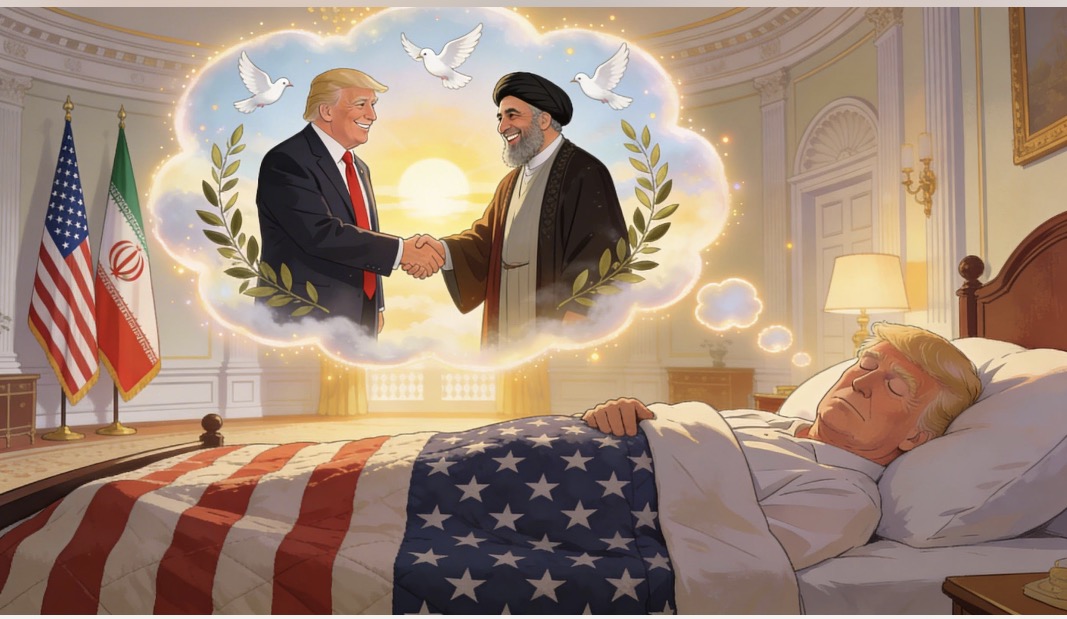
The United States needs an off ramp that would enable Trump to claim success, but without demanding Iranian capitulation.
March 20, 2026
A Global Ideas Center, Strategic Assessment Memo (SAM) from the Global Ideas Center

You may quote from this text, provided you mention the name of the author and reference it as a new Global Ideas Center, Strategic Assessment Memo (SAM) published by the Global Ideas Center in Berlin on The Globalist.

Three weeks into launching the war of choice with Iran, the Trump administration still has no plausible exit strategy.
Four scenarios
Several scenarios are being debated: First, a prolonged air and naval campaign ending in a unilateral U.S. declaration of “victory”. Second, a ceasefire mediated by regional and international actors. Third, a dangerous escalation into limited ground operations. And fourth, an uncontrolled regional war involving multiple fronts.
Of these scenarios, only a negotiated deescalation grounded in realistic objectives offers a path that avoids producing more instability in the region and beyond than it resolves.
Remember the aftermath in Iraq and Libya
Even to the extent that some in Washington cling to maximalist scenarios, they must be aware that their purported goal of achieving regime collapse would likely have catastrophic consequences.
That, after all, is what the United States and the entire West learned the hard way in Iraq and Libya.
What the U.S. needs
The United States needs an off ramp that would enable Trump to claim success, but without demanding Iranian capitulation.
A carefully crafted “mission accomplished” narrative can provide that. It would include the truthful declaration that Washington has severely degraded Iran’s military, missile production and capacity to reconstitute its nuclear program.
But such an announcement must be paired with constructive – and, yes, diplomatic – substance. Specifically, a several-week long cooling-off period with no new offensives, an end to triumphalist and humiliating rhetoric about Iran, as well as discreet back-channel contacts to explore conditions for resuming broader talks.
What Iran needs: Avoiding humiliation
The importance of tone is often dismissed as cosmetic. It is not. The modern history of Iran is full of memories of humiliation — foreign intervention in 1953, the brutal Iran–Iraq War, as well as decades of sanctions.
Continued public gloating by American or Israeli leaders over killing Iran’s supreme leader or “crushing” its armed forces further narrows the space for any Iranian decision-maker to contemplate engagement.
If the United States wants Iran to show flexibility, it must allow Iranian leaders to tell their own public that they defended the nation’s honor and extracted concessions, not that they were forced to their knees.
Back channel contacts and multilateralizing talks
Hard though it may be to imagine at the moment, back channel diplomacy, facilitated by trusted intermediaries such as Oman or Qatar, is essential. The quiet exploration of relevant parameters — items such as red lines, sequencing and verification — must come first.
Since Iran, for good reason, distrusts Trump after he withdrew from the JCPOA in 2018 and attacked Iran twice during negotiations (in June 2025 and in February of this year), representatives acceptable to both sides — perhaps British and Saudi — should later join as observers.
Invited by Washington, they would reassure Tehran that the U.S. is bound to the process and signal to skeptics that the outcome is durable, not a fragile bilateral deal.
Professional negotiators and psychological understanding of Iran
Just as important is who negotiates. Trump’s habit of sending personal loyalists and real estate fixers to handle enormously complex security dossiers is a recipe for spectacle, not success.
Negotiating with Iran requires deep technical knowledge of nuclear and missile issues, sanctions architecture and regional security dynamics. Negotiators must also have a nuanced understanding of Iranian political psychology and the dynamics of political factions.
The United States should appoint first-rate diplomats and experts in international negotiations and conflict resolution, not family or business partners of Donald Trump’s, to lead these extraordinarily sensitive talks.
A realistic U.S. negotiating agenda
Washington must narrow its demands to what is legitimate and achievable. A realistic package from the U.S. perspective would include four goals:
1. End Iran’s funding and operational support for proxies attacking U.S. forces and destabilizing neighbors.
2. Roll back Iran’s 60 percent enriched uranium stockpile under a mutually agreed mechanism.
3. Establish a new Israel-Iran security framework in which Tehran halts direct and indirect threats against Israel, while Israel ceases threatening the Iranian regime.
In return, the United States would need to:
1. Recognize Iran’s right to a peaceful, strictly monitored civilian nuclear program.
2. Find a way to coordinate with key partners to lift nuclear related sanctions in phased steps tied to compliance.
3. Gradually unfreeze Iranian assets and pledge non-interference in Iran’s internal politics.
4. Move toward gradual normalization.
A very tough road ahead
No doubt, critics on all sides will bristle. Iranian hardliners, for their part, will resist limiting support for Hezbollah, Iraqi militias and other “axis of resistance” elements seen as essential to deterrence.
Meanwhile, Israeli leaders will argue that anything short of zero enrichment and missile dismantlement leaves an existential threat intact. And American hawks will denounce sanctions relief or recognition of Iran’s nuclear rights as appeasement.
Yet, the alternative to a bargain along the lines outlined above is an indefinite, simmering war—one that will repeatedly ignite regional crises, keep oil markets on edge, hardens Iran’s radicals, as well as erode the U.S.-Arab Gulf alliance system as partners recoil from Washington’s unilateral adventurism.
Anticipating Israeli attempts to sabotage a deal
That is why the United States must also stop allowing its Iran policy to be effectively subcontracted to whoever sits in the prime minister’s office in Jerusalem.
Yes, Israel has legitimate security concerns, and Iran must not be allowed to threaten Israel’s existence or use the Israeli–Palestinian conflict as a permanent lever of regional destabilization.
But it is not for Washington to conduct its foreign policy on Israel’s behalf. Furthermore, neither Israel nor the United States should dictate who governs Iran.
As long as Tehran refrains from threatening Israel and interfering in the Israeli–Palestinian arena, the United States should judge the Iranian government primarily by its behavior, not its ideology.
Conclusion
Iran is not going away. Neither is Israel. Nor is the durable reality of American strategic interests in the Middle East or the universal desire — among Americans, Iranians, Israelis and their neighbors — for a more stable and peaceful region.
The war the United States launched was a war of choice. Continuing it without a plausible political endgame is also a choice. So is building an off-ramp that departs from maximalist fantasies for a hard-nosed, enforceable form of peaceful coexistence.
The question is not whether that off-ramp is easy. It is whether the parties involved have the wisdom to take it before the alternatives become far worse.
Takeaways
Even to the extent that some in Washington cling to maximalist scenarios, they must be aware that their purported goal of achieving regime collapse would likely have catastrophic consequences.
Only a negotiated deescalation grounded in realistic objectives offers a path that avoids producing more instability in the region and beyond than it resolves.
Continued public gloating by American or Israeli leaders over killing Iran’s supreme leader or “crushing” its armed forces further narrows the space for any Iranian decision-maker to contemplate engagement.
It is important who negotiates. Trump’s habit of sending personal loyalists and real estate fixers to handle enormously complex security dossiers is a recipe for spectacle, not success.
Iran is not going away. Neither is Israel. Nor is the durable reality of American strategic interests in the Middle East or the universal desire for a more stable and peaceful region.
The real question about the Iran war The question is not whether an off-ramp is easy. It is whether the parties involved have the wisdom to take it before the alternatives become far worse.
A Global Ideas Center, Strategic Assessment Memo (SAM) from the Global Ideas Center
You may quote from this text, provided you mention the name of the author and reference it as a new Global Ideas Center, Strategic Assessment Memo (SAM) published by the Global Ideas Center in Berlin on The Globalist.