Is the Global Shadow Fleet Now Seriously Degraded?
After the Trump administration’s actions against oil tankers in international waters, there is a strong possibility that the global shadow fleet is at a tipping point.
January 14, 2026

Note to journalists: You may quote from this text, provided you mention the name of the author and reference it as a new Strategic Assessment Memo (SAM) published by the Global Ideas Center in Berlin on The Globalist.

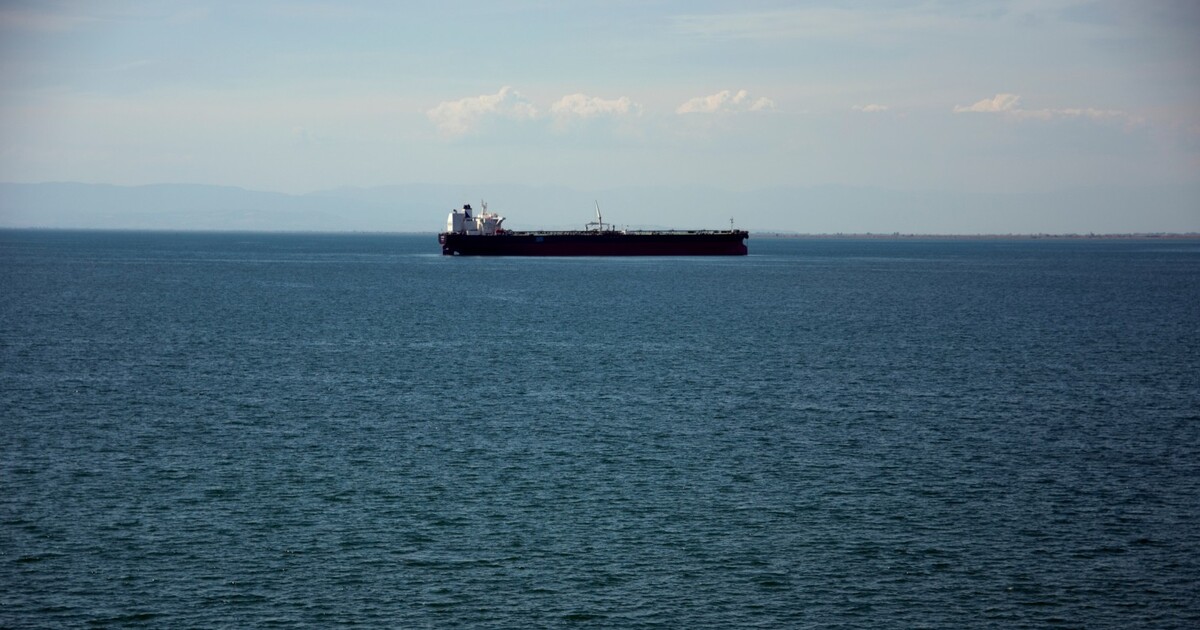
After the Trump administration’s actions against oil tankers in international waters, there is a strong possibility that the global shadow fleet — a clandestine network of older, often poorly maintained ships, primarily tankers, that use deceptive tactics to evade international sanctions, especially for transporting sanctioned oil from countries like Russia, Iran and Venezuela — may not just be at a tipping point, but may well be on track to be seriously degraded.
To the general public, the actions taken to counter those fleets may still look like incremental enforcement. Even so, their operating layer, which is set up and maintained to evade sanctions, is being attacked in a serious fashion now.
Operators face a seriously elevated risk profile
The principal reason why this business, conducted by nations such as Russia, Venezuela and Iran, is at a tipping point now is straightforward: These ships are clearly exposed to a seriously elevated risk profile both in economic and physical terms.
Given that, it is very likely that the marginal operators will be exiting the unregulated market. The declining oil price adds further to the pressure on them.
Moreover, given the lower oil price, the arbitrage trade performed by intermediaries to secure sanctioned crude oil and then selling it off is not as profitable anymore.
Turning the value chain upside down
Now that enforcement actions have intensified, the underlying business calculations have flipped. With ships now being seized or attacked, the value chains have been turned upside down.
The shadow fleets’ crews are particularly exposed. While a shipowner might absorb a loss by virtue of diversification across hulls, a seaman cannot diversify, risks jail or even his own life in case of kinetic actions, i.e., attacks on individual ships of the shadow fleet. This is a personal, physical and asymmetric risk.
For shipowners, it becomes much more difficult to secure crews under these circumstances. Criminal liability is also no longer abstract. In addition, it is no longer confined to white-collar intermediaries or enablers whom you may find in many countries.
The shadow fleet ecosystem
In general, one should not think of the shadow fleet as a fixed stock of ships. Rather, it is an ecosystem of hulls, flags, insurers, ship managers, brokers, ship to ship transfer operators, crew agencies, port services and paperwork handlers that focus on crafting plausible, not clean papers for the ships.
Shadow fleets of the non-state type operate on thin capitalization, fast reflagging and plausible deniability. Their comparative edge is speed and anonymity, not resilience.
However, once the expected probability of seizure or prosecution rises above a low threshold, they leave. Not gradually. All at once.
Impact on Russia
For Russia, the loss of shadow oil fleet capacity is a major issue fiscally. With the ever-tighter ability to smuggle oil, Russia is really in a tight spot and at risk of losing a major source of state revenues. Fiscally, things already look terrible, and the degrading of the shadow fleet adds further pressure on spending on domestic affairs as well as on the war against Ukraine.
Just how badly Putin miscalculated becomes clear if one recalls that the oil price in January 2022, the month before he invaded Ukraine, stood at $90 per barrel. Now, it is in the $50 range.
In addition, Russia has a crude oil problem, due to the degradation of domestic refining capacity achieved by Ukraine’s armed forces inside Russia.
… and Iran
Russia is not the only country under stress. Aside from Venezuela, Iran is hit hard. The shadow fleet degradation will impact calculus for engaging with moving Iranian crude. Given that the Iranian economy is already in tatters, this creates further instability.
There is a risk that the Iranian regime may find no other option but to threaten a major escalation. But that seems increasingly theoretical as such a move would be utterly self-defeating in light of the vehement, potentially regime-toppling protests underway in Iran right now.
Conclusion
What matters is not whether some shadow fleet oil tankers remain afloat, but whether the risk-adjusted return for participation remains positive. That may no longer be the case.
Takeaways
After the Trump administration’s actions against oil tankers in international waters, there is a strong possibility that the global shadow fleet is at a tipping point.
The shadow fleets’ crews are particularly exposed. While a shipowner might absorb a loss by virtue of diversification across hulls, a seaman cannot diversify, risks jail or even his own life.
Shadow fleets of the non-state type operate on thin capitalization, fast reflagging and plausible deniability. Their comparative edge is speed and anonymity, not resilience. For Russia, the loss of shadow oil fleet capacity is a major issue fiscally.
What matters is not whether some shadow fleet oil tankers remain afloat, but whether the risk-adjusted return for participation remains positive. That may no longer be the case.
Note to journalists: You may quote from this text, provided you mention the name of the author and reference it as a new Strategic Assessment Memo (SAM) published by the Global Ideas Center in Berlin on The Globalist.