“Finlandization”: From Pejorative to European Aspiration
If “Finlandization” was once a pejorative, the contemporary Finnish mindset is something Europeans, especially Germans, should aspire to.
March 6, 2026

Note to journalists: You may quote from this text, provided you mention the name of the author and reference it as a new Strategic Assessment Memo (SAM) published by the Global Ideas Center in Berlin on The Globalist.

For decades, the word “Finlandization” was a dirty term in international relations. It was used as a pejorative to describe a small democracy that was reflexively prepared to cave to the Kremlin.
Specifically, while Finland insisted on being sovereign, it bent its foreign and security policy to Soviet preferences. In Western debates, “Finlandization” was used as shorthand for weakness and to castigate what happens when fear replaces strategy – in short, appeasement in all but name.
Guess who emancipated itself
Today, the old label is out of place. If anything, the development that Finland has taken in recent decades should serve many European nations, notably Germany, as an inspiration.
The Finland that emerged from the Cold War, and especially the Finland of the past 20 years, offer exactly the kind of hard‑headed strategic culture, societal resilience and defense posture that Europe now needs in dealing with Russia.
Forget the caricature
The classic notion of Finlandization emerged from Finland’s precarious position after the Second World War. Defeated militarily in the Winter War and the Continuation War, it was forced to cede territory and sign a far‑reaching agreement with the Soviet Union in Order to keep its sovereignty.
However, its army inflicted serious casualties on the Russian aggressors and, unlike other nations, it managed to maintain its independence, democracy and market economy.
Under that agreement, Finland nevertheless accepted serious constraints on its foreign and security policy. It could not join Western defense structures, and its leaders avoided open confrontation with Moscow. Non-alignment was its chosen diplomatic course.
Self‑satellization
From the outside, it looked like self‑satellization: a formal democracy whose elites pre‑emptively adjusted their positions to Soviet sensitivities and carefully managed their public narratives.
Especially in Bonn (and later Berlin), but also in Paris, London and Washington, “Finlandization” became a warning: this is what happens to your nation if you let the Kremlin define your red lines.
Yet even then, that view missed a deeper reality. The Finnish strategy was pragmatic, realistic – and constructively self-protective. It was focused on preserving democracy, the rule of law and a market economy, while avoiding occupation or any prospect of a communist takeover.
Lesson in survival under pressure
Over time, that lesson in survival under pressure shaped a very different Finland.
Two fundamental truths were etched into the country’s strategic culture: First, illusions about Russian intentions, as they have been maintained by successive German governments until very recently, are dangerous.
Second, Russia can be deterred, but there is a clear price to be paid. This entailed, most specifically, a clear-cut commitment to territorial defense, conscription and civil preparedness.
Even while it outwardly maintained a course of neutrality and careful diplomacy, Finland always observed three cardinal lessons: It never allowed itself to forget that geography cannot be changed, that the Kremlin always harbors the potential to become aggressive and that hopes for softness or accommodation can be very dangerous for one’s own nation’s health.
Strong motivating force
That sober and unsentimental mentality, powerfully rooted in the painful memory of trauma, turned into an asset once the Soviet Union collapsed and a new European order emerged.
After the Cold War, Finland joined the EU, integrated economically with the West and opened its domestic political debate to assess the new realities and challenges.
While the country kept its formal course of military non‑alignment longer than its Nordic neighbors, the 2000s and 2010s were used for gradual de facto convergence with Western defense structures.
A positive example for others
Finland deepened its partnership with NATO, systematically aligned its forces with NATO standards and also intensified security cooperation with the United States and the Nordic countries.
It participated in exercises, built interoperability and updated its military doctrine. Moscow was consistently defined as the key contingency: the main potential source of military pressure or aggression.
A key society-wide policy answer to this constellation was and is to maintain a large, well- trained reserve force and invest intensively in civil resilience.
In that process, NATO membership moved from being treated as an option rather than a taboo.
The Russian invitation
Russia’s annexation of Crimea in 2014 marked the first major shift of the Finnish debate. That act of aggression on Putin’s part underscored that Moscow was willing to redraw borders by force and treat international law as expendable.
Finland responded by deepening defense cooperation and further updating its threat assessments. The full‑scale invasion of Ukraine in 2022 then removed the remaining illusions.
Public buy-in
Public attitudes shifted with remarkable speed. The old logic of staying non‑aligned to avoid “provoking” Russia had lost its credibility.
The invasion had shown that non‑alignment was not an effective shield. What mattered was to be on the inside of a credible system of collective defense.
Political parties that had long been cautious about NATO membership now backed it. Within months, Finland applied and joined NATO in 2023. This move was the logical conclusion of two decades of preparation combined with a strategic shock.
Europe needs the Finnish mindset
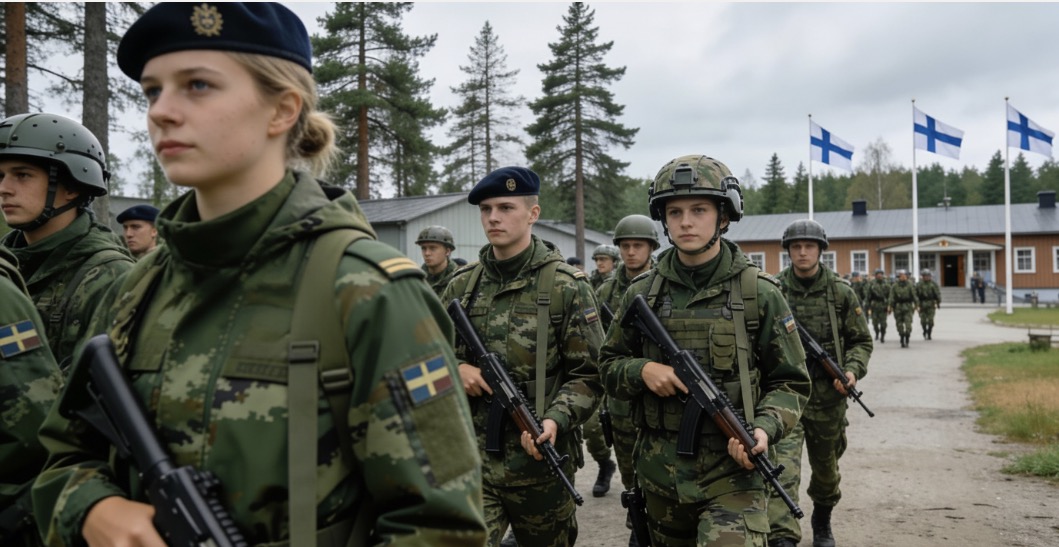
The Finland of 2026 is almost the mirror image of the old caricature. Instead of a pliable neutral force, it is a front‑line democracy that plans – and prepares – for the worst.
What many long-time EU members nations can learn:
1. Turn national defense into a society-wide project
Defense is not outsourced to a small professional class but treated as a collective responsibility. Unlike in Germany, most young Fins understand full well that they have a personal obligation to secure their nation’s collective defense. They know that their own individual freedom depends on it.
2. Focus on resilience
The state understands that national defense has a military, cyber, IT, public information and economic dimension. It accordingly prepares not just its armed forces but acts society-wide to strengthen critical infrastructure, supply chains, communications and governance to absorb shocks and continue functioning.
3. Clear threat perception
Russia is not romanticized but also not turned into a monster. It is recognized as a dangerous neighbor with a record of opportunistic aggression.
Finland also established a strategic foresight mandate, which requires government ministries to Report to the national parliament on strategic goals, the related policies and their fulfillment.
4. National strength is boosted via alliances
NATO membership does not replace domestic preparedness – it reinforces it.
The lessons for Germany
Finland brings a strong territorial‑defense model and serious reserve to the alliance and gains the deterrence of Article 5 and access to allied planning and capabilities.
In Germany, NATO is still, self-comfortingly, viewed as a substitute for national defense. In addition, even the proper financial support for NATO has long been a matter of irresponsible political gamesmanship in Germany.
Conclusion
If “Finlandization” once meant bending to Moscow’s will, the contemporary Finnish mindset shows how a small democracy can live with a dangerous neighbor – by being clear‑eyed, prepared and firmly embedded in a community of like‑minded states.
That is a lesson Europe should now aspire to, not dismiss.
And if there is one country in Europe today whose society is still somehow still caught in the old form of “Finlandization”, it is today’s Germany.
Takeaways
For decades, the word “Finlandization” was a dirty term in international relations. It was used as a pejorative to describe a small democracy that was reflexively prepared to cave to the Kremlin.
If there is one country in Europe whose society is somehow still caught in the old form of “Finlandization”, it is today’s Germany.
If “Finlandization” was once a pejorative, the contemporary Finnish mindset is something Europeans, especially Germans, should aspire to.
The Finland that emerged from the Cold War offers exactly the kind of hard‑headed strategic culture, societal resilience and defense posture that Europe now needs in dealing with Russia.
The Finland of 2026 is almost the mirror image of the old caricature. Instead of a pliable neutral force, it is a front‑line democracy that plans – and prepares – for the worst.
In Finland, defense is not outsourced to a small professional class but treated as a collective responsibility.
Unlike in Germany, most young Fins understand full well that they have a personal obligation to secure their nation’s collective defense. They know that their own individual freedom depends on it.
Note to journalists: You may quote from this text, provided you mention the name of the author and reference it as a new Strategic Assessment Memo (SAM) published by the Global Ideas Center in Berlin on The Globalist.