American Delusions About Iran
Message from Iran: One cannot negotiate with a regime of uncompromising, corrupt fanatics.
July 16, 2026

Note to journalists: You may quote from this text, provided you mention the name of the author and reference it as a new Strategic Assessment Memo (SAM) published by the Global Ideas Center in Berlin on The Globalist.
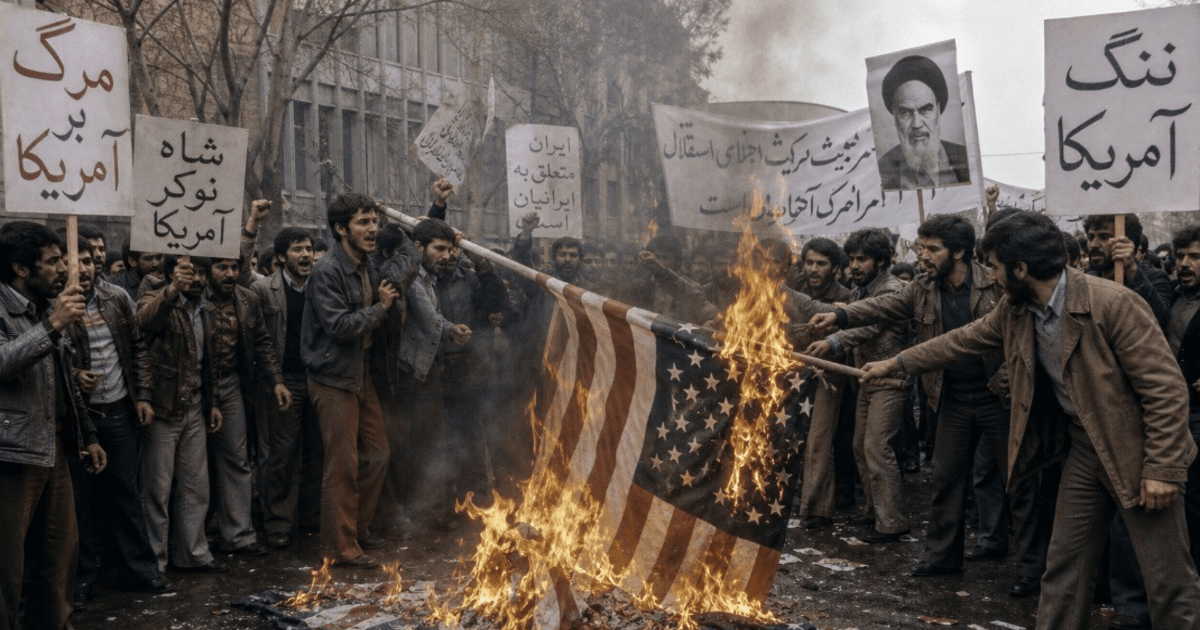
The government of the United States has a long history of failing to understand Iran. For example, back in the 1970s, President Carter failed to look clear-eyed at the inevitable collapse of the Shah’s regime.
He thus did not prepare for the rise of Ayatollah Ruhollah Khomeini and have any proper contingency planning for the seizure of U.S. diplomats in Tehran. That sequence of failures doomed Carter’s hope of reelection.
U.S. Presidents being played by Iran
Now, President Trump has put himself out of his own volition into the position of being played for a fool by the Iranian regime.
That move will cost the Republicans dearly in the U.S. mid-term elections this November. Most Americans oppose the war and are infuriated about the rise in oil prices it has caused.
Vice President Vance and Trump negotiators Jared Kushner and Steve Witkoff may believe, encouraged by Pakistani and Omani mediators, that they can negotiate with the Iranians.
What they fail to understand, however, is that those talks are a trap. The Iranian negotiators simply want to buy time to enable the IRGC to rebuild its forces. The Iranian envoys, like the regime’s other leaders, are fanatical and corrupt ideologues.
A “revolutionary” force driven by immense greed
The despotic Iranian regime lives in constant fear of losing its absolute political and social control over its 93 million citizens.
Moreover, the remarkable level of greed that serves it as the fuel of internal cohesion not only drives an economic management system in which only a few prosper at the expense of the many, but also harsh domestic repression.
Corruption reigns supreme
At the same time, what is for too less understood about Iran’s regime is that it is among the most corrupt on the planet. It ranks 153rd out of 182 countries in the Transparency International’s 2025 Corruption Perception Index with a score of just 23 out of 100 (top ranked Denmark has a score of 89).
One businessman is quoted in a new book on Iran’s politics as stating: “Corruption in Iran is like a mountain. When you are next to it, you have no idea how vast it is; only by getting some distance can you appreciate its grand scale.”
There are “reformers”, really?
The U.S. media is not blameless. It continues the refrain that Iran’s leadership is divided between hard-liners and pragmatists. There is next to no evidence that there are reformers anywhere near the helm of Iran’s government and military.
The history of contemporary Iran tells us that those who sought to open Iran’s doors to negotiations with Western leaders and who welcomed foreign investment were rare birds who, inevitably, had their wings clipped by the all-powerful and completely uncompromising forces running the country.
The stolen revolution
Consider this account of the 36 years in which Ayatollah Ali Khamenei served as Iran’s Supreme Leader: He “eliminated his critics, oversaw the stealing and the hoarding of the country’s wealth and elevated incompetent loyalists who had driven the country into the ground. He had created parallel institutions that obscured and paralyzed decision-making.”
This is the conclusion of a new book “Stolen Revolution: Betrayal and Hope in Modern Iran,” by journalists Bozorgmehr Sharafedin and Yeganeh Torbati.
Their detailed account of Iran’s history since the 1979 revolution to the present provides deep insights into the total focus of the leadership clerics and the Islamic Revolutionary Guards Corps (IRGC) on absolute control of the nation, its economy and the cruelty of its judges and torturers in the name of their “holy government,” and their insatiable greed.
Bases of judgment
My own conclusions about Iran’s current leadership are influenced by the details in this book, combined with investigations by the U.S. and U.K. authorities into terrorism financing and Iranian money laundering, as well as the experiences of my friend Emad Shargi, an American citizen who was born in Iran.
He spent five years as a “hostage” of the Iranian government in Evin prison. He was finally freed along with four other Americans under a deal finalized by President Biden in September 2023.
Inside Evin prison
After his arrest, Emad Shargi spent eight months in the wing of the Evin prison known as Section 2A and controlled by the IRGC. He was constantly beaten, and he would frequently be interrogated as he sat on a chair facing a hangman’s noose. He was also constantly hearing the screams of women in the prison.
He refused to admit to being a CIA spy. He was sentenced to 10 years in prison and eventually transferred to the civilian section of Evin, which provided somewhat better conditions.
Emad’s sister, Neda Sharghi, who played a key role in helping to secure her brother’s freedom, notes that right now there are Americans in Iran’s prisons. In a television interview in Washington, she called on the Trump Administration to push for the release of these “hostages” in the current negotiations.
Emad underscores that the word “compromise” is not in the vocabulary of the IRGC leadership, who are now running the country. The IRGC moved from being just a military elite to controlling much of the economy, in partnership with corporations established by Ali Khamenei.
An economy captured
The emergence of the IRGC as what is by now the country’s most potent economic force began following the Iran-Iraq war in 1988, when the IRGC first launched into the construction business.
At the time, it seemed sensible enough to employ soldiers who no longer had a war to fight and having them benefit from vast public contracts in that manner.
Over time, as foreign sanctions hit Iran, the IRGC developed a major set of smuggling enterprises using ports it controls and their “duty-free trade zones” to import all manner of goods that were sold to wealthy Iranians, many of them kleptocratic government employees.
The Iranian economy was captured through assorted holding companies headed by Khamenei’s loyalists, including the IRGC, and notably including his son Mojtaba Khamenei. The latter enjoyed immense influence despite having no official government role.
Clerical crony capitalism
They took control of what would eventually become “an enormous business portfolio that spanned the entire economy, from oil and gas to pharmaceuticals to ostrich farming.”
Emad Shargi estimates that today the regime and IRGC control at least 40 percent of Iran’s GDP. Authors Sharafedin and Torbati add: “Khamenei created a unique brand of clerical crony capitalism… he transferred wealth not to the poor, but to those loyal to the system, which was increasingly personified by Khamenei himself.”
In other words, any pretense of having the interests of Iran’s common folks in mind, as would behoove a religious leader, was just that – a pretense.
Theft
The companies that the regime and IRGC established were not subject to any public accounting or any form of transparency. Significant amounts of cash enriched the Iranian military and civilian leadership. It also provided cash to tens of thousands of loyalists across the country and to financing terrorist groups in Gaza, Lebanon, Yemen and beyond.
After sanctions were tightened on Iran in 2010, Iran’s regime launched programs to make the country ever-more isolated from foreign influence as it sought to promote domestic economic independence. This has been a constant goal of Iran’s regimes. It has impoverished the nation.
Reform hopes
For a short period, it looked as if there might be a fundamental change when Hassan Rouhani was elected President in 2013 and opened negotiations with the Obama Administration.
This led two years later to an agreement on nuclear inspections, reduced sanctions and Iran’s access to foreign funds.
The lessons Trump urgently needs to learn
Trump ought to pay very close attention to learn the lessons of what happened then. Most importantly, that the regime has always been terrified of opening up the economy to Western influence, fearing that it could undermine its total authoritarian control.
Trump’s negotiators may believe they can secure deals by offering huge amounts of foreign investment, but history shows this is the wrong track.
Trump’s deployment of Kushner and Witkoff as lead negotiators reflects a fundamental misunderstanding. The Iranian regime has no respect for foreign businessmen, nor interest in foreign investors.
It might bow, if only temporarily, to formidable economic pressure, but it will staunchly resist any effort that it sees by the West to influence its economy and its citizens.
Initially, after the 2015 deal with the West, known as the Joint Comprehensive Plan of Action (JCPOA), Iranians hoped for the dawn of economic liberalization, and indeed, entrepreneurs created many start-ups, notably in the technology area, and attracted foreign investors.
Instead of seizing opportunities such as this to improve the prospects of their national economy and hence the lot of their people, Khamenei and the IRGC were worried about Western influence. Their concerns focused on the rapid growth of the Internet and social media. Khamenei began warning against foreigners threatening the revolution.
Ayatollah’s warnings
Sharafedin and Torbati write that the Supreme Leader’s warnings were voiced first and foremost to the Guards, which was populated by people with a purely ideological terror of the internet.
In their view, the internet was part of an American war of the mind against Iran and designed to tempt Iranians toward Western values and customs. As its use spread, the internet disrupted the Iranian government’s monopoly on ideology.
That, in turn, widened the gap between the people and the state, while giving Iranians themselves a much-needed place to debate and sharpen their ideas.
To counteract that, the Iranian government set about taking control of the start-ups. It intimidated entrepreneurs, demanded shareholdings and imprisoned wealthy shareholders whose ability to regain their freedom conveniently depended on handing over shares and paying “fines.”
In other words, the Iranian mafia state was on the march, leaving no doubt that state enterprises had unlimited powers and could not be challenged.
Hostages
It was with the prospect of a possible investment deal at the time that Emad Shargi, then representing a Dutch investment firm, had a first-hand glimpse of the regime’s insatiable greed and corruption.
His arrest underscored the regime’s distrust of foreign businessmen, especially ones with American passports. It signaled to the U.S. that the regime had no hesitation in jailing Americans for use as pawns in negotiations – negotiations centering on cash.
Emad and his four jailed colleagues were freed because the Biden administration agreed to unfreeze $6 billion of Iranian funds in accounts in Quatar. In fact, with the Hamas attack on Israel on October 7, 2023, the U.S. decided not to allow the Iranians to access the funds.
Foreign cash
The leaders of the regime want to lay their hands on the country’s frozen assets in large measure to enrich themselves. The U.S. has been slow to fully grasp that cutting off the regime’s foreign investments can add pressure. Only on July 10, 2026, did the U.S. Treasury finally act.
It announced that it was placing Ali Ansari, a Dubai-based Iranian financier, on its sanction list. It said Ansari ran “a sprawling global network of assets benefitting Iran’s leader, Mojtaba Khamenei, and other regime elites… diverting publicly funded wealth into an extensive overseas portfolio of real estate and commercial holdings to enrich himself, regime elites, including notable senior figures within the Supreme Leader’s Office, and the Islamic Revolutionary Guard Corps.”
Public protests
The crass incompetence that the Iranian regime manifested over decades as to promoting the fortunes of the Iranian people has left the country with a shattered economy. Today, inflation is estimated at an annual 80 percent.
Understandably, public anger is widespread. The protests this past January saw as many as 30,000 Iranians killed and/or jailed by the regime. As the war with the United States continues, it is fair to assume that the level of domestic repression will become even more widespread.
Iran’s two-front war
The Iranian regime knows that it has a war on two fronts at its hands. The one that captures the headlines is with the United States, but over time the more consequential one will be with the citizens of Iran.
In the last election in Iran, only 49 percent of eligible voters went to the polls. Most citizens believed that there is simply no point in voting in a country where only hardline fanatics can stand for election.
Perhaps a full-scale economic blockade, freezing of the foreign assets owned by the regime’s leaders and the Guards, and targeted bombing of major factories and oil terminals will lead to some sort of short-term willingness by the Iranian regime to open the Strait of Hormuz.
But the safest assumption is that, whatever happens, as in the past the regime will be playing for time.
Hope for a true popular revolution
The real hope, as Emad Shargi stresses, is for the people of Iran to eventually overthrow the thugs running the country.
The most successful of all the protests over the years in Iran, which, however, led to many people being killed and jailed, was organized by Iran’s women and its ethnic and religious minorities.
The gravest threat to the regime, in time, will be the ever-increasing desperation of the nation’s women and its religious and ethnic minorities.
They certainly have plenty of reason to lead the march against the rampant corruption, the total incompetence of the Iranian economy’s managers, and, as Sharafedin and Torbati titled their book, the “Stolen Revolution.”
Takeaways
The government of the United States has a long history of failing to understand Iran.
The talks with Witkoff and Kushner are a trap. The Iranian negotiators simply want to buy time to enable the IRGC to rebuild its forces.
Trump’s negotiators may believe they can secure deals by offering huge amounts of foreign investment, but history shows this is the wrong track. The Iranian regime has no respect for the interests of foreign investors.
The Iranian regime knows that it has a war on two fronts at its hands. The one that captures the headlines is with the United States, but over time the more consequential one will be with the citizens of Iran.
Iran’s regime is among the most corrupt on the planet. It ranks 153rd out of 182 countries in the Transparency International’s 2025 Corruption Perception Index.
There is next to no evidence that there are reformers anywhere near the helm of Iran’s government and military.
The concept of "compromise" is simply not in the vocabulary of the IRGC leadership, who are now running the country.
Khamenei created a unique brand of clerical crony capitalism by transferring wealth not to the poor, but to those loyal to the system.
Note to journalists: You may quote from this text, provided you mention the name of the author and reference it as a new Strategic Assessment Memo (SAM) published by the Global Ideas Center in Berlin on The Globalist.