Football Conquered the United States. Now It Wants to Conquer Global Football
Can the U.S. ambition to conquer football on a global scale and to remake the game in American style be stopped?
August 30, 2026
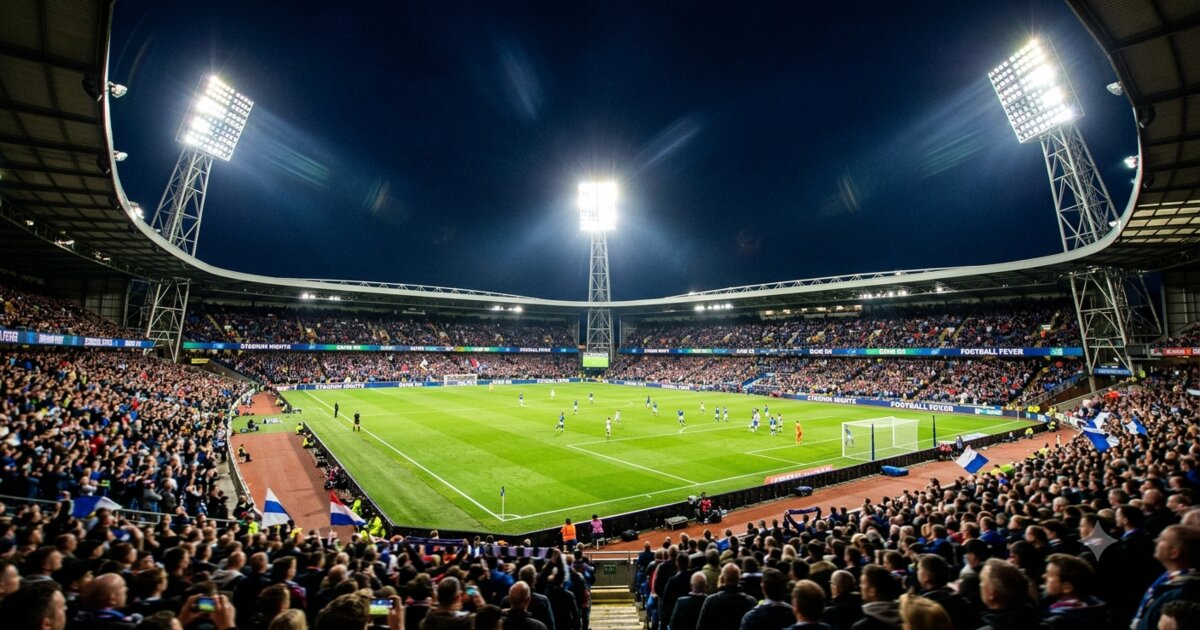
Over the past three decades, the game almost universally (that is, ex U.S.) known as football has quietly conquered the United States.
Unsurprisingly for a country never shy to spread its wings imperially as well as commercially, football’s in-country rise has been matched, stride for stride, by the U.S.’s own designs on shaping the sport football globally. It may well be the country’s latest campaign for global conquest.
On another global conquest campaign
This is no trivial matter. For starters, football carries immense political leverage across the globe. FIFA, the global football association, has 211 member nations — 19 more than even the UN.
The U.S. ambition to conquer football itself, and to remake the game in an American image, is growing constantly.
Infantino’s self-inflicted inferno
The unfettered commercial dimension of this ambition broke briefly, but in a most glaring fashion into the open right after the conclusion of the 2026 World Cup. That was the moment when FIFA president Gianni Infantino floated a plan to sell a stake in the World Cup to a group of American investors close to Donald Trump.
Thankfully, swift backlash from fans and various regional football federations forced a swift retraction of the plan within 48 hours. But do not kid yourself: The impetus behind the planned hyper-commercialization of the sport has not gone away.
How did we even get to this point?
For more perspective, it is worth asking how the world arrived at the point of an American-led buyout of the world’s game getting this far in the first place.
Mind you, not so long ago, football in American eyes was at best considered a fledgling sports activity pursued by some Europhiles and Latinophiles.
It also didn’t fit the U.S. commercialization model of sports. It prefers sports such as baseball, basketball and American football with their frequent interruptions of the game. That ensures that plenty of TV commercials can be sold for each single game.
Yes, there is a positive side to the “Americanization” of global football
To understand how that generally negative predisposition to the game of football changed, let’s look at the positive side. As it turns out, that record is not all mercenary.
There is actually quite a lot that the U.S. has actually given football in terms of fresh, even admirable inputs. After all, for the longest time it used to be a sport that was solely played by men and, from kiddie times on, dominated by tight club structures.
Home turf
The key event in this evolution process was the 1994 World Cup held in the United States. Two years later, it led to the launch of Major League Soccer (MLS), then a 10-team professional league.
By the time the football world reconvened in North America for the 2026 World Cup, there were 30 MLS teams, four of them valued at over $1 billion each. San Diego, the league’s newest franchise, had to pay $500 million just to join the league.
The corporate dimension of football aside, at the neighborhood level organizations like the American Youth Soccer Organization (AYSO) run recreational leagues built around a simple, deliberately uncompetitive promise: everyone plays.
That approach built a broad fan base from the ground up.
Women!
The U.S. has done something similar, and arguably better, on the women’s side. It was essentially the key driver of the launch of women’s soccer.
U.S. universities’ varsity teams played a major role in bringing women’s soccer from a total sideshow to a significant sports activity, first nationally and then globally.
Spain may currently hold the World Cup in both the men’s and women’s game, but the U.S. tops the all-time list on the women’s side, with four Women’s World Cups.
And it is the National Women’s Soccer League (NWSL) that has turned that record into the world’s most valuable platform for the women’s professional game.
Just consider that Denver’s 2026 home opener drew over 63,000 fans, a number few European women’s clubs could dream of.
Whatever else the info of American money may do to football, it has done more than any other market to make the women’s professional game a going financial concern.
Just for kicks
For a large share of American kids, football is still just a kiddie activity, not an early sorting mechanism into hyper-competitive travel programs and academies.
That same ethos has spread into adulthood. The latest phenomenon has moved well beyond the informal pick-up game in the park.
In cities like New York there are now plenty of ad hoc-composed co-ed teams playing on fields set aside specifically for the purpose. The games are organized around meeting people as much as playing football.
NYC Footy, founded in 2010, now calls itself the country’s largest adult soccer league on exactly that promise of connection first, competition second.
That is a genuinely different model from countries like Germany, where the equivalent activity runs almost entirely through membership clubs, closed off to anyone who has not joined one.
These are all very useful contributions to global football from the U.S. side.
Commercialize everything
The world got to see the comparatively innocent version of the U.S.-steered commercialization plan during the games at this year’s World Cup.
The previously seldom-used one-minute cooling break rule during games was stretched into three-minute timeouts per half.
Booed by fans in the stadium, it surely generated loads of TV advertising revenues, thus meeting its desired non-game purpose.
This revenue source may well reshape the game further once a share of it trickles down to the players as a kind of persuasion money.
Buying in
There apparently is an insatiable appetite among U.S. big money investors to buy into the “opium of the people” and charge the faithful a high price for their addiction.
And so it is that Americans today own 40 European football clubs of various stature, including top Premier League clubs. (Arabs come a distant second, but they have top clubs only in their portfolios.)
Alas, underneath the strong American commercialization drive lurks the desire to bring the capital markets into the equation.
However, leveraged financing threatens to corrupt the global game further, since the need to pay back debt may end up producing match results calibrated to business goals rather than goals scored on the pitch.
Already, the owner of Chelsea (football), the Dodgers (baseball) and the Lakers (basketball) is under investigation in the U.S. over fraudulent financing tied to his sports acquisitions.
The Trump/Infantino fireworks
For now, Gianni Infantino’s proposal to sell a stake in the World Cup to a group of American investors by carving out a subsidiary to monetize FIFA’s greatest assets, the quadrennial Men’s and Women’s World Cup, appears pretty dead.
Do remember, however, that it was CVC Capital that set the stage for the assetizing move with its investment in World Volleyball.
Also of note is the fact that, on the back of the financial success of the recent World Cup, the value of Infantino’s proposed subsidiary was moderately estimated at $20 billion. That amount will keep some people salivating.
Another Trumpist insider game
It is also very much worth looking at the political side of Infantino’s business proposition as it follows an interesting template.
The company that was expected to lead the proposed investor group, with Morgan Stanley adding legitimacy to the venture, was called Thrive Eternal. This is a fund run by Thrive Capital, founded by Joshua Kushner.
Joshua happens to be the brother of Donald Trump’s son-in-law Jared Kushner. The latter operates his own global mediation business.
All in the family
Always equipped with an investment proposal for a new luxury tourism development or so under his arm, Jared uses his access to, and advisor role with, his father-in-law to make sure he can buy favors from world leaders along the way.
It all seems like yet another act straight out of Trump’s playbook: mess up the globe with trade tariffs and war, but while you are at it, abduct the global sport to enrich the Trump clan in the process.
Unsurprisingly, though, now that the plan has crashed, Donald Trump denies ever having had anything to do with it or even knowing about it.
The two biggies outside: China and India
Finally, note what in a global context was missing from Infantino’s grand vision — a full third of the global population is watching football from the sidelines: China and India.
The Chinese, for their part, at least craftily use the perimeter LED displays in football stadiums to advertise their products and brands.
Meanwhile, India’s Cricket Super League, at an estimated 20 billion U.S. dollars, is already the world’s most valuable sports league, ahead of the NFL.
Takeaways
The U.S. is never shy to spread its wings imperially as well as commercially. U.S. designs on shaping the football globally may well be the country’s latest campaign for global conquest.
U.S. big-time investors apparently an insatiable appetite for football. They are to buy into the “opium of the people” and charge the faithful a high price for their addiction.
Americans today own 40 European football clubs of various stature, including top Premier League clubs. (Arab owners come a distant second, but they have top clubs only in their portfolios.)
Leveraged financing, U.S. style, threatens to corrupt the global game of football further. The need to pay back debt may end up producing match results calibrated to business goals rather than goals scored on the pitch.
It all seems like an act straight out of Trump's playbook: mess up the globe with trade tariffs and war, and while you are at it, abduct the global sport to enrich the Trump clan in the process.
Infantino's grand vision notably excluded a full third of the global population: China and India.
The swift backlash from fans and various regional football federations forced a swift retraction of Infantino's World Cup hyper-commercialization plan. But do not kid yourself: The impetus behind the planned hyper-commercialization of the sport has not gone away.
The key driver of women’s soccer globally were U.S. universities’ varsity teams. They bought it from a total sideshow to a significant sports activity nationally and globally.
Whatever else the info of American money may do to football, it has done more than any other market to make the women's professional game a going financial concern.
Authors
George Courmouzis
George Courmouzis is a sports and media entrepreneur, working out of Greece and the United States. He has had business ventures in the Balkans, and has advised Greek Ministers and an ex Prime Minister. He has written articles on sports, focusing on the Olympic Games.

Stephan Richter
Founder and Editor-in-Chief of The Globalist and Director of the Global Ideas Center, a global network of authors and analysts.