
Be a Good Egg — and Buy Easter Chocolate That Is Child Labor-Free
The hidden human cost of chocolate — and how you can make a difference. Plus: A recipe for an easy chocolate tart.
April 4, 2026
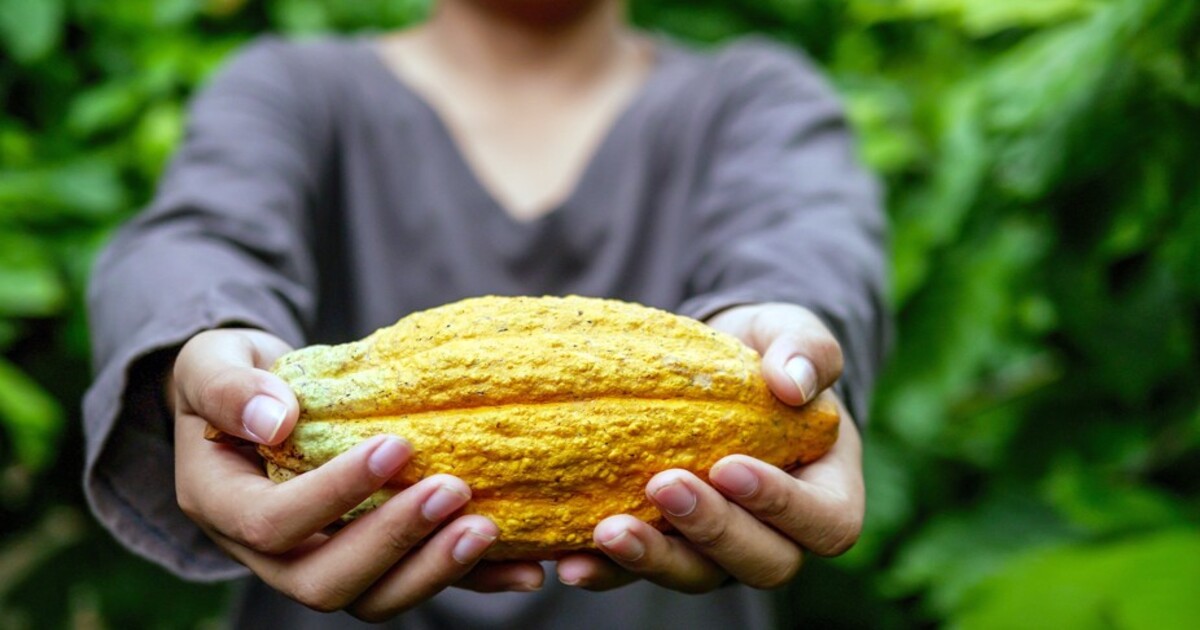

West Africa is the source of around 70% of the world’s cocoa, with Côte d’Ivoire (Ivory Coast) alone accounting for over 45% of total production — followed closely by Ghana, then Nigeria and Cameroon.
Cocoa nibs or beans are picked and processed by hand. These are more than likely a child’s hand.
Armed with machetes, hauling heavy loads and spraying pesticides, children between 5 and 17, deprived of education and proper payment, can work up to 100 hours a 7-day week picking beans manually. Many of them are trafficked from Mali and Burkina Faso.
The dark side of chocolate production
It takes between 300 and 600 nibs, each weighing around 450 grams/1 pound and typically containing between 30 to 50 large seeds, to create 1 kg/2.2 pounds of chocolate.
The larger chocolate industry, conscious of its bad press, stresses it is committed to eradicating child labor. It protests that the challenge is the fact that they do not own the cocoa farms where abuses take place, and that identifying which of those often-modest family farms is difficult, and that auditing is expensive.
The excuses seem disingenuous in light of the fact that those obstacles do not apply to smaller manufacturers.
Ethical alternatives in the chocolate industry
Describing themselves as impact-companies, there are 14 smaller players in the chocolate market which pass significantly higher profits back to the cocoa farmers supplying them and which appear to avoid using child slave labor.
The American brand “Beyond Good” sources its cocoa directly from Madagascar — bypassing West African supply.
“Divine” is a Ghanaian farmer-owned company that passes the company’s net gains directly in cash to the farmers and invests its Fairtrade premiums in social programs.
Transparency and the limits of major brands’ efforts
Tony’s Chocolonely is probably the most well-known of such mission-driven companies. A Dutch manufacturer determined to be transparent, it launched in 2005 — specifically, to make chocolate 100% slave-free by paying a higher price to farmers.
But even they have had to acknowledge that while they buy their cocoa products from sources that do not use slave labor, they have discovered hundreds of cases annually lower down their supply and manufacturer chain.
They faced a particular PR setback over their partnership with Swiss-Belgian processors Barry Callebaut, one of the world’s largest manufacturers of high-quality chocolate and cocoa products.
In 2023-24, 19,389 cases of child labor were identified in Callebaut’s supply chain.
Major corporations and the ongoing problem of child labor
Despite pledging to reduce child labor and institute monitoring systems, major chocolate companies Nestlé, Cargill, Mars, Mondelez International, the Ferrero Group and the Hershey Company have been linked to the continued engagement of over 1.5 million children in hazardous work in West African cocoa-growing regions.
Allegations over their connection to child labor compelled Lindt & Sprüngli to produce two defensive reports: “Forced Labor and Child Labor in Supply Chains’ in 2023 and “Modern Slavery Statement” the following year.
Climate change and its impact on cocoa production
Cocoa supply itself is an issue. While recent crops have been bountiful after several poor seasons, their quality has been inferior, primarily due to severe climate change weather fluctuations, tree disease and mortality.
Manufacturers are also concerned about the degradation of the accumulated surplus of the beans now in storage — so consumer chocolate prices have risen by up to 19%.
The new health trend: Functional chocolate
Meanwhile, chocolate has entered the “functional” market. You are about to be persuaded that eating chocolate is to “snack smart” — in the current vernacular of the industrial food complex that likes to sell you whatever it can in any guise.
But it is our fault, of course. We consumers now apparently demand that our chocolate should provide us with pre- and pro-biotics, proteins and antioxidants and other health benefits.
Not me. I thought chocolate was supposed to be the exact opposite — an indulgence. I just want to eat it and feel a bit wicked.
The debate around cocoa-free chocolate
More disheartening — or more exciting depending on your viewpoint — Nestlé has come up with a chocolate that is, yes, entirely cocoa-free!
You have been waiting for this moment, I know. Along with Planet A Foods, a German start-up, they have branded ChoViva, a smooth paste made from blending roasted sunflower seeds, sugar, plant-based fats and milk powder together.
If cocoa-free chocolate takes off, it would remove child slave-labor from the manufacturing process. But it would also deprive African families of income. If you are curious to try this substitute, you can already sample it in Nestlé’s “Snack Vibes,” a name which does not quite — for me anyway — have the ring to it as those renowned Neuhaus pralinés “Caprice” and “Tentation.”
Conclusion and the Easter call to action
If you have not yet picked out the Easter eggs for your children’s pleasure, buy one which has not caused hardship and deprivation to someone else’s children.
This incredibly easy chocolate tart makes an appropriate finish to the Sunday feast.
Ingredients
– 400g/14 oz pastry dough, home-made or shop bought
– 400ml/14 fl oz single cream
– 100ml/4 fl oz milk
– 1 teaspoon vanilla essence
– 150g/5oz 70 percent cacao dark chocolate, broken into pieces
– 1 large egg + 4 large yolks
– Unsweetened cocoa powder (optional)
– Crème fraiche (optional)
Method
Make a shortcrust pastry to this excellent recipe or buy a good butter brand, to line a greased 26cm/10 ins tart tin. Preheat oven to 170C/350F.
Line the pastry case with a sheet of baking paper and dried beans to prevent the pastry from puffing up, and bake-blind, as this method is called, for 15 minutes. Remove from the oven and discard the paper and re-store the beans for a future bake.
Break the chocolate in pieces into a blender jar. In a pan, heat the cream and milk to the point where it begins to fizzle around the sides. Then pour over the cream, add the vanilla and blitz until thoroughly blended.
Break in the egg and yolks and blitz again to incorporate. Pour into the pastry case and bake in the oven until set but still a little wobbly in the center, around 30 minutes.
Remove and chill for at least 4 hours. Serve with a sieving over of unsweetened cocoa powder if you like and a bowl of crème fraiche.
If you do not want to make a tart, just make the filling, pour it into ramekins, chill overnight and you have Petits Pots de Chocolat! Happy Easter.
Takeaways
If you have not yet picked out the Easter eggs for your children’s pleasure, buy one which has not caused hardship and deprivation to someone else’s children.
The chocolate industry stresses its commitment to eradicating child labor. However, major companies like Nestle, Mars and Hershey remain linked to over 1.5 million children in hazardous cocoa labor.
Armed with machetes, hauling heavy loads and spraying pesticides, children between 5 and 17, deprived of education and proper payment, can work up to 100 hours a 7-day week picking cocoa beans manually.
Excuses from the chocolate industry — that they do not own the cocoa farms where child labor takes place, that identifying those often modest family farms is difficult and that auditing is expensive — seem disingenuous.