Erdogan Keeps Playing Turkey’s Kurds
Faced with a historic opportunity to end the Kurdish conflict, Turkey’s President seeks surrender rather than a dignified solution.
January 23, 2026
A Global Ideas Center, Strategic Assessment Memo (SAM) from the Global Ideas Center

You may quote from this text, provided you mention the name of the author and reference it as a new Global Ideas Center, Strategic Assessment Memo (SAM) published by the Global Ideas Center in Berlin on The Globalist.
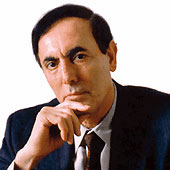
Nearly a decade after Turkey’s failed coup attempt of July 2016, the political landscape of the country has been transformed beyond recognition.
What began as a night of dreadful uncertainty for the Turkish state has become the long day of Recep Tayyip Erdogan’s consolidation of power.
He undertook an authoritarian restructuring that has reshaped institutions, narrowed civil liberties, and placed entire communities, particularly Kurds, under intensified repression and persecution.
Persecution of the kurds
Perhaps nowhere has Erdogan’s nationalist authoritarian shift been more devastating than in his treatment of Turkey’s Kurdish population.
In the early 2010s, Erdogan surprised observers by launching a peace process with the Kurdistan Workers’ Party (PKK). For the first time in decades, there was the prospect of a negotiated solution to the entrenched conflict.
Kurdish language, culture and political expression seemed poised to enter mainstream legitimacy. But by 2015, the peace process collapsed spectacularly at Erdogan’s design.
Since then, Erdogan intensified repression to a degree unmatched in the post-1980 era. The pro-Kurdish Peoples’ Democratic Party (HDP), which emerged as a major parliamentary force in 2015, has been relentlessly targeted.
Thousands of its members have been arrested and dozens of HDP-run municipalities have been seized. These actions resulted in a de facto dismantling of Kurdish political representation through legal and administrative means.
Kurdish identity itself became suspicious and Kurdish political engagement is equated with terrorism.
Collective punishment
One particularly egregious example is the siege of the town of Cizre from December 2015 to February 2016 during a conflict between Turkish security forces and Kurdish militants.
Civilians were trapped without food, water or medical care, which was a horrific case of collective punishment.
In the Kurdish-majority city of Diyarbakir, elected Kurdish mayors were removed and replaced by government appointees, grossly undermining the political rights of the Kurdish community.
Renewed effort towards peace
Following the historic call of Abdullah Ocalan, the imprisoned leader of the PKK, for his organization to disarm in February 2025 and dissolve, the dialogue between the Turkish government and Turkish Kurds has entered a fragile new phase marked by conditional reciprocity and unresolved political demands.
The PKK has taken concrete steps: It announced a ceasefire in March 2025, renounced armed struggle in May, staged a symbolic weapons-burning ceremony in July and announced a complete withdrawal from Turkish soil in October 2025.
Waiting for Ankara to reciprocate
However, senior PKK commanders now state they have fulfilled all measures set by Ocalan and will take no further actions until Ankara reciprocates first.
The Kurdish side’s core demands are clear: unconditional release of Ocalan and constitutional recognition of Kurdish identity and political rights (not independence) within Turkey.
The PKK commanders explicitly warn that peace will halt without these steps, arguing that “as long as the leadership is inside (prison), the Kurdish people cannot be free.”
The Turkish government, while welcoming Ocalan’s disarmament call as a “historic step” that could “tear down the wall of terror,” frames the process as a surrender rather than a negotiated settlement.
No room for negotiation
Ankara has publicly refused direct negotiations with the PKK leadership in exile and insists any reconciliation must occur on Turkey’s terms.
Erdogan and his far-right MHP ally Devlet Bahceli initiated the process primarily for domestic political calculations – seeking Kurdish parliamentary support for constitutional changes and improved regional standing – rather than as a comprehensive initiative to end the more than four decades of bloody conflict.
The pro-Kurdish DEM Party actively facilitates dialogue, but the process remains vulnerable. Ocalan warns of “coup mechanics” that sabotaged past peace efforts.
Meanwhile, the Turkish government has not yet outlined concrete political reforms, legal guarantees, or a roadmap for democratic rights beyond expecting the PKK’s dissolution.
An impasse after 41 years
After 41 years of violent conflict that claimed the lives of over 40,000 on both sides, the dialogue stands at an impasse.
Even though the Kurdish side has forsaken its armed resistance, Ankara still refuses to reciprocate with the institutional changes necessary to secure an enduring political settlement.
This includes granting the Kurds in Turkey the human and civil rights they are entitled to.
Although the Kurds are not seeking independence, Erdogan still refuses to accept the principle that they are an ethnic group that has the inherent right to live their lives as they see fit.
They want to speak their language, practice their culture, music, dance and ritual – as long as they fully abide by the rules and laws of their country to which they have fully committed.
Missed opportunity
Erdogan must remember that nearly 15 percent of the Turkish population, approximately 16 million, are ethnic Kurds. They will never rest until their human and ethnic rights are recognized.
But leave it to the blind nationalist Erdogan to miss yet another historic opportunity, demonstrating his folly, even when facing a real prospect of ending the most debilitating domestic conflict in modern Turkey.
Takeaways
The Turkish government, while welcoming Ocalan’s disarmament call as a "historic step," frames the process as a surrender rather than a negotiated settlement.
Erdogan and his far-right MHP ally Devlet Bahceli initiated the process primarily for domestic political calculations - rather than as a comprehensive initiative to end the more than four decades of bloody conflict.
The Turkish government has not yet outlined concrete political reforms, legal guarantees or a roadmap for democratic rights beyond expecting the PKK's dissolution.
Although the Kurds are not seeking independence, Erdogan still refuses to accept the principle that they are an ethnic group that has the inherent right to live their lives as they see fit as long as they fully abide by the rules and laws of their country.
Nearly 15 percent of the Turkish population, approximately 16 million, are ethnic Kurds. They will never rest until their human and ethnic rights are recognized.
A Global Ideas Center, Strategic Assessment Memo (SAM) from the Global Ideas Center
You may quote from this text, provided you mention the name of the author and reference it as a new Global Ideas Center, Strategic Assessment Memo (SAM) published by the Global Ideas Center in Berlin on The Globalist.