Mark Carney: The West’s New Emmanuel Macron
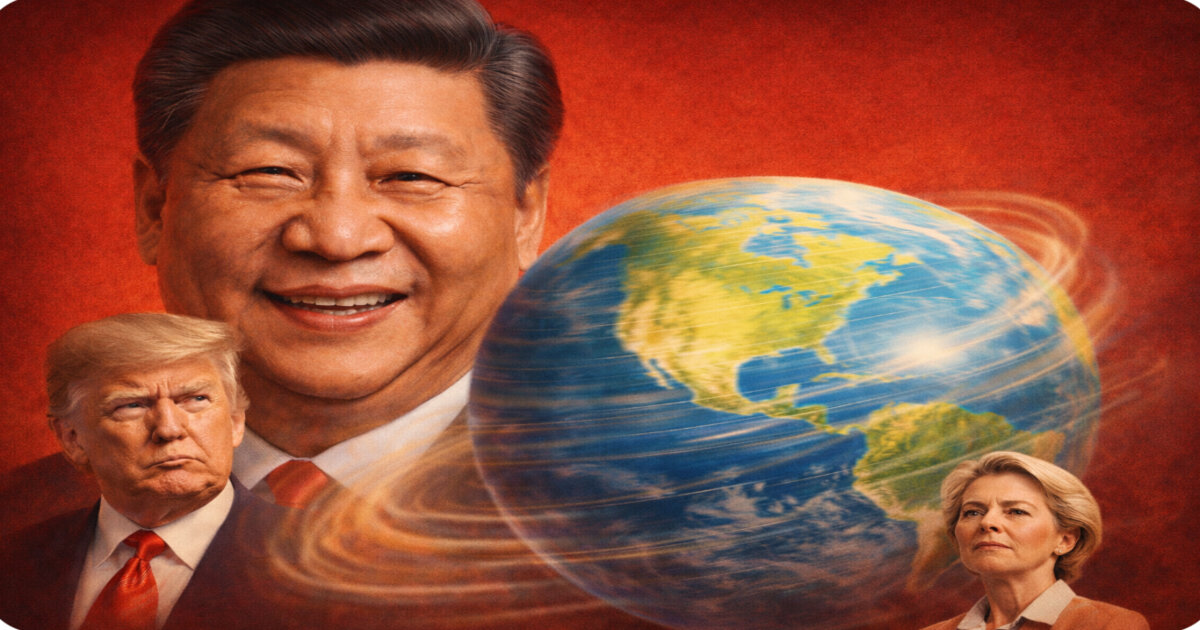
In view of an overbearing Trump administration, Western nations need leaders willing and able to speak truth to power.
January 22, 2026
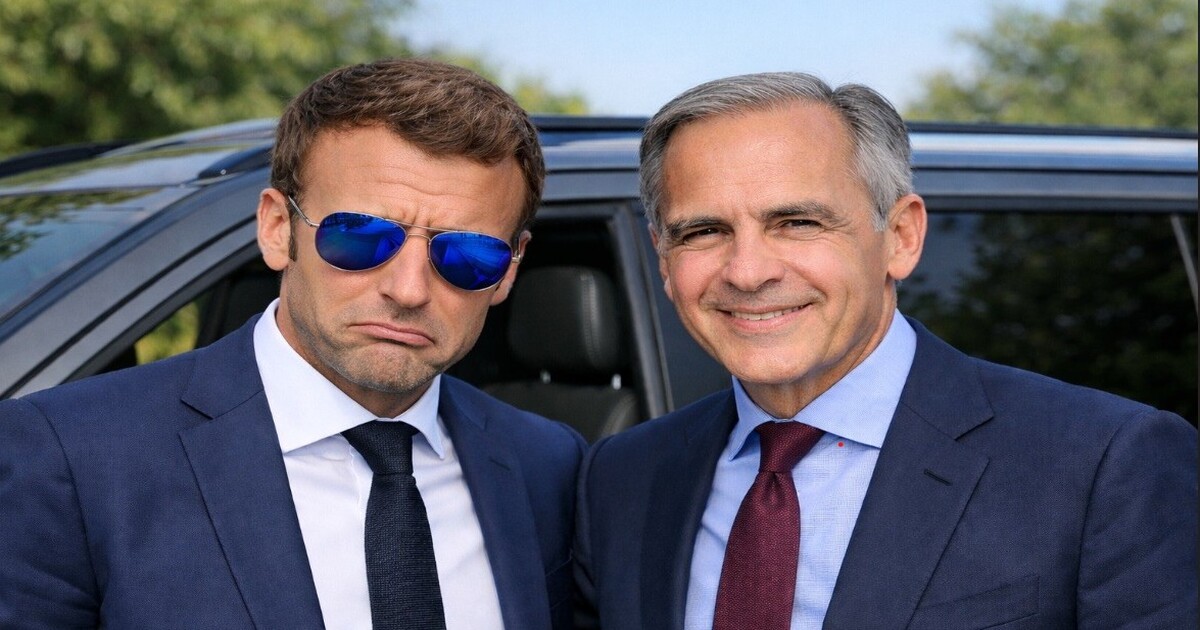
Emmanuel Macron’s star as the most articulate champion of the liberal democracy has been fading for a while now. This was mostly due to developments on the French domestic political front.
The French people have an imperial habit about their leaders. They start hating them as soon as they discover that their national leader tries to undertake necessary reforms to the system of entitlements. The resoluteness of their street protests is a direct reflection of the fact that they themselves appear innately incapable of accepting change.
The global stage as compensation
Until recently, Macron has been able to compensate for floundering at home by being a leader on the global stage. He was more thoughtful and articulate and on occasion also more courageous than all the rest of European heads of government.
However, his influence on the international stage has been fading fast as the French Presidential elections that his party seems set to lose come closer and his influence evaporates.
The Macron mandate: Speaking truth to power
The loss of Macron as its champion is bad news not just for democratic Europe but the West as a whole. He has left a vacuum in the discourse that neither the still relatively new German Chancellor Friedrich Merz nor Keir Starmer in the UK are cut out to fill.
That dangerous void has now been filled by Canadian Prime Minister, Mark Carney, a technocrat new to politics and a man whom few outside his own country knew to be eloquent or courageous enough to speak truth to Trump.
That all changed in Davos on January 21st when Carney addressed the Annual Meeting of the World Economic Forum. He delivered a powerful and principled “blood sweat and tears” speech, articulating a vision of middle power globalism without the United States.
Pinpointing Trump’s destructive vision
Carney essentially said that the King had no clothes, that the Trump vision of the world was both incoherent and destructive. Apart from the eloquence of his speech, what is amazing is that such a bold speech should have been given at all.
No other leader has dared. But it should not be surprising that Carney was the first credible leader to call out the Trump hegemony.
Canada was the canary in the mineshaft
Remember the resounding silence in Europe when Trump started in the spring of 2025 speaking about Canada as the 51st state and annexing its territory?
While the international reaction among the middle powers was muted, Trump’s threats transformed the Canadian political landscape. Canada’s Liberal Party replaced Trudeau with Carney, the single person considered strong enough to galvanize the country into asserting its sovereignty.
Carney to the rescue
An exceptionally successful financier and global intellectual, he left the private sector to work in government and went on to become Governor of two central banks, the Bank of Canada and the Bank of England.
Canadians subsequently elected him Prime Minister, confident that he had the guts and bandwidth to stand in the ring with Trump.
Leading by openly challenging.
They were right, and to the surprise of everyone outside Canada, a Canadian Prime MInister was the first world leader to openly challenge Trump.
His move should not have come as a surprise, knowing who Carney is and what Canada has at stake. Its ability to defend itself depends on collective resistance to Trumpian hegemony by the very Middle Powers (i.e., the West).
In retrospect, they have learned the hard way that they have recklessly relied on the United States to guarantee their security and, to a considerable extent, also their prosperity at little cost to themselves.
Trump has shredded that illusion, deciding to pursue economic autarky at the cost of its partners and to draw the line against Russia in the mid-Atlantic at the cost of its allies.
Between absorption and abandonment
This combination of policies might make Canada’s exposure to U.S. hegemony seem even starker than that of the EU. But the difference is ultimately not so fundamental.
Canada is in danger of absorption, while Europe is in danger of abandonment. What we have in common is Trump. The same goes for the non-Atlantic members of the “West”. Japan, Taiwan and South Korea are in as much danger as the rest.
Hence Carney’s call for unity through variable geometry. Each member of the old “West” has both assets at risk and the means to resist the threats to them.
Combining effort, rather than the pursuit of different forms of appeasement are, he suggests, the way forward. It is already the path he is charting for Canada.
His words have had an extraordinary resonance around the world, the first time in history that a Canadian Prime Minister had this impact. The grand gesture at Davos was a necessary catalyst for any collective response to Trump.
After Greenland: Canada next?
It remains to be seen if it is enough. From the Canadian point of view, nothing other than its own existence is at stake. If Trump is allowed to swallow Greenland, the likelihood of Canada being next will have risen dramatically.
The challenge is now on the table for other leaders. The fractious political situation in Europe might not seem auspicious for decisive action, but it is possible that this common threat to their societies may be an opportunity to bring factions together.
Provided of course, that this is indeed accepted in the political discourse as a moment of crisis – rather than an opportunity for further division.
Takeaways
The shrinking of Emmanuel Macron, the West's long-time champion of liberal democracy, has left a political vacuum.
That leadership void has now been filled by Canadian Prime Minister, Mark Carney, a technocrat new to politics and a man whom few outside his own country knew to be eloquent or courageous enough to speak truth to Trump.
The middle powers have learned the hard way that they have recklessly relied on the United States for their security and also their prosperity.
In pursuing economic autarky at the cost of its middle power partners, Trump has shredded the illusion of a meaningful transatlantic partnership.
From the Canadian point of view, nothing other than its own existence is at stake. If Trump is allowed to swallow Greenland, the likelihood of Canada being next will have risen dramatically.
The fractious political situation in Europe might not seem auspicious for decisive action, but it is possible that this common threat to their societies may be an opportunity to bring factions together.
Authors
Stephan Richter
Founder and Editor-in-Chief of The Globalist and Director of the Global Ideas Center, a global network of authors and analysts.
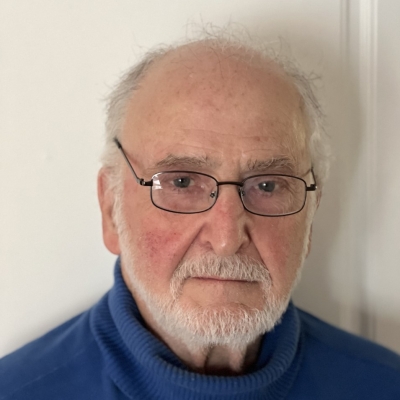
George Haynal
George Haynal is a Senior Fellow of the Munk School of Global Affairs and Public Policy at the University of Toronto, and a former head of the Policy Planning Staff of the Canadian Ministry Of Foreign Affairs and International Trade.