
When Donald Trump Boosts Germany’s Anti-NATO Hard Left
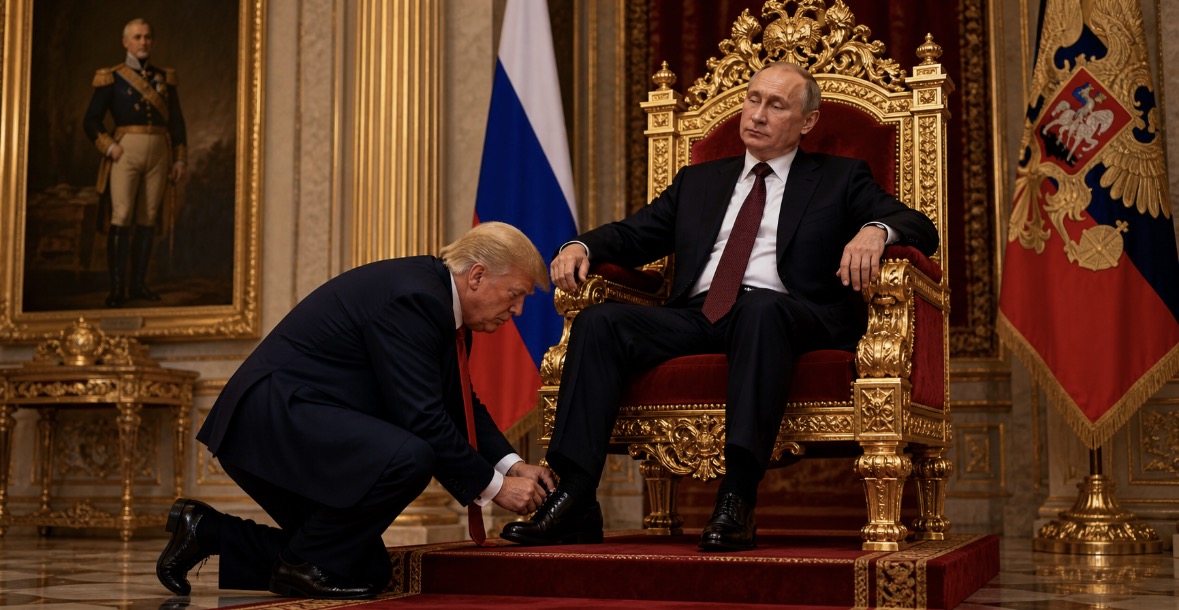
Donald Trump isn’t punishing Germany as much as he is yet again kowtowing to Vladimir Putin.
May 5, 2026

Note to journalists: You may quote from this text, provided you mention the name of the author and reference it as a new Strategic Assessment Memo (SAM) published by the Global Ideas Center in Berlin on The Globalist.


There is a bitter irony in Donald Trump’s reported decision to cancel the planned deployment of medium-range missiles to Germany.
Intended as punishment for Chancellor Friedrich Merz’s criticism of his Iran war strategy, Trump’s move has achieved something that Germany’s anti-NATO hard left could never dreamed of accomplishing through the democratic process.
Undermining NATO, pleasing Putin
The cancellation of Typhon medium-range missile launchers, Tomahawk cruise missiles and hypersonic weapons — originally scheduled during the Biden administration for deployment in 2026 — runs directly counter to Trump’s supposed desire to strengthen NATO.
In effect, it creates a hole in the NATO-related defense posture in the middle of Europe that directly serves Putin’s interests in splitting Europe and the United States from one another. Donald Trump evidently is a dutiful servant of that agenda.
His move also shows that Trump is incapable of pursuing any consistent policymaking approach. If anything, he should be very pleased that his past threats of withdrawing U.S. support have triggered the demanded result — a significant increase in defense outlays by EU nations.
Trump as an asset of Russia’s fellow travelers
Instead, Trump now surfaces in yet another variant, presenting himself as a fellow traveler of political forces nobody would have ever presumed an American President would choose.
Trump has handed an unearned victory to the very forces in Germany that have long opposed American military presence there. These include Die Linke, which has consistently demanded the removal of all U.S. soldiers and weapons from Germany, as well as Sahra Wagenknecht’s BSW party, which explicitly seeks to free Germany “from the geostrategic grip of the United States.”
Both Die Linke and BSW had vehemently opposed the original 2024 Biden-Scholz agreement on missile deployment, with Die Linke warning of a new arms race and Wagenknecht making opposition to U.S. missiles a key demand in coalition negotiations to join state governments in eastern Germany.
They can now claim that their positions are vindicated by the U.S. President’s own policy choice.
The SPD’s forever Russia-pleasing top left-wing politicians are boosted by Trump
And then there is the anti-defense wing of the SPD, the junior partner in the German government.
The SPD’s forever Russia-pleasing top left-wing politicians, Rolf Mützenich and Ralf Stegner, had finally been moved to the sidelines in view of Putin’s humanity-despising strategy that is playing out daily in Ukraine.
Unsurprisingly, no sooner had the Trump administration’s announcement filtered through that Mr. Mützenich, the SPD’s former floor leader in the German Bundestag, seized the moment. He called for launching immediate disarmament negotiations with Russia, officially demanding that Russian, nuclear-armed medium-range missiles be withdrawn from Belarus and Kaliningrad.
As if Putin would ever accede to that. But why worry about outcomes at all? What matters to the SPD’s anti-defense left wing is to strengthen its role in German domestic politics.
Happy about a true hole in the German deterrence posture
Mützenich may frame his suggestion as an opportunity for Europe to pursue “clever diplomacy,” but his critics immediately recognized Mützenich’s move for what it was: a transparent move to advance his long-stagnant pacifist agenda.
This at a time when there is a daily debate even in Germany about the timing — and the implications — of a Russian attack on NATO territory. Never mind the threats of nuclear attacks on Germany and Berlin emanating from Putin’s Russia.
The SPD’s response to that is to be happy about a true hole in the German deterrence posture.
Trump validating the German hard left
It is worth recalling that Die Linke and the BSW party in Germany had earlier argued against the deployment of U.S. missiles on the grounds that American security guarantees were unreliable and that Germany should pursue alternative arrangements, notably seeking accommodation with Russia.
Trump has now proven them right, but for all the wrong reasons. His cancellation stems not from strategic reassessment but from personal spite.
He has created political space for arguments that would have been considered totally marginal just months ago — that Germany should reduce its dependence on the United States, that NATO expansion was provocative, that dialogue with Moscow offers more security than Western deterrence.
The German hard left’s underlying military logic is circular but politically very potent: American weapons make Germany a target. American unreliability proves we shouldn’t depend on them. Therefore, disarmament and dialogue with Russia offer the only path to security.
Weakening NATO when strengthening it matters most
The strategic consequences are profound. At precisely the moment when Eastern European allies view Russian aggression as an existential threat, Trump’s action weakens the conventional deterrence that these missiles were meant to provide.
Germany must now look for a plan B for mid-range conventional missiles, while the anti-NATO left argues that this entire exercise demonstrates the futility of military preparedness.
Meanwhile, Trump‘s announcement of the withdrawal of “at least” 5.000 troops represents a shameful capitulation to the bully in Moscow that, first and foremost, sacrifices American strategic interests to Putin.
Trump: Uniter of the Political Extremes in Germany
Trump’s real, but hard to accomplish achievement is that he validates the policy preferences of Germany’s two political extremes — not just the hard left, but also the far-right AfD.
As another aficionado of Vladimir Putin, it too calls for removing U.S. troops and reorienting German foreign policy away from NATO.
Both ends of the German political spectrum can thus now claim that the idea of a transatlantic alliance is fiction, that American protection is at best conditional and definitely capricious and that Germany’s interests therefore lie in choosing independence.
Conclusions
The political damage of Trump’s move extends beyond immediate security calculations. Every European nation watching the current spectacle must draw the same conclusion: that American commitments are subject to the personal whims of a single man in the White House who can make decisions over the collective heads of the U.S.’s vast and very experienced military security apparatus.
Short-sighted as he is, Trump may have intended to punish Merz. Instead, he has empowered precisely those forces in German politics—the anti-NATO hard left and the pro-Russian fringe—that pose the greatest long-term threat to the transatlantic relationship. Mützenich’s sagging political fortunes have been revived by Trump’s anti-Merz temper tantrum.
And the validity of the American security guarantee, already strained, has been further discredited. The ultimate irony is this: in attempting to bend Germany to his will, Trump has strengthened the very Germans who have always wanted the United States of America out.
That is not statecraft. It is strategic self-mutilation, dressed up as dealmaking. Meanwhile, the anti-NATO left in Germany and beyond is laughing all the way to the negotiating table with Moscow.
Takeaways
The cancellation of U.S. medium-range missiles in Germany runs directly counter to Trump’s supposed desire to strengthen NATO.
Trump's move not only creates a hole in the NATO-related defense posture in the middle of Europe. It also directly serves Putin’s interests in splitting Europe and the United States from one another.
Trump has handed an unearned victory to the very forces in Germany that have long opposed American military presence in Germany. These include Die Linke and the left wing of the SPD.
The German hard left’s underlying military logic is circular but politically very potent: American weapons make Germany a target. American unreliability proves we shouldn't depend on them. Therefore, disarmament and dialogue with Russia offer the only path to security.
The sagging political fortunes of the SPD's top security policy leftist have been revived by Trump's anti-Merz temper tantrum.
Trump's biggest achievement is that he validates the anti-NATO mindset of Germany's two political extremes — not just the hard left, but also the far-right AfD.
Trump may have intended to punish Merz. Instead, he has empowered precisely those forces in German politics — the anti-NATO hard left and the pro-Russian fringe — that pose the greatest long-term threat to the transatlantic relationship.
Note to journalists: You may quote from this text, provided you mention the name of the author and reference it as a new Strategic Assessment Memo (SAM) published by the Global Ideas Center in Berlin on The Globalist.