
After the Bayeux Tapestry Why Not the Parthenon Marbles?
Britain needs friends in Europe. Finally returning the Parthenon Marbles to Athens would be a good start toward gaining one.
September 27, 2026

After a wait of longer than a millennium, the Bayeux Tapestry — the founding cartoon strip of English history — may finally be seen in London.
This amazing embroidered tapestry, crafted by Queen Matilda and her team, tells the story of the Norman invasion and occupation of part of Britain led by Matilda’s husband, William the Conqueror, in 1066.
More art is being exchanged
French President Emmanuel Macron quipped that the negotiations over lending the tapestry lasted longer than the Brexit talks that have turned Britain into the poor man of Europe.
The exchange of art treasures is picking up pace. The British Museum has sent back 32 items of Asante royal regalia to Ghana that were brought to London as imperial plunder in 1896.
London’s prestigious Horniman Museum restored 72 Benin bronzes looted in 1897 by British soldiers at the height of Britain’s colonial looting of other nations’ art heritage.
Artistic justice
Return of looted art became a priority after World War II.
The U.S. Army, while occupying Germany, invited art specialists to track down and return the art German generals and Nazi diplomats had stolen from museums and from Jewish owners of paintings and sculpture in occupied Europe.
The Germans had looted 500,000 pieces of raubkunst (stolen art). Most have been returned, but there remains work to do. However, the rising far-right AfD party in Germany is defending those museums that cling onto their raubkunst. The party says that museum bosses suffer from “artificial perpetuations of feelings of guilt.”
Stealing the foundations of Europe
Much remains to be done, and one case stands out among the stolen works.
One-hundred and fifty years before World War II, the Royal Navy helped a syphilitic Scottish aristocrat — diplomat Thomas Bruce, the seventh Earl of Elgin — saw off and carry away the Parthenon Marbles, the foundational sculptures of European art.
The marbles at that time were standing proud in the center of Athens, which was occupied by the Ottoman army. The earl oversaw the effort to steal them away to England.
A real piece of work
Elgin had married a Scottish heiress, and he used her money to pay workmen to remove the sculptures from their site fashioned by Phidias, the founding father of European sculpture.
Elgin had a facial disfigurement that required him to wear a mask to cover where his nose had been.
Losing a nose was commonly attributed to syphilis, and the poet Byron, appalled by Lord Elgin’s theft of the sculptures, wrote “The Curse of Minerva,” a poem saying the Gods gave Lord Elgin syphilis as punishment.
Elgin sold the marbles to the British government for £4.5 million in today’s money. Much of that wealth went to his wife to pay for their divorce.
The looted Parthenon Marbles remain in Britain. Their presence there is defended by the British establishment, including the stars of popular broadcasting about Hellenism as well as the great and the good of UK state administration.
These are people brought up in private schools and Oxbridge colleges on a steady diet of Greek culture, history and philosophy.
One of them is Chair of the British Museum George Osborne, the former Conservative chancellor of the exchequer.
Misappropriated heritage
Discussing how the Parthenon Marbles might be returned, Osborne told me: “It’s the kind of thing that can only be done when a new government comes in. Everything is in flux and decisions that seem impossible can be taken.”
Unfortunately the elite London club of British Hellenists considers the Parthenon Marbles to be part of Anglo-Saxon cultural heritage.
They insist Greeks should be grateful the English stole this art so central to the very idea of Europe that the English right and far-right have now repudiated.
When the marbles were about to go on display in the 19th-century British Museum, the English Hellenist vandals ordered they be cleaned with steel bristle brushes.
In 1963, a corrupt, declining Conservative government wracked by sexual scandals linked to the Soviet Embassy hurriedly passed a law forbidding the British Museum from restoring any of its raubkunst to the nations the art came from.
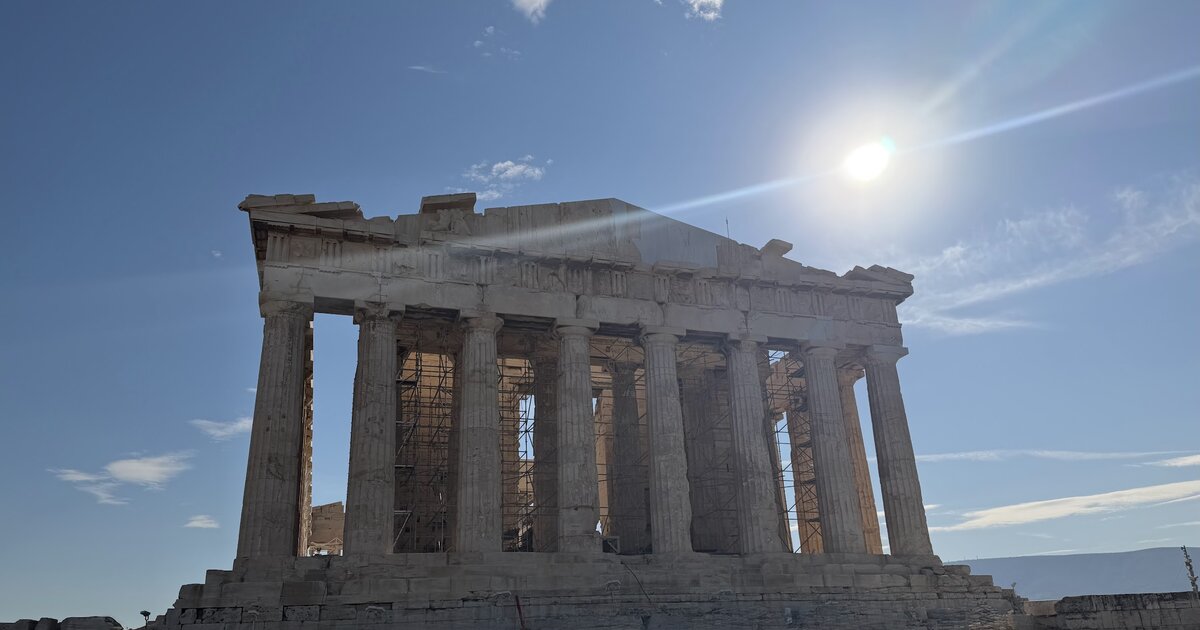
The Marbles were put on display at the Acropolis 2,000 years ago to show the world what European art could attain. Could Britain now find inspiration in France’s generosity of spirit and finally talk to Athens about their return?
Burnham has talked the talk
When Andy Burnham, now Britain’s prime minister, arrived in the Commons in 2001, he signed House of Commons motions about the marbles with other MPs.
He even promoted a private member’s bill to open partnership talks with Athens to allow the Marbles to go on show in their home city.
In 2023, during the opening of the Manchester Museum, Burnham tweeted: “Send the Marbles back, no strings. And let’s use culture to change how Britain is seen around the world.”
As the nation is finding out, Prime Minister Burnham made many statements prior to entering 10 Downing Street that are not quite operative. That’s politics.
A historic precedent
But the display of the Bayeux Tapestry in London, 900 years after it was produced, creates an important precedent.
Scientists, with the help of AI, have developed ways of making identical copies of Europe’s ancient art. Further, loans of art over a period of several years are now commonplace.
Friends need to share
Britain needs friends in Europe. Agreeing with Athens to end the 200-year shame of looting the Parthenon Marbles would be a good start toward gaining one.
Macron, who agreed to send the Bayeux Tapestry to London, should be the guest of honor when the Parthenon Marbles go on display at the special museum built for them in Athens close to the Acropolis.
There, they stood for 2,000 years before a Scottish lord, with help from the Royal Navy, committed one of the great crimes against art in European history.
Denis MacShane is Britain’s former Minister of Europe.
Takeaways
The exchange of art treasures is picking up pace. The British Museum has sent back 32 items of Asante royal regalia to Ghana. London’s prestigious Horniman Museum restored 72 Benin bronzes.
The display of the Bayeux Tapestry in London, on loan from France 900 years after it was produced, creates an important precedent. Does it open an opportunity for talks with Greece about returning the Parthenon Marbles?
The carrying off of the Parthenon Marbles by the Royal Navy and a syphilitic Scottish aristocrat is one of art history’s greatest unresolved crimes.
London’s elite Hellenists insist Greeks should be grateful the English stole this art that is so central to the very idea of Europe. How do they square that with Britain’s rejection of that same idea?
Britain needs friends in Europe. Agreeing with Athens to end the 200-year shame of looting the Parthenon Marbles would be a good start toward gaining one.