
Peas That Please
From ancient Mesopotamia to Bird’s Eye, the humble pea has a storied past!
May 9, 2026
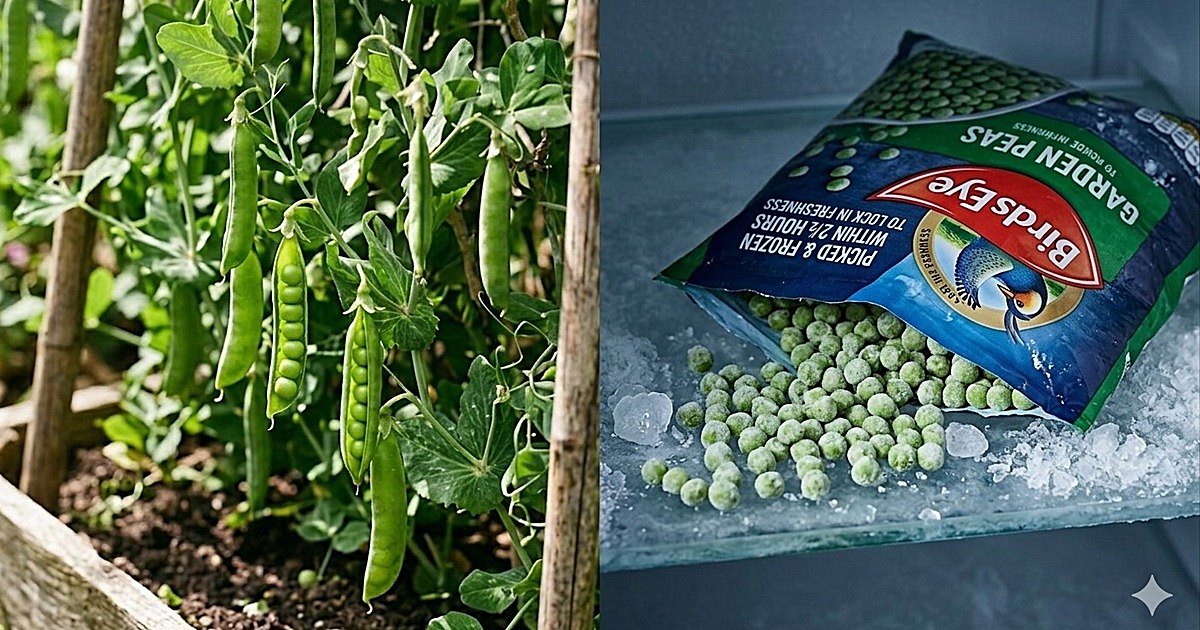

There is one vegetable that’s almost better frozen than fresh: the pea. An early 1970s advertising jingle captured its taste this way: “Sweet as the moment when the pod went pop!”
The commercial brand that presented it was Bird’s Eye, named after Clarence Birdseye, the American entrepreneur and inventor considered the founder of the frozen food industry. Back in 1952, he was the first person to freeze peas.
A look back into pea history
According to archaeological finds across the area now separated into Syria, Anatolia, Israel, Iraq, Jordan and Greece, peas go back to 7000-5000 BC. They also show up in 5000 BC in Georgia, then in the Nile Delta from around 4800 BC, and a century later in Upper Egypt.
By 2000 BC, they are found in Afghanistan, after that in northwestern India — and so on. By the fourth century BC, peas are so prolific that Theophrastus, the Greek philosopher commonly considered the father of botany, gives specific growing advice in his “Enquiry into Plants.”
A bit of scientific background
Peas owe their name to Swedish biologist and professor of medicine and botany at Uppsala, Carl Linnaeus. The father of modern taxonomy, he classified plants, animals and minerals. In 1753, he came up with the name “Pisum sativum” from which we derive the word “pea”.
The challenge for clarity, though, is considerable. To begin with, there are many very different legumes known as a pea. Peas are also not necessarily round and green.
Just consider the pigeon pea, or toor dhal, of South East Asia or the cowpeas of Africa. Then there are black-eyed peas which are another type of cowpea and originated in West Africa.
These were introduced into the West Indies and the American South by enslaved people in the 17th century. Then there is Captain Sturt’s desert pea, an ancient and beautiful herb of Australia whose flowers, too, are edible.
Not a vegetable!
Our familiar Pisum sativum, also known as the garden pea, is from the same pea family as the flat, immature pod of the mangetout, or snow pea, which is eaten whole.
Another member of this particular pea family is the sugar snap pea which is a cross between the garden pea and the mangetout.
While we loosely think of peas as vegetables, their proper category is a legume. Once they have been dried, they become known as pulses, like split peas and lentils.
Packed with fiber, iron, potassium and magnesium, they are good for winter soups and mushy peas, the essential side to fish and chips.
Of course, if you grow your own peas, there is nothing better than peas picked from the vine and immediately boiled and buttered.
In contrast, those leathery-looking pods in high-end grocery stores that cost the price of a rare treat really aren’t worth the investment. It’s been days since they left the field and left languishing in crates.
Just like sweetcorn, peas begin to develop their starch as soon as they are separated from their stalks. Boiled, they turn into bullets, and floury to the bite.
Those peas would be better used turned into the Dutch split pea potage that is cooked with a hock of ham, but it’s hardly a springtime soup.
Eating advice
The ultimate pea-experience method for cooking just-picked peas, I would suggest, is the edamame method: melt enough butter to generously fill a small saucer for each diner, then steam or boil the peas in their pods.
Holding them by their stalks, dip each pod in the butter, nip the end between the teeth to open them and release the peas and their juices, then finish them off like a globe artichoke leaf, dipping the pod back in the butter and drawing it through clenched teeth to ease the pod’s softened flesh from its fiber.
Sweet childhood memories
My father grew peas in rows under netting so that we, not the birds, would benefit from the crop. In early spring, as their first shoots emerged from the winter earth, we would trudge through the woods to cull pea sticks.
We found young branches with a network of twigs for the peas to curl around and grow skywards. Once they had turned into the green thicket that fed us spring and summer long, my sister and I would toss for one of the two supper jobs – laying the table or podding the peas – to be completed before we could escape briefly back to the garden.
Takeaways
There is one vegetable that's almost better frozen than fresh: the pea.
Just like sweetcorn, peas begin to develop their starch as soon as they are separated from their stalks. Boiled, they turn into bullets, and floury to the bite.
Those leathery-looking pea pods in high-end grocery stores that cost the price of a rare treat really aren’t worth the investment.
Across the area now separated into Syria, Anatolia, Israel, Iraq, Jordan and Greece, peas go back to 7000-5000 BC.
All beyond the green pea, there are many very different legumes known as a pea. Just consider the pigeon pea, or toor dhal, of South East Asia or the cowpeas of Africa.