
A Tale of American Lawyers and Chinese Engineers
A look at how two superpowers — one built by lawyers, the other by engineers — are driving global change.
March 2, 2026

“No two peoples are more alike than Americans and Chinese… masses and elites are united in the faith that theirs is a uniquely powerful nation that ought to throw its weight around if smaller countries don’t get in line.” That is how Dan Wang puts it in his recent book, “Breakneck: China’s Quest to Engineer the Future.”
Engines for global change
Wang sees these two countries not just as “thrilling, maddening and, most of all, deeply bizarre,” but as “engines for global change.”
The two countries are reconfiguring the international order — and each other, too. In contrast, “Europeans have a sense of optimism only about the past, stuck in their mausoleum economy.”
Wang was born in China and, at seven years of age, migrated with his parents to Canada, and then moved to the United States.He is currently a research fellow at the Hoover History Lab at Stanford University.
He spent six years in China, from 2017 to 2023, as an economic and technology analyst and writer. His book grew out of this experience.
Similar, yet different
Despite their commonalities, the United States and China have fundamental differences. China would be an “engineering state,” whereas the United States is a “lawyerly society,” writes Wang.
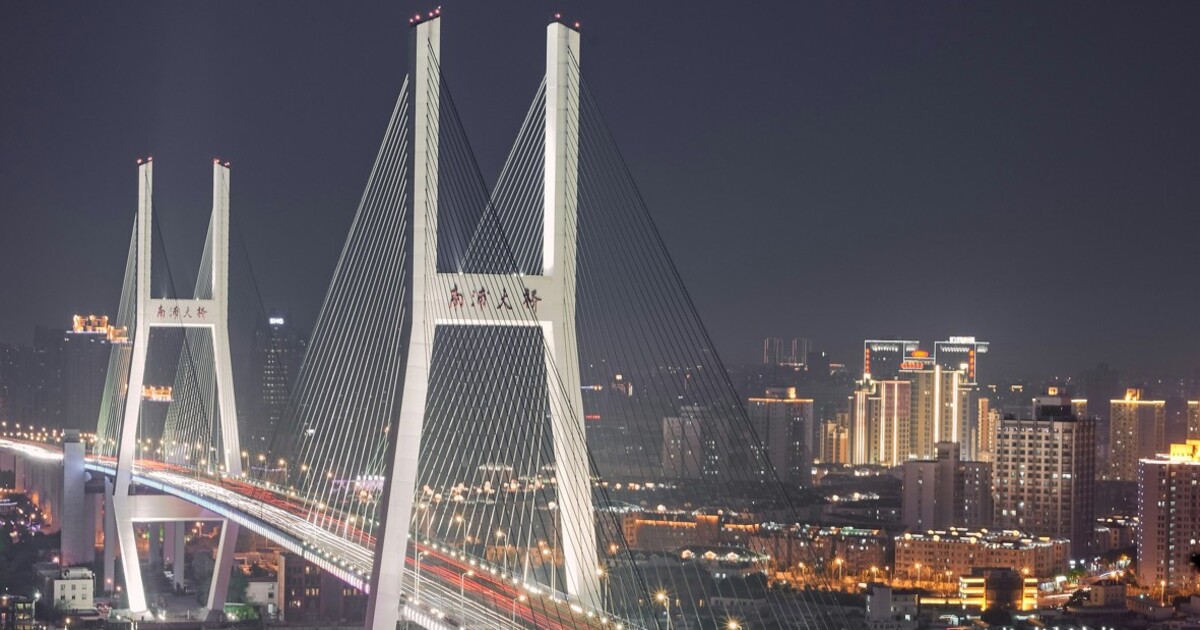
Most Chinese Communist Party leaders have been engineers focused on building mega projects such as highways, bridges, fast trains and airports. Construction has been a source of domestic and international political prestige. It has also been a key foundation for China’s rise as the world’s manufacturing powerhouse.
From physical engineers to social engineers
While Wang admires China’s engineering state, he argues that China’s physical engineers are often “social engineers” who treat society as just another big optimization problem.
As an example, he offers a detailed analysis of China’s one-child policy. The policy inflicted much suffering on Chinese women through forced abortions and sterilization and also led to tragic femicides.
But it was not effective in addressing China’s demographic challenges. Indeed, today the CCP is pushing women to have children!
Another example of wrong-headed social engineering was China’s zero-Covid policy which was ultimately ineffectual and abandoned following protests in Shanghai.
China: Level-headed, but not always
Wang argues that over the past seven decades China has experienced lengthy periods of stability punctuated by government-triggered chaos. The Chinese state is usually level-headed but every so often succumbs to extreme, ineffective policies.
In sum, Wang argues that the engineering state has remarkable strengths and appalling weaknesses — a more lawyerly society can help prevent these weaknesses.
The demise of the U.S. engineering state
Wang argues that the United States used to be an engineering state. It enjoyed a big growth spurt between the 1850s and 1950s. During this period, it built canals, interstate railways and highways, the commercial airline system and skyscrapers in Manhattan and Chicago.
Then there was the Manhattan Project which produced the first nuclear weapons, and the Apollo program which landed the first humans on the Moon in 1969.
But the U.S. engineering state made mistakes, triggering public opposition. Urban planners such as Robert Moses rammed highways through dense urban neighborhoods, U.S. government agencies sprayed pesticides (especially DDT) and some government regulators were captured by big business.
This provoked a backlash against the United States’ engineering state, giving rise to the “lawyerly society” as the country’s elite, dominated by lawyers, focused on procedure and process rather than getting things done.
The U.S.’s crumbling infrastructure
Indeed, over the past 50 years the United States has not been effective at maintaining and building infrastructure.
New York and other big cities have long had housing shortages. New York and California are ineffective at building mass transit compared with such places as Rome, Paris or Barcelona.
The military-industrial complex is behind schedule in many projects. Even in the private sector, Detroit automakers and companies such as Intel and Boeing have many tales of woe, sapping the United States’ dynamism.
Offshoring U.S. manufacturing
Wang is critical of the offshoring of large parts of the U.S. manufacturing sector to China, motivated by short-term profits. One consequence has been the loss of process knowledge — proficiency gained from practical experience, which is so critical for efficiency and flexibility.
It very much remains to be seen whether these deficiencies can be overcome by AI, as some U.S. corporate leaders such as Nvidia’s Jensen Huang and Palantir’s Alex Karp believe.
Chinese workers who assembled the early versions of Apple’s iPhone have turned their newly acquired skills to making other products, such as drones.
Conclusion
Wang’s analysis can seem simplistic as it reduces much of the United States’ and China’s challenges and differences to the roles of engineers and lawyers.
And it is not clear how their roles could be wound back, as Wang recommends. But Wang’s book is of great value as it offers many insights based on first-hand experience in China.
While the engineering state has many inefficiencies, notably excess capacity and overproduction, Wang argues it is enabling the top 5% of Chinese companies to be technological leaders and challenge the United States in fields including AI, semiconductors, biotechnology and renewable energy.
Takeaways
The U.S. and China are reconfiguring the international order — and each other, too.
The U.S. and China have fundamental differences. China is an “engineering state,” whereas the U.S. is a “lawyerly society.”
China’s engineers in the CCP are often “social engineers” who treat society as just another big optimization problem.
The U.S. used to be an engineering state. But the U.S. engineering state made mistakes, provoking a backlash and giving rise to the “lawyerly society.”
While the Chinese engineering state has many inefficiencies, it is enabling the top 5% of Chinese companies to be technological leaders and challenge the U.S. in fields including AI, semiconductors, biotechnology and renewable energy.
The Chinese engineering state has remarkable strengths and appalling weaknesses — a more lawyerly society can help prevent these weaknesses.
Europeans have a sense of optimism only about the past, stuck in their mausoleum economy.